
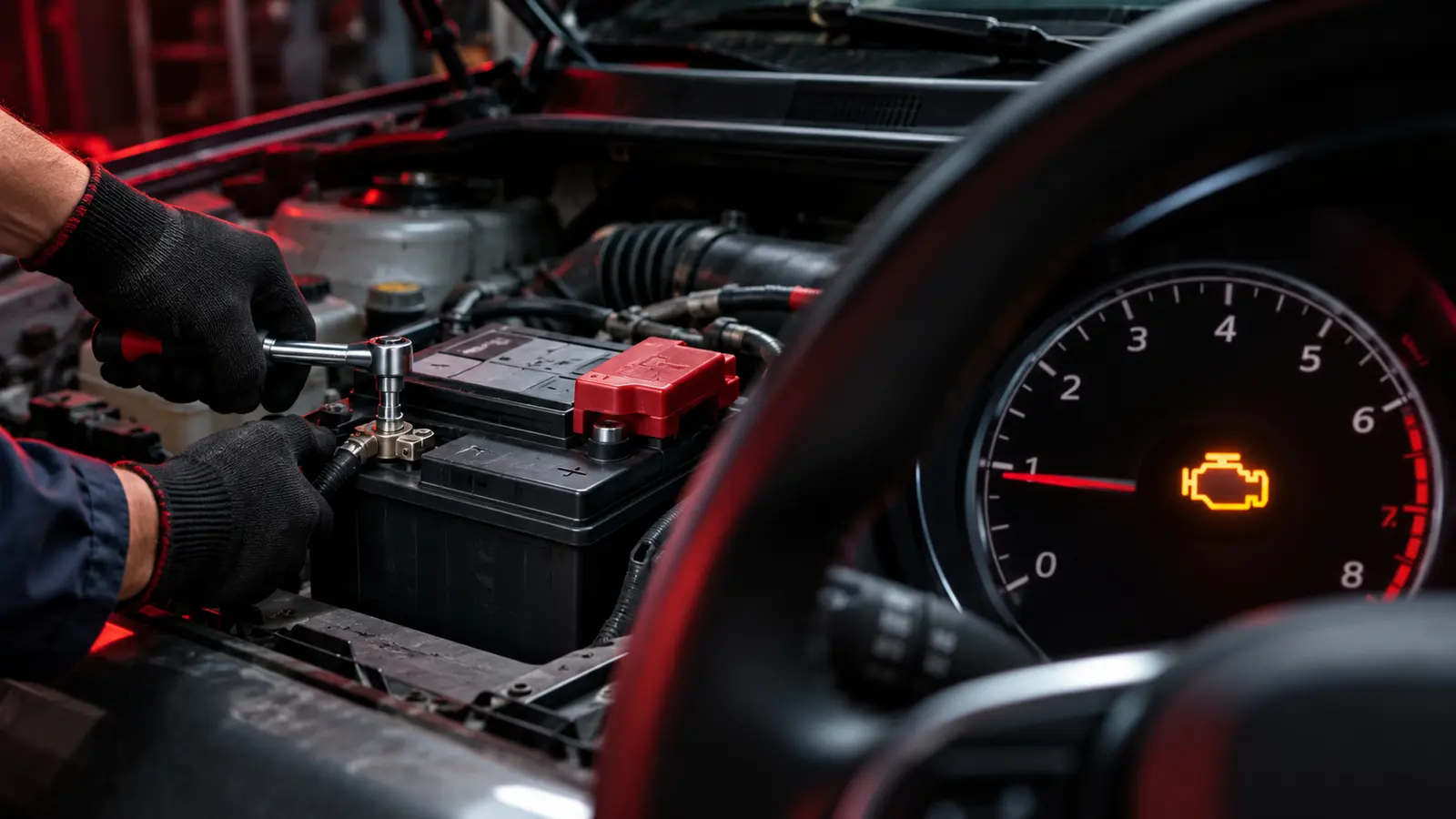
Check Engine Light On After a Battery Change: Why
Quick answer
Low voltage before or during a battery change can set fault codes, and some cars need the new battery registered or idle relearned. A loose terminal is another simple cause.
- Topic
- Warning Lights
- Sections
- 5
- Reading time
- 1 min
- Applies to
- All regions
If the check engine light comes on after a battery change, the cause is often harmless: low voltage before the change set codes, the ECU lost learned settings, or the car needs the new battery registered. A loose terminal clamp or the wrong battery type are other simple causes.
Is it safe to drive?
If the car drives normally and the light is steady, yes. Read the codes soon. A flashing light means a misfire: slow down and stop when safe.
Common causes
| Cause | Clue |
|---|---|
| Codes from low voltage | Several unrelated codes, often communication faults |
| Lost idle or throttle adaptations | Rough or high idle after the change |
| Battery not registered | Charging or start-stop warnings |
| Loose clamp | Flickering lights, intermittent faults |
| Wrong battery type | Start-stop warnings |
What to do
- Check both clamps are tight.
- Read and note the codes, then clear them with a scan tool.
- Drive normally for a few trips to let adaptations relearn.
- Register the battery if your car requires it (often needs a scan tool).
- Do window and steering relearns if the handbook says so.
Avoiding this next time
Use a memory saver when changing the battery, and fit the exact battery type specified.
Related guides
Frequently asked questions
Will the light go off by itself?
Some codes clear after several drives if the cause is gone. Reading them is quicker and safer.
What is battery registration?
Some cars must be told a new battery was fitted, so the charging system manages it correctly.
Tools that can help
Need a mechanic?
Find rated garages near you by city, ZIP code or postcode, with directions.
About this guide
Written by Editorial Team using manufacturer documentation, government road-safety guidance and motoring-organisation advice. It explains likely causes and safe checks. It is not a diagnosis. How we write and check guides.
More warning lights guides
 Warning Lights
Car Dashboard Warning Lights: The Complete Guide to Colours, Meanings and What to Do
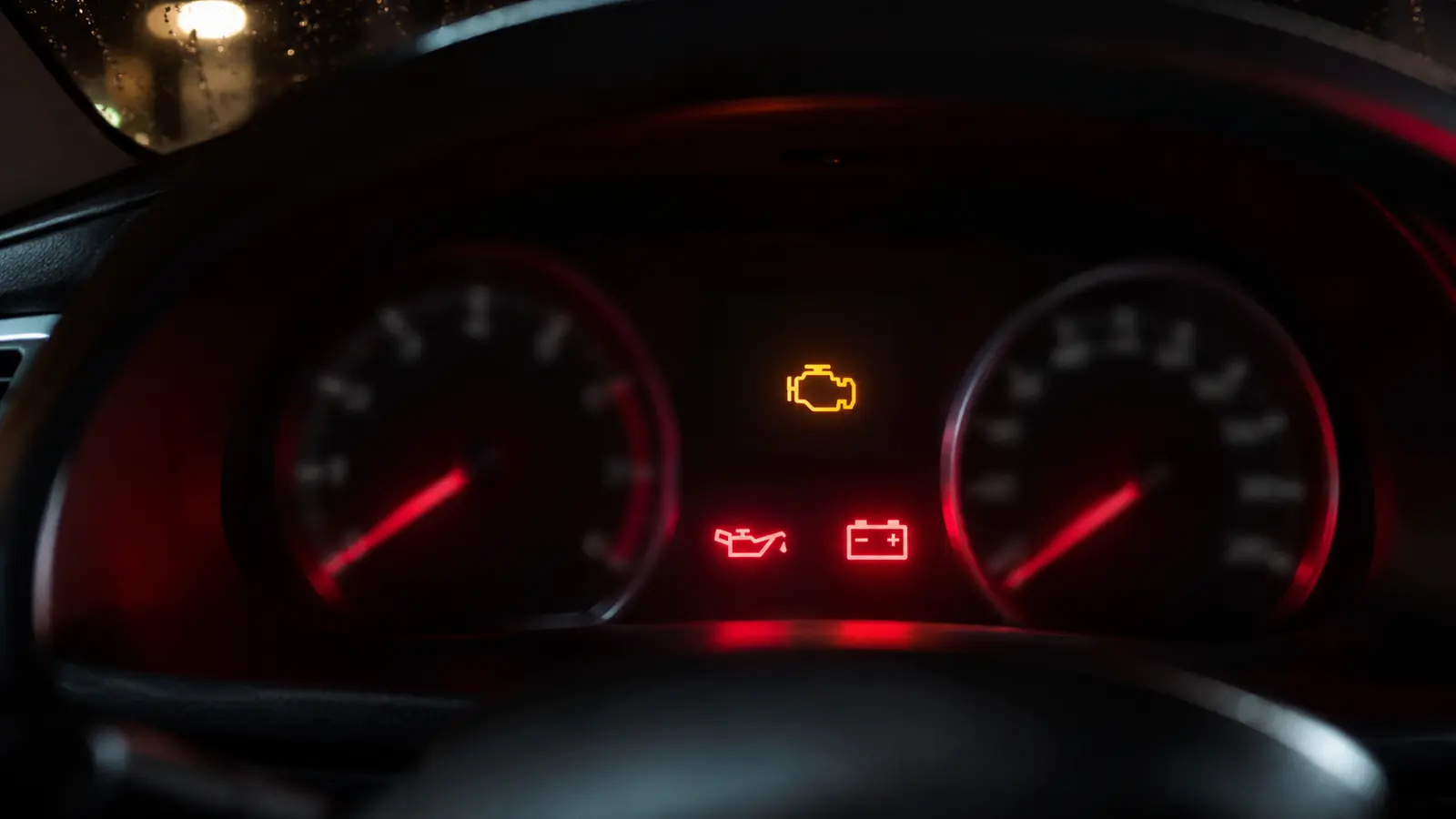
Dashboard lights follow a simple colour logic: red means stop or act now, amber means check soon, green or blue means a system is on. This guide explains the most important warnings, what a flashing check engine light means, and how to read fault codes.
Updated November 22, 2026Read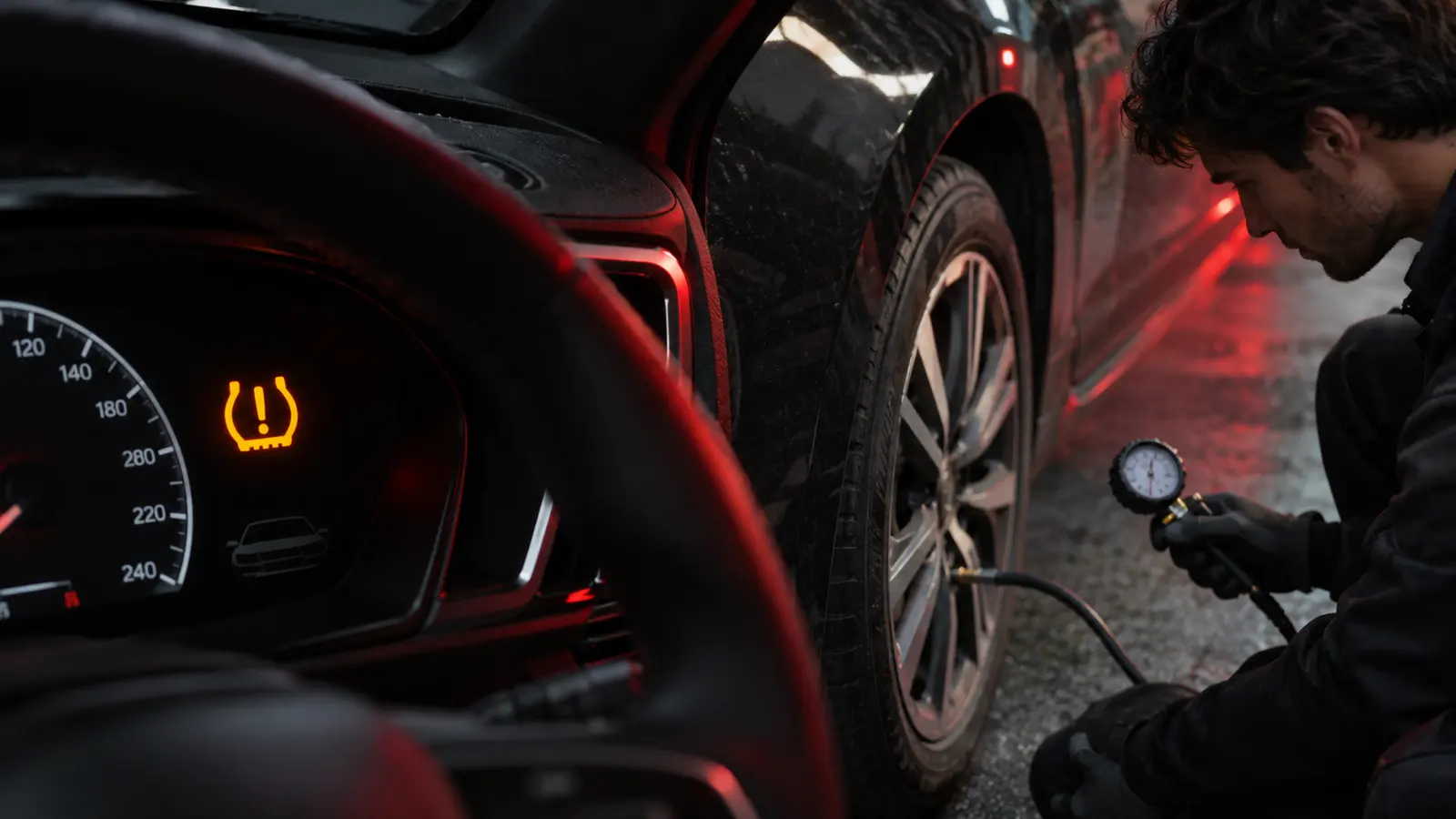 Warning Lights
Exclamation Mark Warning Light: What It Means
An exclamation mark on the dashboard means different things depending on its shape and colour: inside a horseshoe tyre shape it's low tyre pressure; inside a circle (often red) it's the brake system; inside a triangle it's a general warning with a message.
Updated November 22, 2026ReadWarning LightsABS and Traction Control Lights On Together: Why
ABS and traction control share the same wheel-speed sensors and hydraulic unit, so a single fault, often a wheel-speed sensor or its wiring, turns both lights on.
Updated November 22, 2026Read