
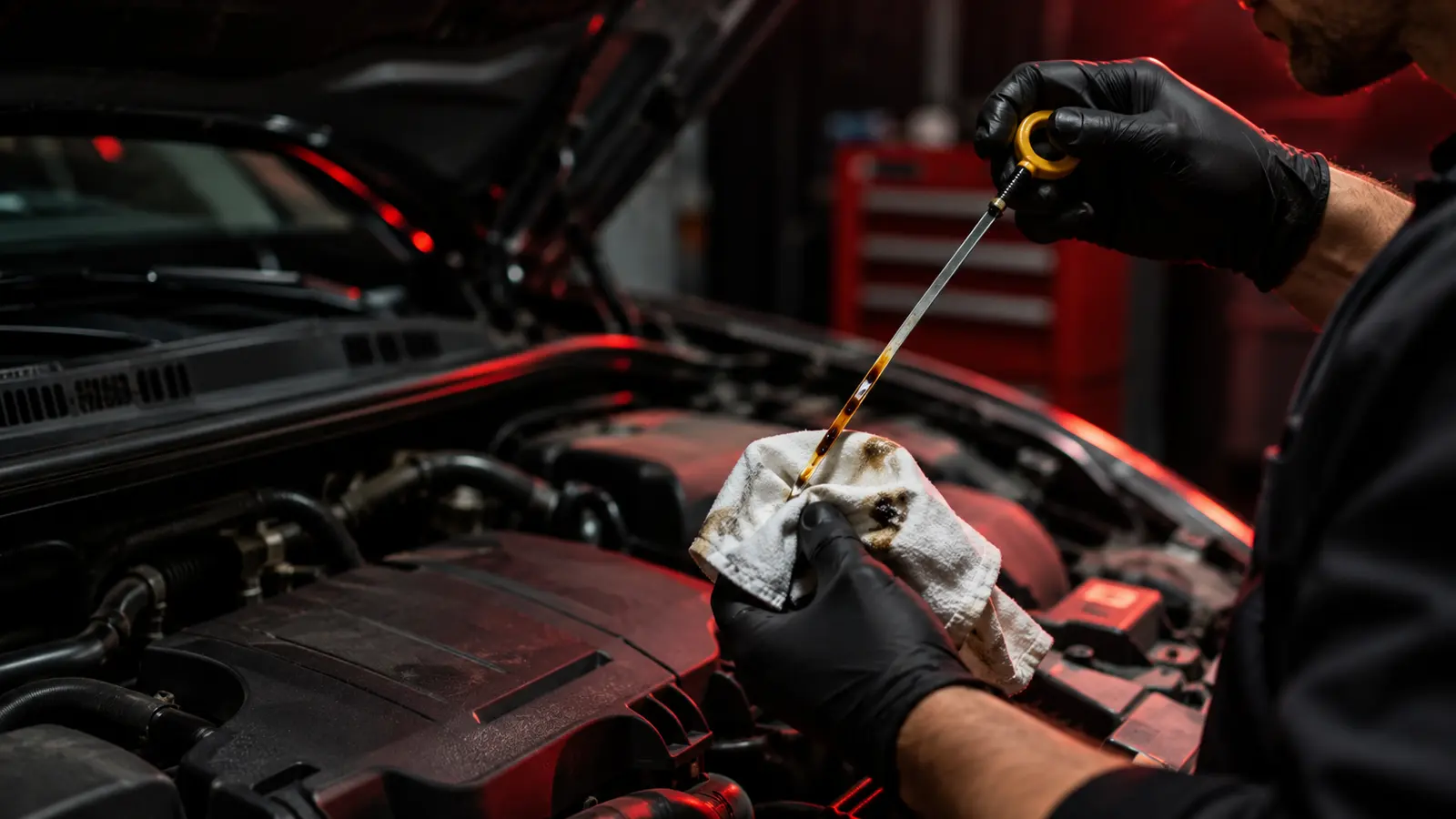
How Often Should You Change Your Oil?
Quick answer
Follow your handbook. As a rough guide, most modern cars need fresh oil every 5,000–10,000 miles (8,000–16,000 km) or once a year, sooner for short trips, towing or dusty roads.
- Topic
- Servicing & Maintenance
- Sections
- 10
- Reading time
- 2 min
- Applies to
- All regions
The right answer is whatever your handbook says, but as a rough guide most modern cars need an oil and filter change every 5,000–10,000 miles (8,000–16,000 km) or once a year, whichever comes first. Many cars with full synthetic oil and an oil-life monitor can go longer. Short trips, towing and extreme temperatures call for shorter intervals.
Is a late oil change dangerous?
Going a little over isn't an emergency. Running far beyond the interval lets the oil break down and sludge build up, which wears the engine and can damage turbochargers and timing chains.
Typical intervals at a glance
| Situation | Typical range (check handbook) |
|---|---|
| Modern car, full synthetic, mixed driving | 7,500–10,000 miles or 1 year |
| Car with oil-life monitor | When the monitor says, max 1 year |
| Conventional oil, older engine | 3,000–5,000 miles |
| Severe service (short trips, towing, dust) | Shorter interval from handbook |
| Very low mileage | At least once a year |
Check these in order
- Find the service schedule in the handbook or app for your exact engine.
- Check whether your driving counts as severe: mostly short trips, cold climate, towing, dusty roads.
- Use the specified oil grade (for example 0W-20 or 5W-30) and approval.
- Check the level monthly, whatever the interval.
Why oil needs changing
Oil lubricates, cools and cleans. Over time heat breaks it down, additives wear out, and it collects soot, fuel and moisture. The filter also fills up.
Synthetic vs conventional
Full synthetic oil resists breakdown better, especially at high temperatures, which is why many modern engines require it. It doesn't mean you can skip changes.
What a garage does at an oil service
They drain the old oil, replace the filter and drain plug washer, refill with the correct grade and quantity, reset the service indicator, and usually check fluids, tyres and lights.
What affects the cost
Oil type and quantity, the filter, and labour. Full synthetic costs more. Some engines take a lot of oil.
How to prevent problems between changes
- Check the dipstick monthly and top up with the correct grade.
- Watch for the oil pressure warning light. Red means stop.
Regional notes
Distances in Canada, Australia and New Zealand are in kilometres. In the UK, many cars follow a fixed annual service or a variable "long-life" schedule set by the maker.
Related problems
Frequently asked questions
Is the 3,000-mile oil change still necessary?
For most modern cars and oils, no. It came from older engines and oils. Use the handbook interval or the oil-life monitor.
Should I change oil once a year even if I don't drive much?
Usually yes. Oil ages and collects moisture and fuel even when mileage is low, and most makers specify a time limit as well as a distance.
What is severe service?
Short trips, extreme heat or cold, towing, dusty roads and lots of idling. Many handbooks give a shorter interval for these conditions.
Tools that can help
How the parts involved work
Need a mechanic?
Find rated garages near you by city, ZIP code or postcode, with directions.
About this guide
Written by Editorial Team using manufacturer documentation, government road-safety guidance and motoring-organisation advice. It explains likely causes and safe checks. It is not a diagnosis. How we write and check guides.
More servicing & maintenance guides
Servicing & MaintenanceEngine Oil: The Complete Guide to Grades, Types, Checks and Changes
Engine oil lubricates, cools and cleans the engine. This guide explains what the numbers in 5W-30 mean, API and ACEA specifications, synthetic vs conventional oil, how to check the level, when to change it, and what leaks, smoke and warning lights are telling you.
Updated November 22, 2026Read Servicing & Maintenance
Car Leaking Oil After an Oil Change: Why
Oil drips right after an oil change are usually from the job itself: a filter not tightened or with the old gasket stuck on, a drain plug without a new washer, overfilling, or oil spilled during the change that is now dripping off.
Updated November 22, 2026Read Servicing & Maintenance
Signs Your Car Needs a Mechanic
Red warning lights, a soft brake pedal, steam, a strong fuel smell, new noises, leaks, vibration and changes in steering or braking are signs your car needs professional attention.
Updated November 22, 2026Read