
Car Won't Start After Getting Gas: Why It Happens
Part of: Car Won't Start: Find the Cause
Quick answer
Hard starting straight after filling up is a classic sign of a stuck-open EVAP purge valve flooding the engine with fuel vapour. Wrong fuel and a weak battery are other causes.
- Topic
- Starting & Battery
- Sections
- 9
- Reading time
- 2 min
- Applies to
- United States
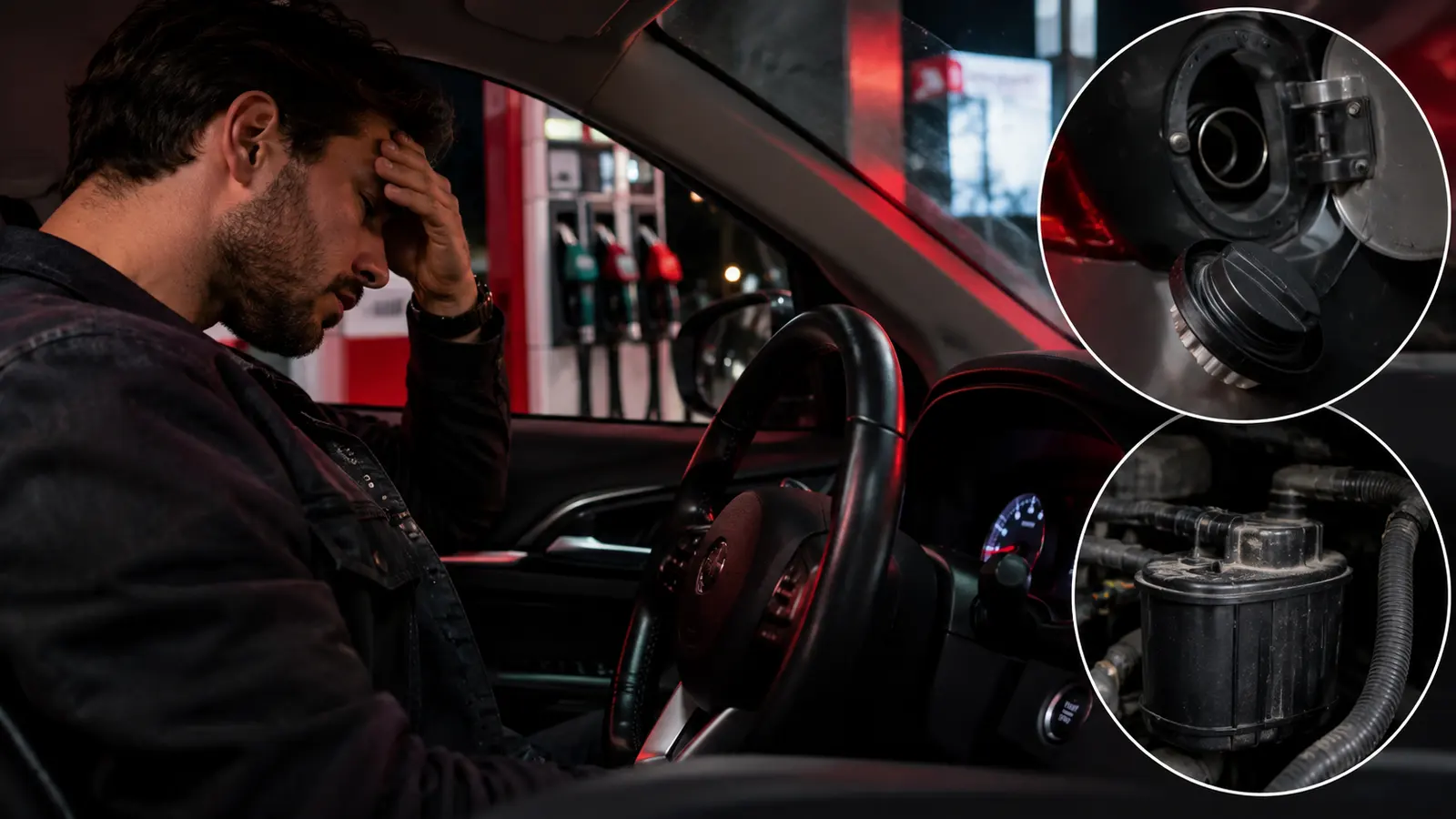
If your car won't start, or starts and stalls, right after you get gas, the most likely cause is the EVAP purge valve stuck open. The evaporative emissions (EVAP) system stores fuel vapour in a charcoal canister. When the purge valve sticks open, refuelling floods the engine with vapour and the mixture is too rich to fire.
Is it safe to drive?
If it starts after a few seconds of cranking and then runs normally, it's usually safe to drive to a shop. If you smell strong raw fuel or see a leak at the pump, don't start it.
Causes at a glance
| Cause | Typical clue |
|---|---|
| Stuck-open EVAP purge valve | Long crank, rough idle only after refuelling; codes like P0496 or P0441 |
| Saturated charcoal canister | Fuel smell; often after habitual topping off |
| Weak battery | Slow crank at any time, worse after a stop |
| Wrong fuel | Problem started straight after a different pump |
| Loose gas cap | Check engine light and codes like P0455 or P0457 |
Check these in order
- Try holding the accelerator halfway while cranking (on cars where the handbook allows it). Extra air can help a flooded engine start.
- Check the gas cap is clicked tight.
- Read the codes. P0496 (excess purge flow) strongly points to the purge valve. Use our OBD2 code lookup.
- Note whether it happens every fill-up. Consistent timing is typical of the purge valve.
Causes explained
EVAP purge valve stuck open
The purge valve should only open when the engine is warm and running. A valve stuck open lets vapour pour into the intake. Many owners first notice it only after refuelling, because that is when the canister is fullest.
Saturated charcoal canister
The canister is designed for vapour, not liquid fuel. Topping off after the nozzle clicks can push liquid into it, ruining the charcoal and causing the same symptoms.
Wrong fuel
If the problem started immediately after using a different pump or fuel type, misfuelling is possible. Don't keep cranking.
Coincidence: a weak battery
Sometimes the car would have struggled anyway. If cranking is slow, test the battery first.
What a mechanic will do
They will read codes, run an EVAP system test with a scan tool, and check whether the purge valve holds vacuum when it should be closed. Smoke testing finds leaks in the EVAP lines.
What affects the cost
A purge valve is usually a straightforward part. A saturated canister costs more. Misfuelling costs depend on whether the engine was run.
How to prevent it
- Stop filling when the pump clicks off the first time.
- Tighten the gas cap until it clicks.
- Don't ignore EVAP codes. They are cheap to fix early.
Regional notes
In the UK and Australia this is the same fault, usually described as the car "struggling to start after filling up with petrol". EVAP systems are fitted to modern petrol cars in all these markets.
Related problems
Frequently asked questions
Why does my car only struggle to start right after filling up?
Refuelling pushes a lot of fuel vapour into the EVAP canister. If the purge valve is stuck open, that vapour floods the intake at start-up, making the mixture too rich to fire easily.
Can overfilling the tank cause this?
Topping off after the pump clicks can push liquid fuel into the EVAP canister and damage it, which can lead to hard starting and fuel smells.
What if I put the wrong fuel in?
Don't start the engine. Diesel in a petrol car, or petrol in a diesel, needs the tank drained. Call for roadside help.
Tools that can help
Need a mechanic?
Find rated garages near you by city, ZIP code or postcode, with directions.
About this guide
Written by Editorial Team using manufacturer documentation, government road-safety guidance and motoring-organisation advice. It explains likely causes and safe checks. It is not a diagnosis. How we write and check guides.
More starting & battery guides
 Starting & Battery
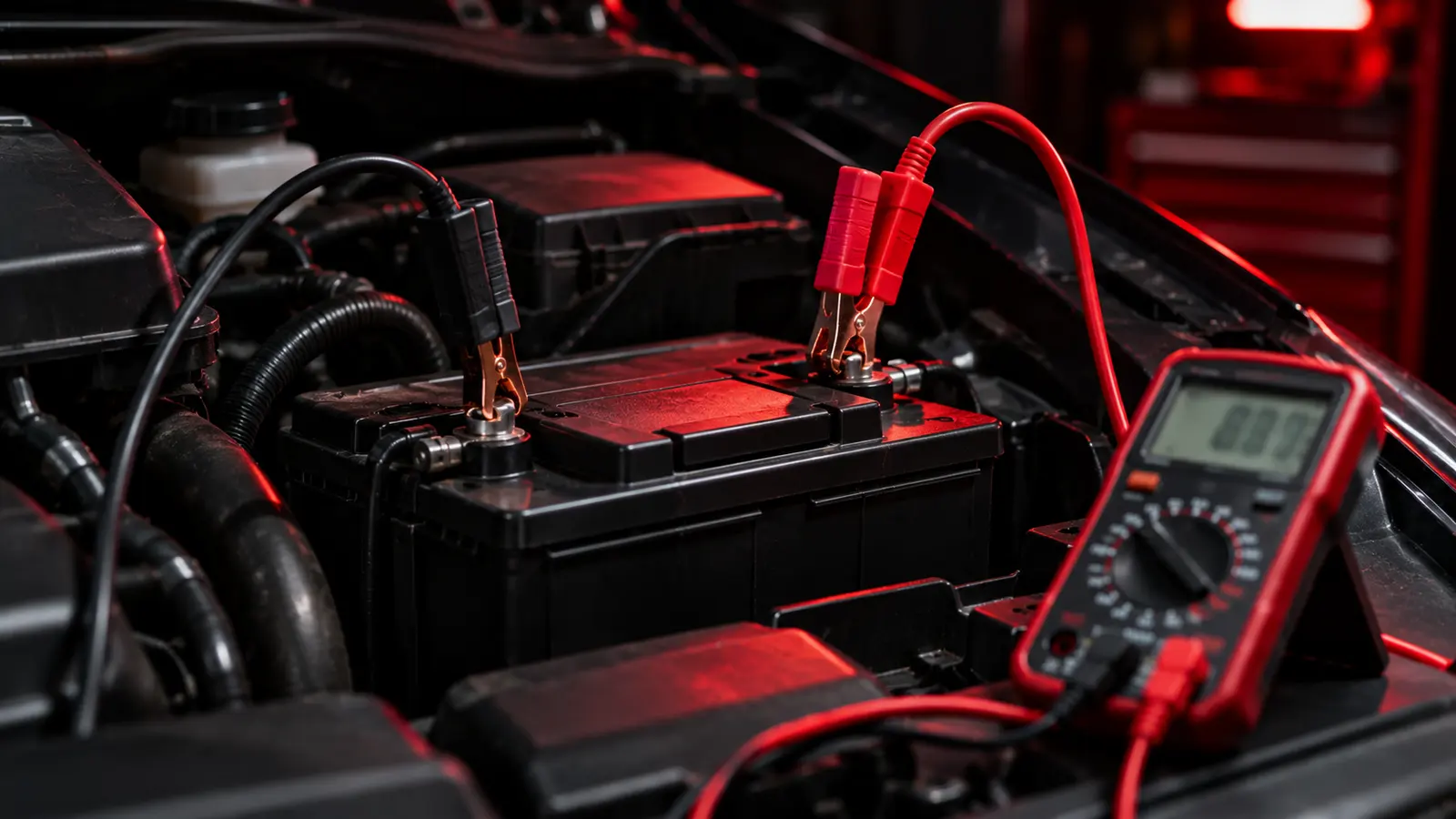
Car Batteries: The Complete Guide to Types, Testing, Care and Replacement
A 12-volt car battery starts the engine and steadies the electrics; the alternator then keeps it charged. This guide covers how batteries work, the main types, what the ratings mean, how to test and charge one, why they fail and how to replace one safely.
Updated November 22, 2026Read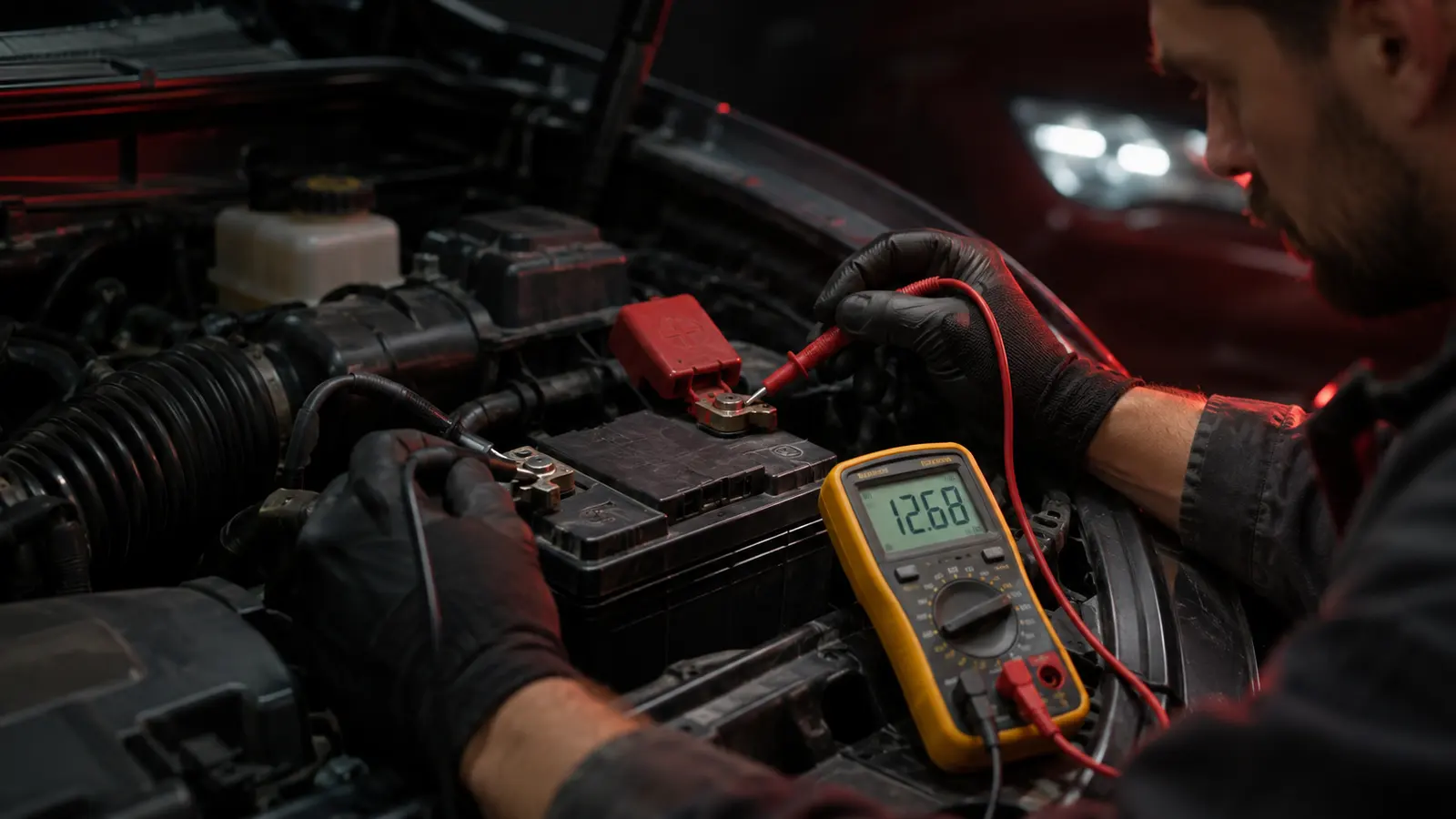 Starting & Battery
Car Battery Voltage Chart: What Your Reading Means
A fully charged 12-volt car battery rests at about 12.6 volts. With the engine running, the alternator should hold the system between about 13.5 and 14.5 volts. Readings well below those point to a flat battery or a charging fault.
Updated November 22, 2026Read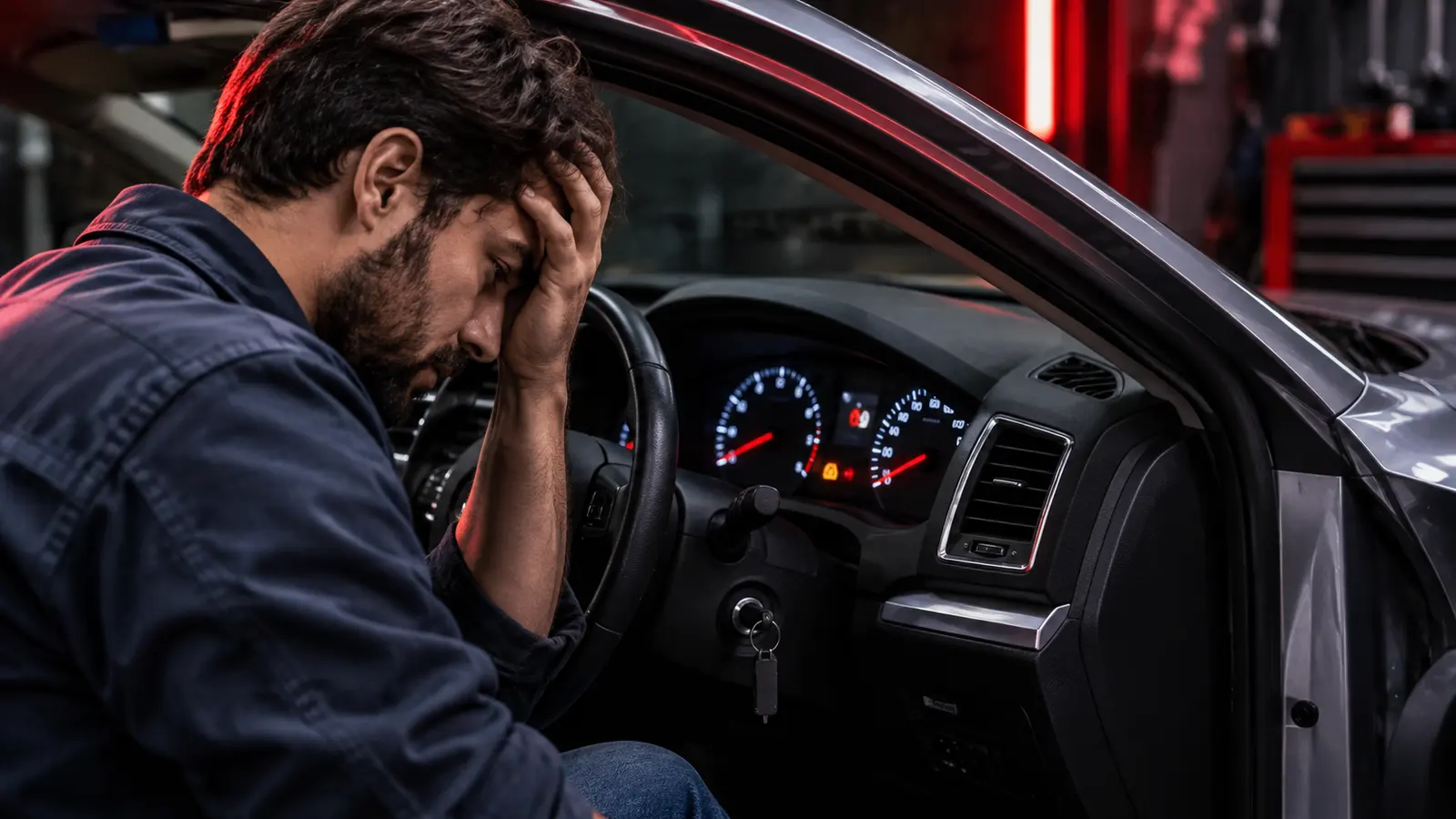 Starting & Battery
Car Won't Start but the Lights Come On: What It Means
Working lights mean the battery has some charge — not that it can crank the engine. The sound the car makes points to the cause.
Updated November 22, 2026Read