
Quick answer
A sudden rise in fuel use often comes from low tyre pressure, a dragging brake, a faulty oxygen or temperature sensor, a thermostat stuck open, or simply colder weather and shorter trips.
- Topic
- Engine Problems
- Sections
- 6
- Reading time
- 1 min
- Applies to
- All regions
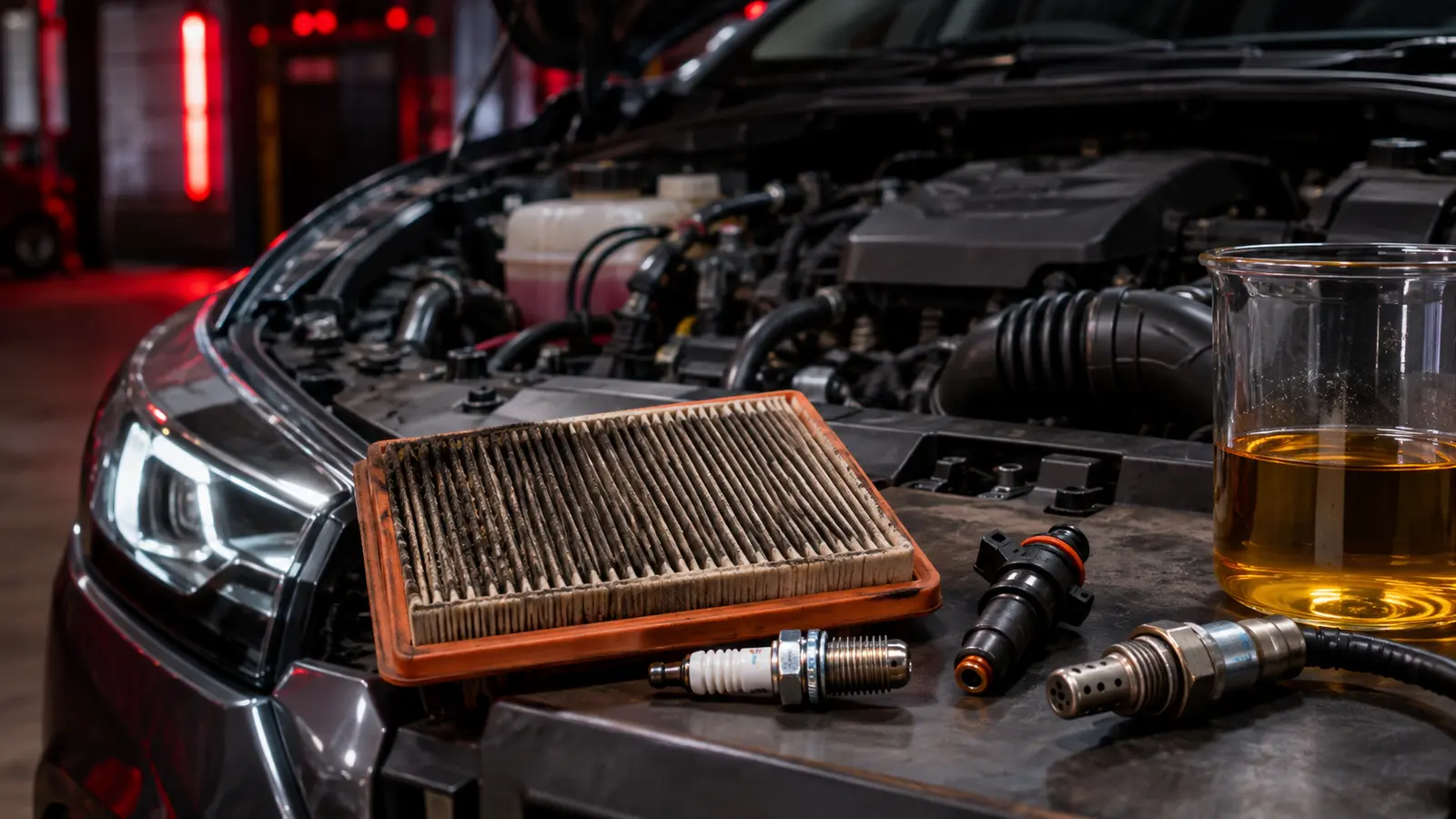
If your car is using more fuel than usual, start with the simple causes: low tyre pressure, a dragging brake, extra weight or a roof rack, and colder weather or shorter trips. Mechanical causes include a faulty oxygen or coolant temperature sensor, a thermostat stuck open, misfires and a clogged air filter.
Causes at a glance
| Clue | Likely cause |
|---|---|
| Car pulls, one wheel hot | Dragging brake |
| Tyres look low | Low tyre pressure |
| Check engine light | Sensor fault or misfire |
| Temperature gauge stays low | Thermostat stuck open |
| Only in winter | Cold weather, short trips |
| Roof box fitted | Aerodynamic drag |
Check these in order
- Measure economy properly over a full tank with our calculator.
- Check tyre pressures.
- Scan for codes.
- Feel for hot wheels after a drive.
- Review driving changes: new route, more traffic, more idling.
Is it a problem?
A gradual change with the seasons is normal. A sudden drop of more than a few percent with no change in driving is worth investigating, especially with a warning light, a smell or a car that pulls.
Normal reasons fuel use rises
- Winter fuel blends and cold starts
- More short trips or heavy traffic
- Roof boxes, bike racks or towing
- New tyres with deeper tread or a different design
What a mechanic will do
They'll scan for codes, check fuel trims and sensor data, inspect brakes and test the thermostat.
Related guides
Frequently asked questions
Does winter reduce fuel economy?
Yes. Cold engines, winter fuel blends, heaters and short trips all increase fuel use.
Can a check engine light affect economy?
Often. Many faults that turn on the light, such as sensor problems, make the engine run rich.
How do I measure fuel economy accurately?
Fill the tank, reset the trip, drive normally, refill and divide distance by fuel used. Our calculator does the maths.
Tools that can help
How the parts involved work
Need a mechanic?
Find rated garages near you by city, ZIP code or postcode, with directions.
About this guide
Written by Editorial Team using manufacturer documentation, government road-safety guidance and motoring-organisation advice. It explains likely causes and safe checks. It is not a diagnosis. How we write and check guides.
More engine problems guides
 Engine Problems
Car Exhaust and Emissions: The Complete Guide to Catalytic Converters, Sensors and Smoke
The exhaust system carries burnt gases away, cleans them with a catalytic converter (and on diesels a DPF and SCR), and quietens the engine. This guide explains each part, what different smoke colours and noises mean, catalytic converter theft, and emissions tests.
Updated November 22, 2026Read Engine Problems
Engine Cooling System: The Complete Guide to Coolant, Overheating and Repairs
The cooling system carries heat away from the engine using coolant, a water pump, a thermostat, a radiator and fans, all under pressure so coolant can run above 100 °C. This guide explains each part, why engines overheat, how to spot leaks and how to check coolant safely.
Updated November 22, 2026Read Engine Problems
Diesel Engines: The Complete Guide to How They Work, DPF, AdBlue and Care
Diesel engines ignite fuel by compression rather than a spark. Modern diesels add glow plugs, a particulate filter, AdBlue and EGR to start reliably and cut emissions. This guide explains each system, the warning lights and how to keep a diesel healthy.
Updated November 22, 2026Read