
Quick answer
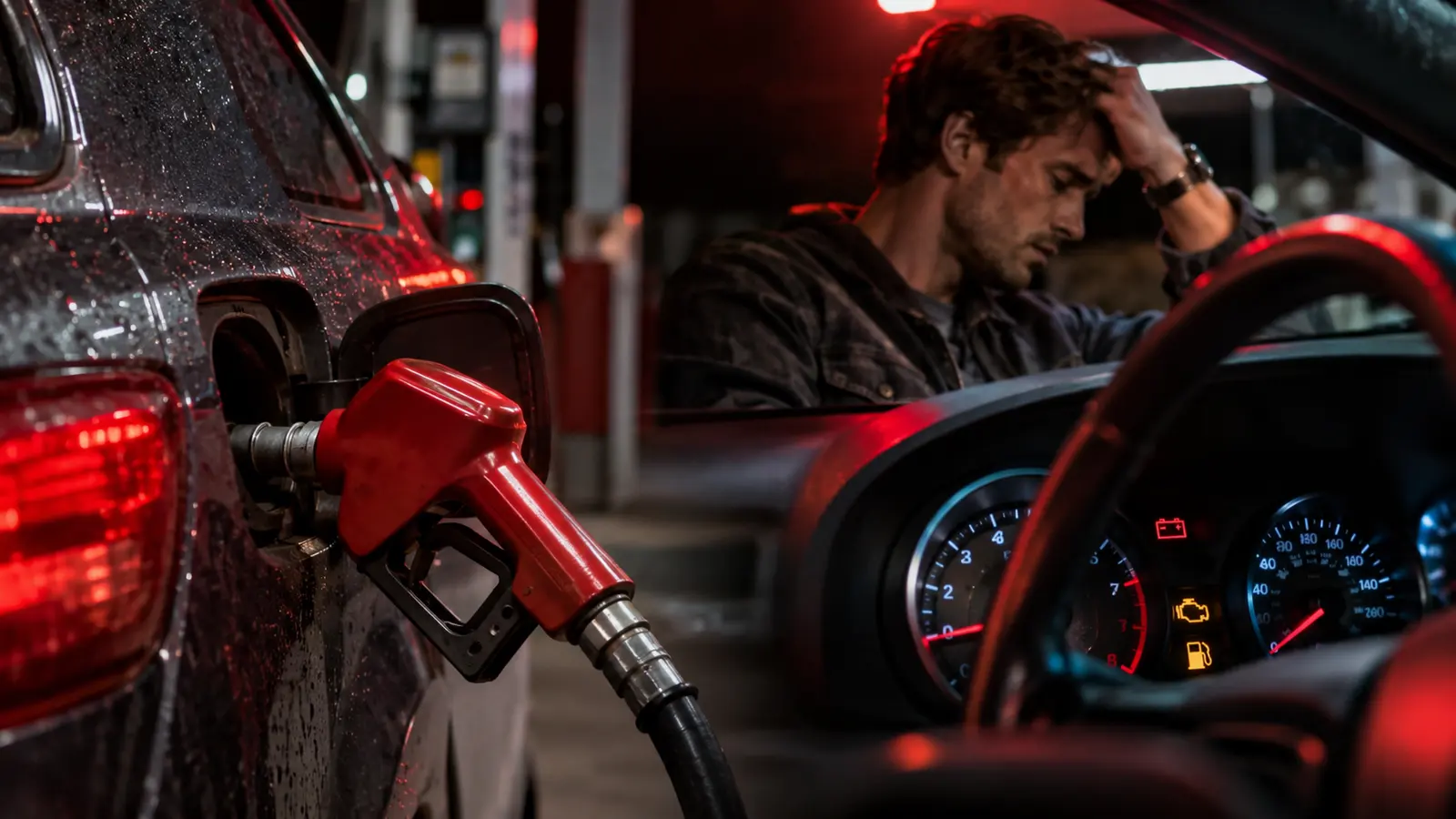
Most cars will run without a fuel cap, but fuel vapour escapes, dirt and water can get in, and the evaporative system may set the check engine light. Fit a correct replacement cap as soon as you can.
- Topic
- Engine Problems
- Sections
- 6
- Reading time
- 1 min
- Applies to
- All regions
Driving without a fuel cap (gas cap) is usually possible for a short time: the engine doesn't need the cap to run. But fuel vapour escapes, dirt or water can get in, and on many cars the evaporative emissions system notices the leak and turns on the check engine light. Fit a correct replacement as soon as you can.
Is it safe?
For a short drive, generally yes, but avoid it for long. Fuel vapour is flammable and polluting, and contamination can harm the fuel system. Never smoke or use naked flames near an open filler.
What happens without a cap
| Effect | Why |
|---|---|
| Fuel smell | Vapour escaping from the filler neck |
| Check engine light | Evaporative system detects a leak |
| Contamination risk | Dirt and water can enter the tank |
| Minor fuel loss | Through evaporation, especially in heat |
First: is it really missing?
Many newer cars have a capless filler with a spring-loaded flap. If you can't find a cap, check your owner's manual before buying one.
Check engine light after refuelling
A loose or missing cap is one of the most common causes of an evaporative-system code after refuelling. See check engine light after getting gas. Once a correct cap is fitted, the light usually clears after several drive cycles.
What to do now
- Cover the filler temporarily with a clean, fuel-safe cover if you must drive.
- Buy the correct cap for your car (fit matters for the seal).
- Tighten until it clicks.
- Read codes if the light stays on: how to use an OBD2 scanner.
Related guides
Frequently asked questions
Will it trigger the check engine light?
Often, on cars with evaporative leak monitoring. The light usually clears after a correct cap is fitted and a few drives.
Does my car even have a cap?
Many newer cars use a capless filler with a sprung flap. Check before assuming it's missing.
Tools that can help
Need a mechanic?
Find rated garages near you by city, ZIP code or postcode, with directions.
About this guide
Written by Editorial Team using manufacturer documentation, government road-safety guidance and motoring-organisation advice. It explains likely causes and safe checks. It is not a diagnosis. How we write and check guides.
More engine problems guides
 Engine Problems
Car Exhaust and Emissions: The Complete Guide to Catalytic Converters, Sensors and Smoke
The exhaust system carries burnt gases away, cleans them with a catalytic converter (and on diesels a DPF and SCR), and quietens the engine. This guide explains each part, what different smoke colours and noises mean, catalytic converter theft, and emissions tests.
Updated November 22, 2026Read Engine Problems
Engine Cooling System: The Complete Guide to Coolant, Overheating and Repairs
The cooling system carries heat away from the engine using coolant, a water pump, a thermostat, a radiator and fans, all under pressure so coolant can run above 100 °C. This guide explains each part, why engines overheat, how to spot leaks and how to check coolant safely.
Updated November 22, 2026Read Engine Problems
Diesel Engines: The Complete Guide to How They Work, DPF, AdBlue and Care
Diesel engines ignite fuel by compression rather than a spark. Modern diesels add glow plugs, a particulate filter, AdBlue and EGR to start reliably and cut emissions. This guide explains each system, the warning lights and how to keep a diesel healthy.
Updated November 22, 2026Read