
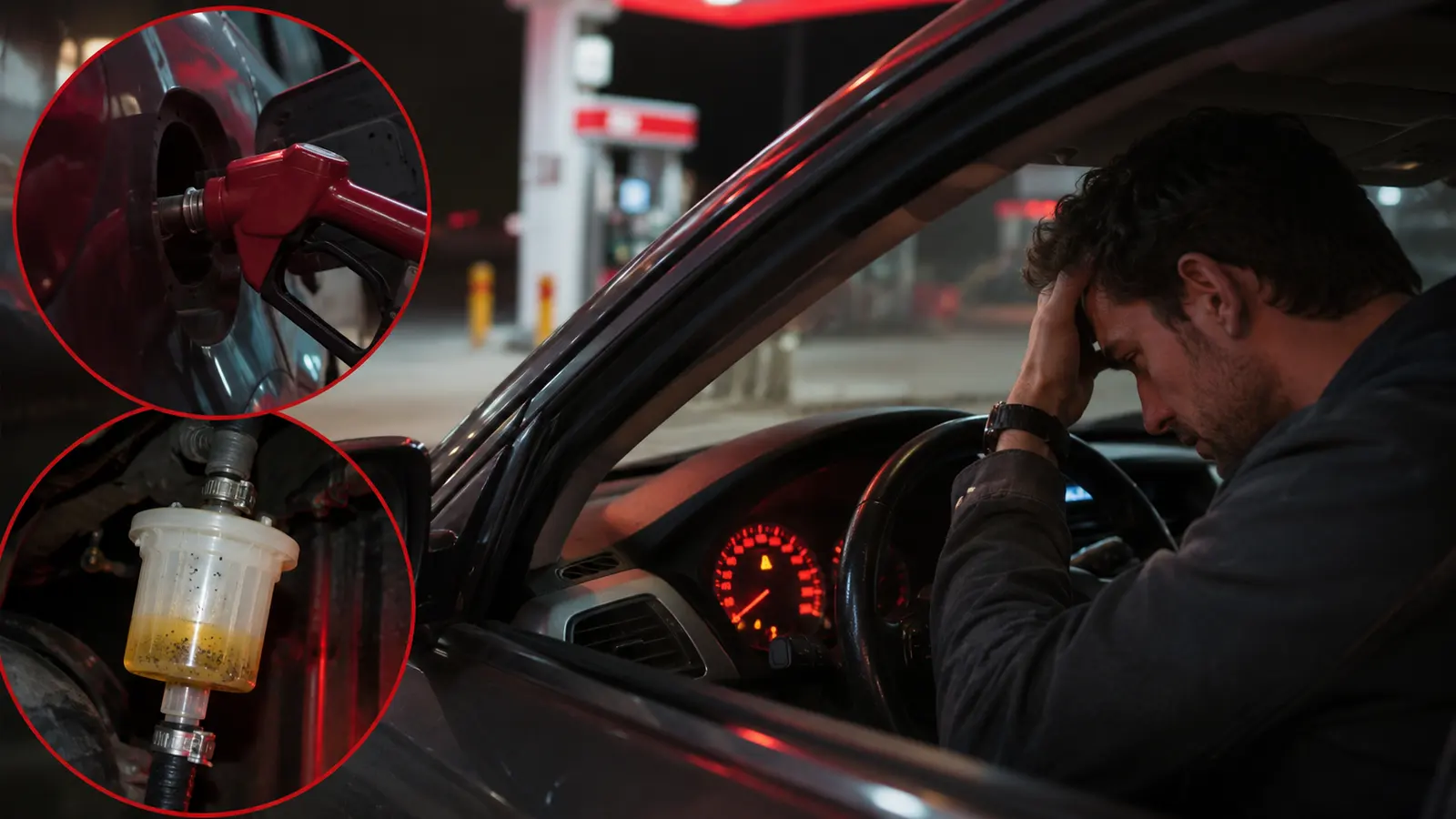
Car Leaking Fuel (Petrol or Diesel): What to Do
Quick answer
A fuel leak is a fire risk. If fuel is pouring or pooling, don't start the engine; keep sparks and flames away and call for help. Common sources are fuel lines, the tank, filter, injector seals and the filler neck.
- Topic
- Engine Problems
- Sections
- 6
- Reading time
- 1 min
- Applies to
- All regions
A car leaking fuel is a fire risk. If petrol or diesel is dripping steadily or pooling under the car, don't start the engine, keep sparks, flames and cigarettes away, and call for help. Common sources include fuel lines and hoses, the fuel tank, the fuel filter, injector seals and the filler neck.
Is it safe to drive?
No, if it's dripping or pooling. A faint smell only after refuelling is different: see car smells like gas.
Where the leak is
| Where you see or smell it | Likely source |
|---|---|
| Under the rear, near the tank | Tank, tank seal or lines |
| Along the underside | Metal or rubber fuel lines |
| Near the filler | Filler neck or cap seal |
| Engine bay, strong smell | Injector seals, fuel rail or filter |
| Only after filling up | Overfill or filler neck |
What to do now
- Switch off and don't restart.
- Move people away and ban smoking or flames.
- Don't try to drive to a garage if it's dripping.
- Call recovery and tell them it's a fuel leak.
Diesel vs petrol
Petrol evaporates quickly and its vapour is highly flammable. Diesel is less volatile but makes roads slippery and still burns. Both need fixing before driving.
What a mechanic will do
They'll lift the car, inspect the tank, lines and connections, check the fuel filter and fuel pump seals, and replace the damaged part. Fuel work needs proper precautions; it isn't a DIY job.
Related guides
Frequently asked questions
How can I tell fuel from other fluids?
Fuel smells strongly of petrol or diesel, is thin and evaporates quickly (petrol) or feels oily (diesel).
Can I drive to a garage?
Not if it's dripping steadily or pooling. Call for recovery.
Tools that can help
Need a mechanic?
Find rated garages near you by city, ZIP code or postcode, with directions.
About this guide
Written by Editorial Team using manufacturer documentation, government road-safety guidance and motoring-organisation advice. It explains likely causes and safe checks. It is not a diagnosis. How we write and check guides.
More engine problems guides
 Engine Problems
Car Exhaust and Emissions: The Complete Guide to Catalytic Converters, Sensors and Smoke
The exhaust system carries burnt gases away, cleans them with a catalytic converter (and on diesels a DPF and SCR), and quietens the engine. This guide explains each part, what different smoke colours and noises mean, catalytic converter theft, and emissions tests.
Updated November 22, 2026Read Engine Problems
Engine Cooling System: The Complete Guide to Coolant, Overheating and Repairs
The cooling system carries heat away from the engine using coolant, a water pump, a thermostat, a radiator and fans, all under pressure so coolant can run above 100 °C. This guide explains each part, why engines overheat, how to spot leaks and how to check coolant safely.
Updated November 22, 2026Read Engine Problems
Diesel Engines: The Complete Guide to How They Work, DPF, AdBlue and Care
Diesel engines ignite fuel by compression rather than a spark. Modern diesels add glow plugs, a particulate filter, AdBlue and EGR to start reliably and cut emissions. This guide explains each system, the warning lights and how to keep a diesel healthy.
Updated November 22, 2026Read