
Quick answer
Sputtering at high speed, loss of power uphill, a whine from the fuel tank and a car that cranks but won't start are classic signs of a failing fuel pump.
- Topic
- Engine Problems
- Sections
- 7
- Reading time
- 1 min
- Applies to
- All regions
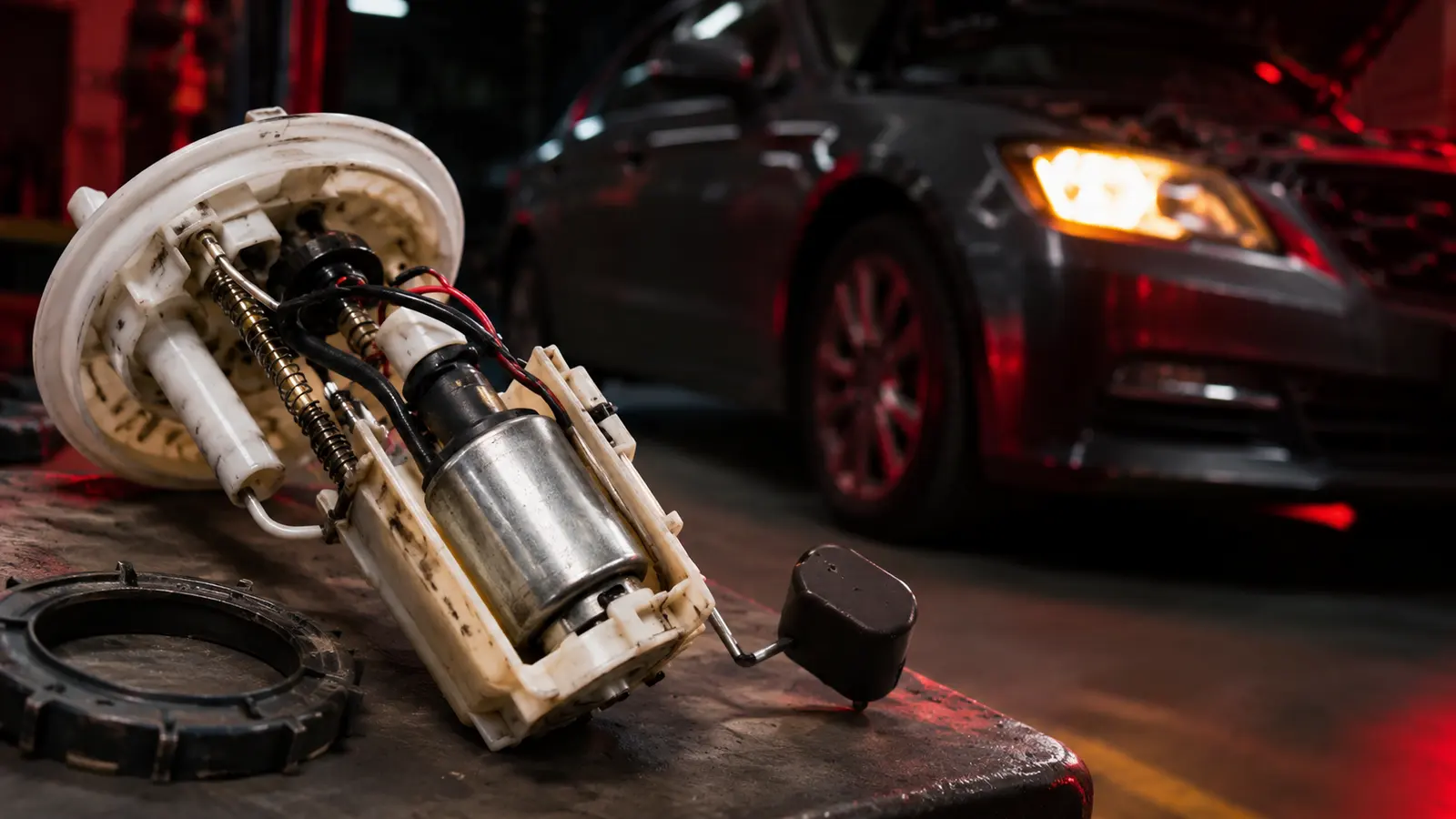
The fuel pump sends fuel from the tank to the engine. Bad fuel pump symptoms include sputtering or surging at high speed, loss of power under load (uphill, towing), a whining noise from the fuel tank, hard starting and a car that cranks but won't start.
Is it safe to drive?
A failing pump can cut out without warning, which is dangerous at speed. Get it checked promptly.
Symptoms at a glance
| Symptom | Why |
|---|---|
| Sputter at high speed | Pressure drops at high demand |
| Power loss uphill or towing | Can't supply enough fuel |
| Whine from rear of car | Worn pump motor |
| Long crank before starting | Pressure bleeds off when parked |
| Cranks, no start, no hum at key-on | Pump, relay or fuse failed |
| Stalls when hot | Pump overheating |
Check these in order
- Listen for the pump hum at key-on.
- Check the fuse and relay.
- Make sure there's enough fuel. Gauges can be wrong.
- Have fuel pressure tested.
What a mechanic will do
They'll test fuel pressure and volume, check the relay circuit and voltage at the pump, and replace the filter if fitted separately.
What affects the cost
In-tank pumps often come as a module. Access varies: some are under the rear seat, others need the tank dropped.
How to prevent it
- Avoid running on very low fuel regularly.
- Replace the fuel filter at the handbook interval if your car has a serviceable one.
Related problems
Frequently asked questions
How can I tell if the fuel pump is working?
On many cars you hear a brief hum from the rear for a couple of seconds when you turn the key to on. No hum can mean a pump, relay or fuse fault.
Does running low on fuel damage the pump?
Fuel cools the in-tank pump. Running very low often can shorten its life.
Is it the pump or the relay?
Check the fuel pump fuse and relay first. They're cheaper and easier to test.
Tools that can help
How the parts involved work
Need a mechanic?
Find rated garages near you by city, ZIP code or postcode, with directions.
About this guide
Written by Editorial Team using manufacturer documentation, government road-safety guidance and motoring-organisation advice. It explains likely causes and safe checks. It is not a diagnosis. How we write and check guides.
More engine problems guides
 Engine Problems
Car Exhaust and Emissions: The Complete Guide to Catalytic Converters, Sensors and Smoke
The exhaust system carries burnt gases away, cleans them with a catalytic converter (and on diesels a DPF and SCR), and quietens the engine. This guide explains each part, what different smoke colours and noises mean, catalytic converter theft, and emissions tests.
Updated November 22, 2026Read Engine Problems
Engine Cooling System: The Complete Guide to Coolant, Overheating and Repairs
The cooling system carries heat away from the engine using coolant, a water pump, a thermostat, a radiator and fans, all under pressure so coolant can run above 100 °C. This guide explains each part, why engines overheat, how to spot leaks and how to check coolant safely.
Updated November 22, 2026Read Engine Problems
Diesel Engines: The Complete Guide to How They Work, DPF, AdBlue and Care
Diesel engines ignite fuel by compression rather than a spark. Modern diesels add glow plugs, a particulate filter, AdBlue and EGR to start reliably and cut emissions. This guide explains each system, the warning lights and how to keep a diesel healthy.
Updated November 22, 2026Read