
Step-by-step DIY
How to Check Coolant (Antifreeze) Strength
With the engine cold, draw a little coolant from the expansion tank with an antifreeze tester (hydrometer) or put a drop on a refractometer. Read the protection temperature against the scale for your coolant type. If protection is weaker than your coldest expected temperature, adjust the mix or replace the coolant.
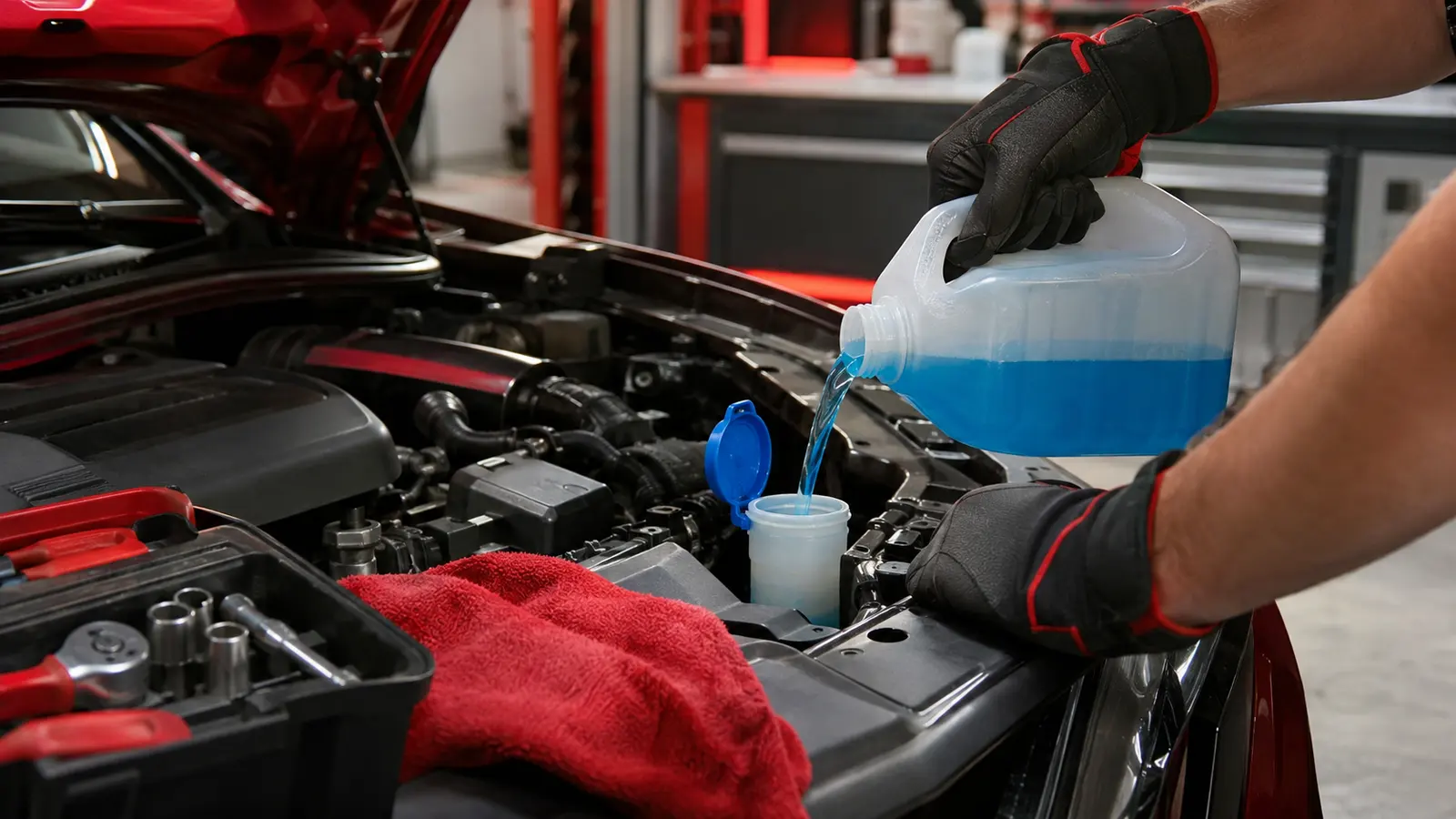
Step by step
- 1
Work cold
Never open a hot cooling system.
- 2
Open the expansion tank
Turn the cap slowly.
- 3
Sample
Draw coolant into the tester or place a drop on the refractometer.
- 4
Read the scale
Use the scale that matches your coolant type.
- 5
Compare with your climate
Protection should exceed your coldest temperatures.
- 6
Correct if needed
Top up with the right concentrate or have it replaced.
Common mistakes to avoid
- Testing hot coolant
- Using the wrong scale for the coolant type
- Topping up with plain water before winter
Not comfortable doing it yourself?
A local garage can do this quickly. Compare nearby options.
Frequently asked questions
How often should I check?
Before each winter, and after any top-ups with water.
Is a cheap float tester accurate?
It gives a rough reading; a refractometer is more precise.
Related guides
General information, not a diagnosis. If a warning light is red, the car drives abnormally or you're unsure, stop safely and have a qualified technician inspect the vehicle.