
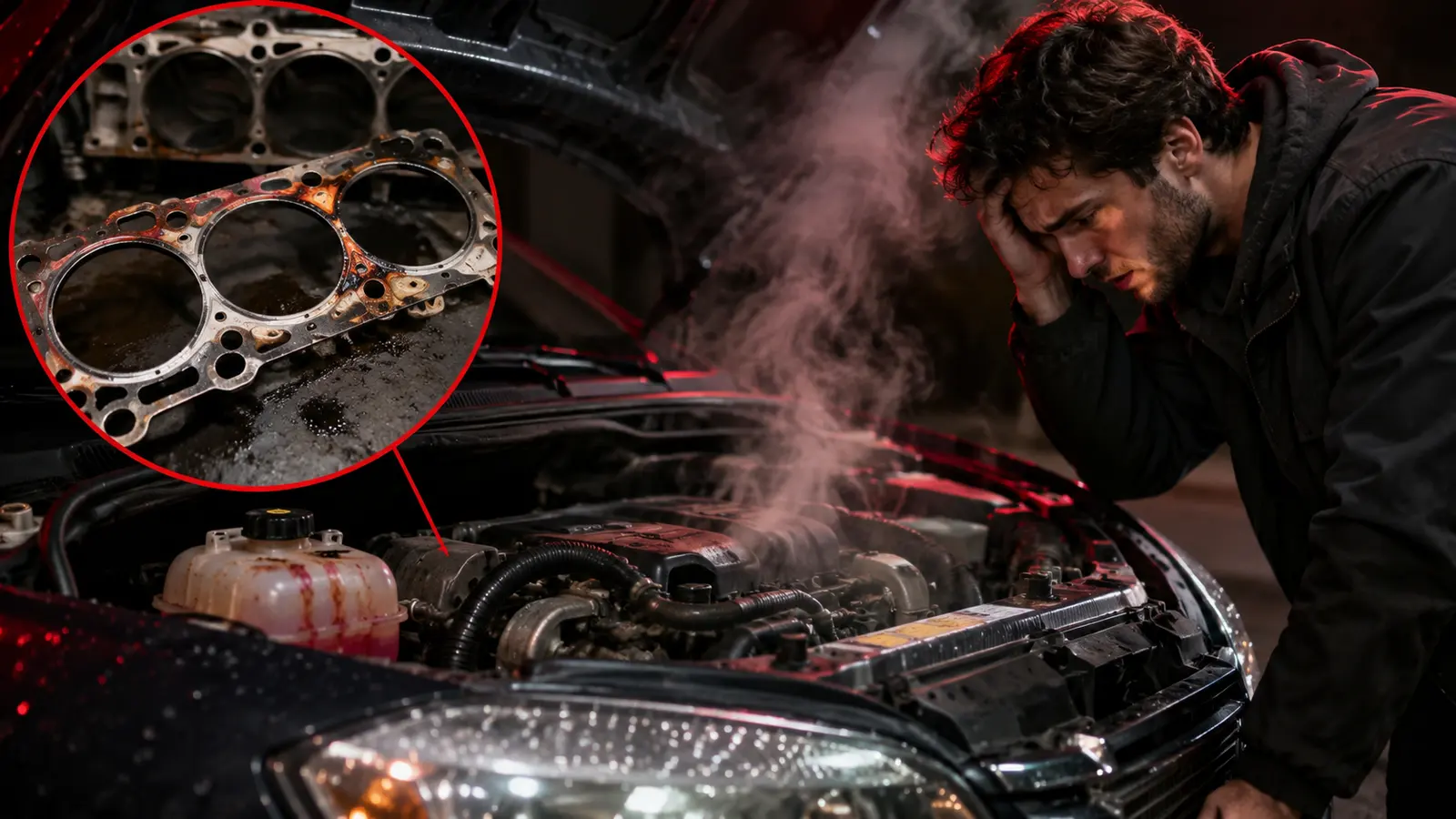
Head Gasket Failure Symptoms
Quick answer
Classic signs are white sweet-smelling exhaust smoke, coolant disappearing with no visible leak, overheating, and bubbles in the coolant tank.
- Topic
- Engine Problems
- Sections
- 8
- Reading time
- 1 min
- Applies to
- All regions
A blown head gasket lets coolant, oil and combustion gases mix where they shouldn't. Classic head gasket failure symptoms are white sweet-smelling exhaust smoke, coolant loss with no visible leak, overheating, bubbles in the coolant tank and sometimes milky oil.
Is it safe to drive?
Not for long. Coolant loss leads to overheating, which makes the damage worse. Get it diagnosed before driving further.
Symptoms at a glance
| Symptom | What's happening |
|---|---|
| White sweet smoke | Coolant burning in a cylinder |
| Coolant level drops, no drips | Coolant being burned or pushed out |
| Bubbles in expansion tank | Combustion gas entering cooling system |
| Overheating, hard top hose | Pressurised cooling system |
| Misfire on one cylinder after sitting | Coolant in cylinder |
| Milky oil on dipstick | Coolant mixing with oil |
Check these in order
- Track coolant level when cold over several days.
- Watch the exhaust after warm-up.
- Look at the expansion tank with the engine running (cap on) for bubbles.
- Check the dipstick for milky oil.
How it's tested
A garage uses a combustion leak (block) test, which detects exhaust gases in the coolant, plus a cooling system pressure test and compression or leak-down tests.
Why head gaskets fail
Overheating warps the head, breaking the seal. Running low on coolant is the usual trigger.
What affects the cost
Labour is the major cost. The head may need machining flat, and on overhead-cam engines the timing belt or chain is disturbed.
How to prevent it
- Never drive while overheating.
- Keep coolant at the right level and strength.
Related problems
Frequently asked questions
Does milky oil always mean a head gasket?
No. Mayonnaise-like residue under the oil cap is often condensation from short trips in cold weather. Milky oil on the dipstick is more concerning.
Do head gasket sealers work?
They can sometimes seal very small leaks temporarily, but they're not a reliable repair.
What causes a head gasket to fail?
Overheating is the most common cause. Age and high cylinder pressures also contribute.
Tools that can help
How the parts involved work
Need a mechanic?
Find rated garages near you by city, ZIP code or postcode, with directions.
About this guide
Written by Editorial Team using manufacturer documentation, government road-safety guidance and motoring-organisation advice. It explains likely causes and safe checks. It is not a diagnosis. How we write and check guides.
More engine problems guides
 Engine Problems
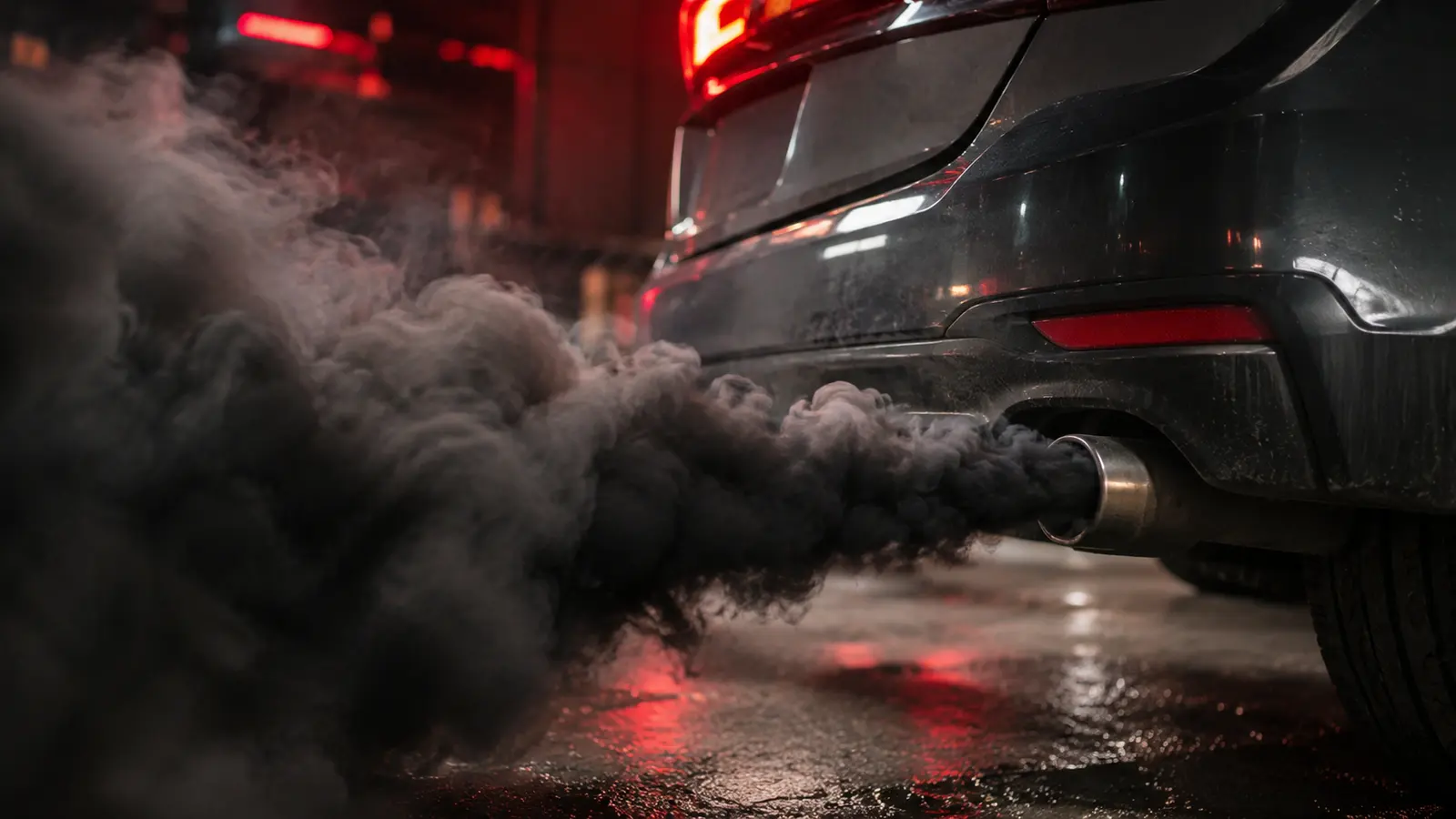
Car Exhaust and Emissions: The Complete Guide to Catalytic Converters, Sensors and Smoke
The exhaust system carries burnt gases away, cleans them with a catalytic converter (and on diesels a DPF and SCR), and quietens the engine. This guide explains each part, what different smoke colours and noises mean, catalytic converter theft, and emissions tests.
Updated November 22, 2026Read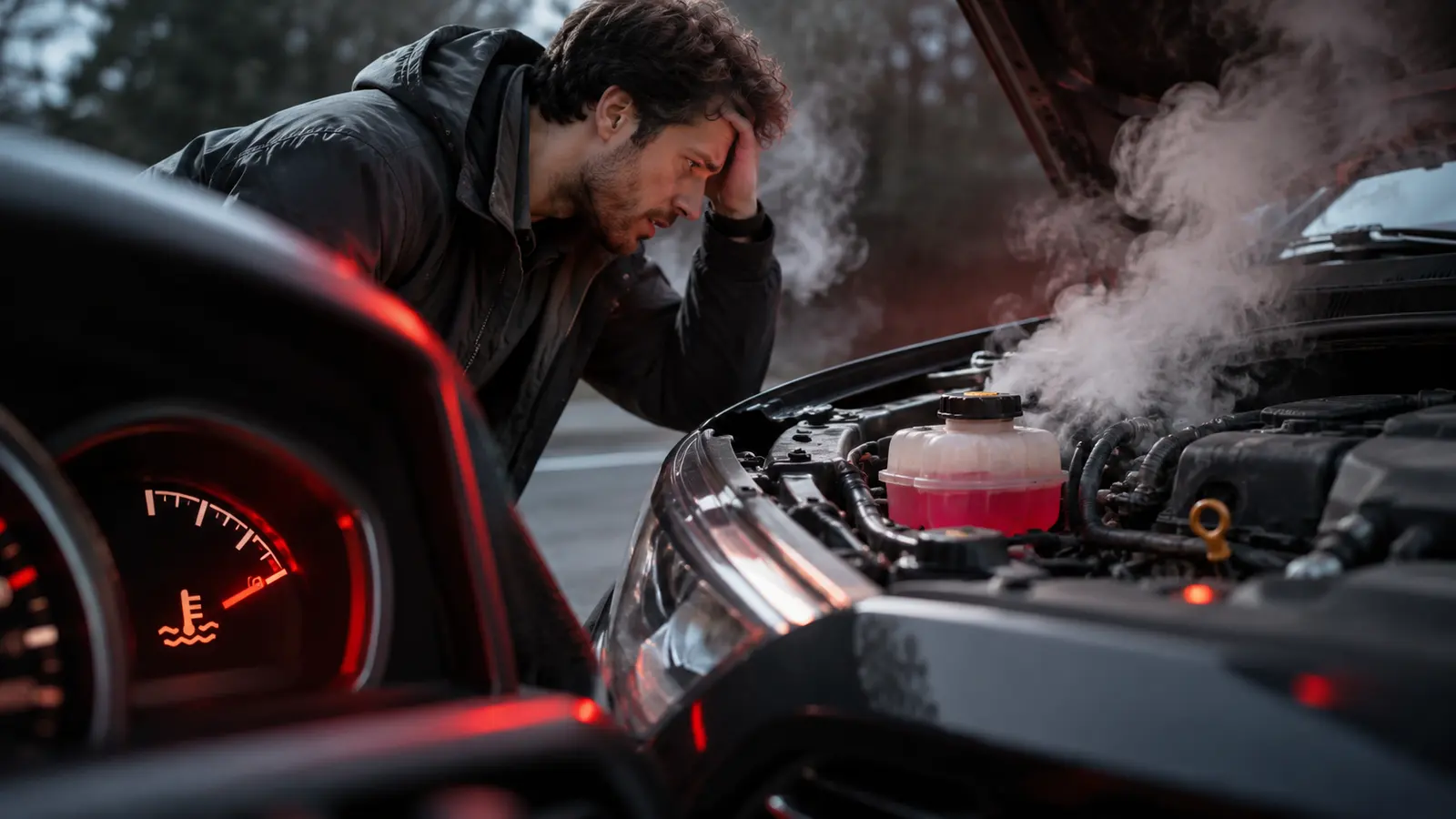 Engine Problems
Engine Cooling System: The Complete Guide to Coolant, Overheating and Repairs
The cooling system carries heat away from the engine using coolant, a water pump, a thermostat, a radiator and fans, all under pressure so coolant can run above 100 °C. This guide explains each part, why engines overheat, how to spot leaks and how to check coolant safely.
Updated November 22, 2026Read Engine Problems
Diesel Engines: The Complete Guide to How They Work, DPF, AdBlue and Care
Diesel engines ignite fuel by compression rather than a spark. Modern diesels add glow plugs, a particulate filter, AdBlue and EGR to start reliably and cut emissions. This guide explains each system, the warning lights and how to keep a diesel healthy.
Updated November 22, 2026Read