
Car Leaking Coolant (Antifreeze): Causes and What to Do
Quick answer
Coolant (antifreeze) leaks usually come from a split hose, loose clamp, radiator, water pump, heater core or, more seriously, a head gasket. Find it early, because running low on coolant can overheat the engine.
- Topic
- Engine Problems
- Sections
- 7
- Reading time
- 1 min
- Applies to
- All regions
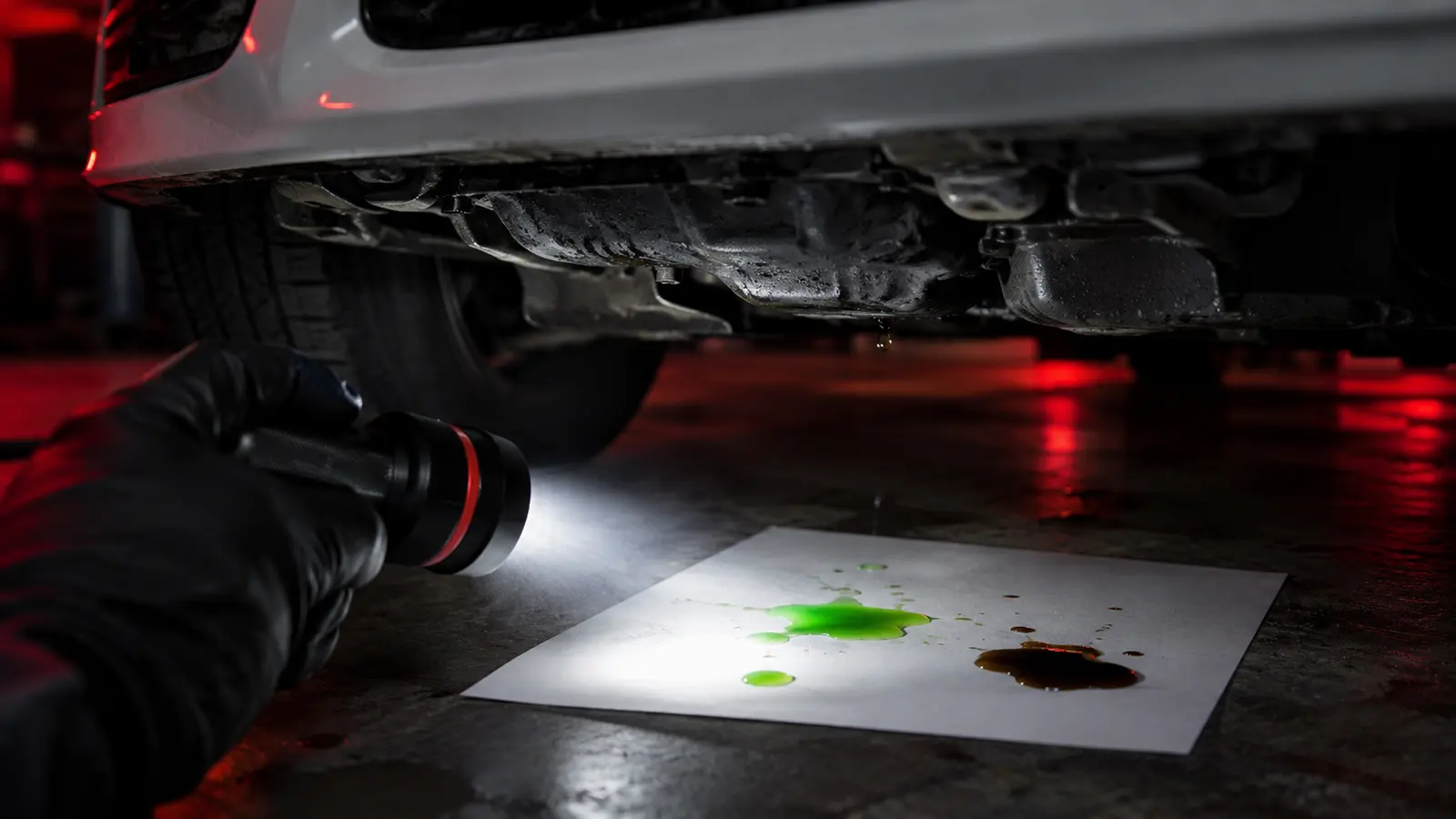
A car leaking coolant (antifreeze) usually leaves a green, orange, pink or blue puddle with a sweet smell. Common sources are a split hose or loose clamp, the radiator, the water pump, the heater core (coolant inside the car) and the expansion tank or cap. A leak with no visible puddle can mean an internal leak such as a head gasket.
Is it safe to drive?
Only briefly. Low coolant leads to overheating, which can damage the engine quickly. Watch the temperature gauge and stop if it climbs.
Where the leak is
| Where you see it | Likely source |
|---|---|
| Front of the car, centre | Radiator or lower hose |
| Near the engine belts | Water pump weep hole |
| Inside, wet passenger carpet | Heater core |
| Around the plastic tank | Expansion tank or cap |
| No puddle, level keeps dropping | Internal leak (head gasket) |
How to check safely
- Wait until the engine is cold. Never open a hot cooling system.
- Check the level in the expansion tank. See how to check coolant level.
- Look for crusty residue on hoses, clamps and the radiator.
- Place card under the car overnight to see where it drips. See how to find a car fluid leak.
Signs of an internal leak
White sweet-smelling exhaust smoke, bubbles in the expansion tank or oil that looks milky point to a head gasket failure or coolant reservoir boiling.
Clean up spills
Coolant is toxic and its sweet taste attracts pets. Wipe up puddles and dispose of rags safely.
What a mechanic will do
They'll pressure-test the cooling system to find the leak, then replace the hose, clamp, radiator, pump or gasket, and refill with the correct coolant type.
Related guides
Frequently asked questions
Can I drive with a coolant leak?
Only short distances while watching the temperature gauge and topping up. Stop if it rises towards hot.
Is coolant poisonous?
Yes. It's toxic and tastes sweet to pets and children. Clean up puddles straight away.
Tools that can help
Need a mechanic?
Find rated garages near you by city, ZIP code or postcode, with directions.
About this guide
Written by Editorial Team using manufacturer documentation, government road-safety guidance and motoring-organisation advice. It explains likely causes and safe checks. It is not a diagnosis. How we write and check guides.
More engine problems guides
 Engine Problems
Car Exhaust and Emissions: The Complete Guide to Catalytic Converters, Sensors and Smoke
The exhaust system carries burnt gases away, cleans them with a catalytic converter (and on diesels a DPF and SCR), and quietens the engine. This guide explains each part, what different smoke colours and noises mean, catalytic converter theft, and emissions tests.
Updated November 22, 2026Read Engine Problems
Engine Cooling System: The Complete Guide to Coolant, Overheating and Repairs
The cooling system carries heat away from the engine using coolant, a water pump, a thermostat, a radiator and fans, all under pressure so coolant can run above 100 °C. This guide explains each part, why engines overheat, how to spot leaks and how to check coolant safely.
Updated November 22, 2026Read Engine Problems
Diesel Engines: The Complete Guide to How They Work, DPF, AdBlue and Care
Diesel engines ignite fuel by compression rather than a spark. Modern diesels add glow plugs, a particulate filter, AdBlue and EGR to start reliably and cut emissions. This guide explains each system, the warning lights and how to keep a diesel healthy.
Updated November 22, 2026Read