
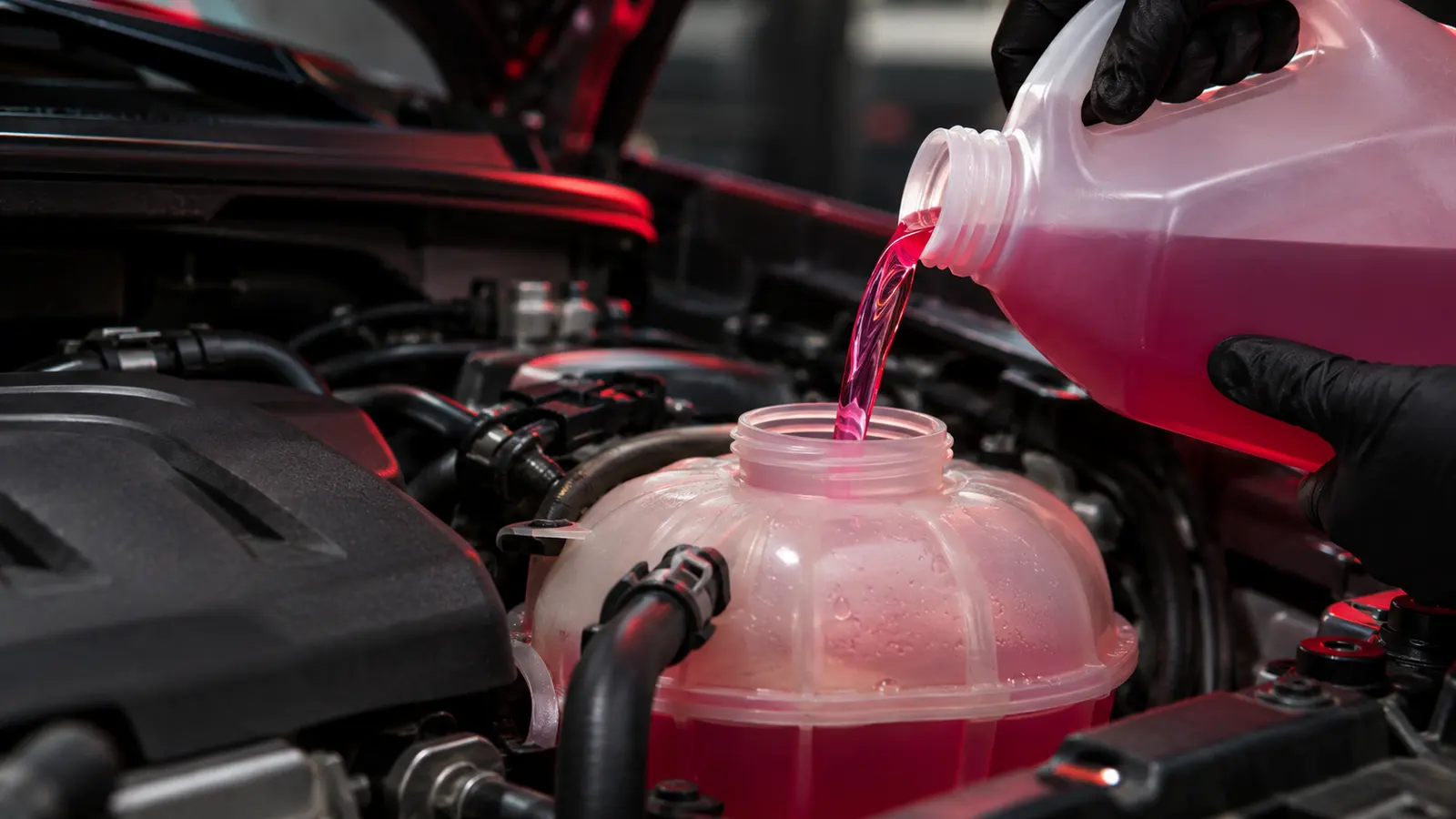
How Often Should You Change Coolant?
Quick answer
Many modern long-life coolants last around five years or more, while older types may need changing every two to three years. Always use the coolant type your handbook specifies.
- Topic
- Servicing & Maintenance
- Sections
- 6
- Reading time
- 1 min
- Applies to
- All regions
Many modern long-life coolants last around five years or more (often with a mileage limit too). Older coolant types may need changing every two to three years. Always use the type your handbook specifies: coolants use different chemistries and shouldn't be mixed.
Why coolant needs changing
Coolant prevents freezing and boiling, and its additives prevent corrosion. Over time the additives deplete, even if the level looks fine.
Signs coolant needs attention
- Overdue on the service schedule
- Rusty, brown or murky coolant
- Sludge in the expansion tank
- Weak freeze protection when tested
Typical guidance
| Coolant type | Typical interval (check handbook) |
|---|---|
| Long-life (OAT/HOAT) | Around 5 years or more |
| Older conventional | 2–3 years |
| After a head gasket or cooling repair | Refill with fresh |
Safety
Never open a hot cooling system. Coolant is toxic to people and pets. Dispose of it properly.
What a garage does
They drain and flush the system, refill with the correct mixture, and bleed out air.
Related guides
Frequently asked questions
Can I mix coolant types?
It's best not to. Mixing different chemistries can reduce protection. Use the type in the handbook.
Can I top up with water?
In an emergency, yes, but it dilutes protection. Have the mixture corrected soon.
How do I know the coolant is still good?
A garage can test freeze protection with a refractometer and check its condition.
Tools that can help
How the parts involved work
Need a mechanic?
Find rated garages near you by city, ZIP code or postcode, with directions.
About this guide
Written by Editorial Team using manufacturer documentation, government road-safety guidance and motoring-organisation advice. It explains likely causes and safe checks. It is not a diagnosis. How we write and check guides.
More servicing & maintenance guides
 Servicing & Maintenance
Engine Oil: The Complete Guide to Grades, Types, Checks and Changes
Engine oil lubricates, cools and cleans the engine. This guide explains what the numbers in 5W-30 mean, API and ACEA specifications, synthetic vs conventional oil, how to check the level, when to change it, and what leaks, smoke and warning lights are telling you.
Updated November 22, 2026Read Servicing & Maintenance
Car Leaking Oil After an Oil Change: Why
Oil drips right after an oil change are usually from the job itself: a filter not tightened or with the old gasket stuck on, a drain plug without a new washer, overfilling, or oil spilled during the change that is now dripping off.
Updated November 22, 2026Read Servicing & Maintenance
Signs Your Car Needs a Mechanic
Red warning lights, a soft brake pedal, steam, a strong fuel smell, new noises, leaks, vibration and changes in steering or braking are signs your car needs professional attention.
Updated November 22, 2026Read