
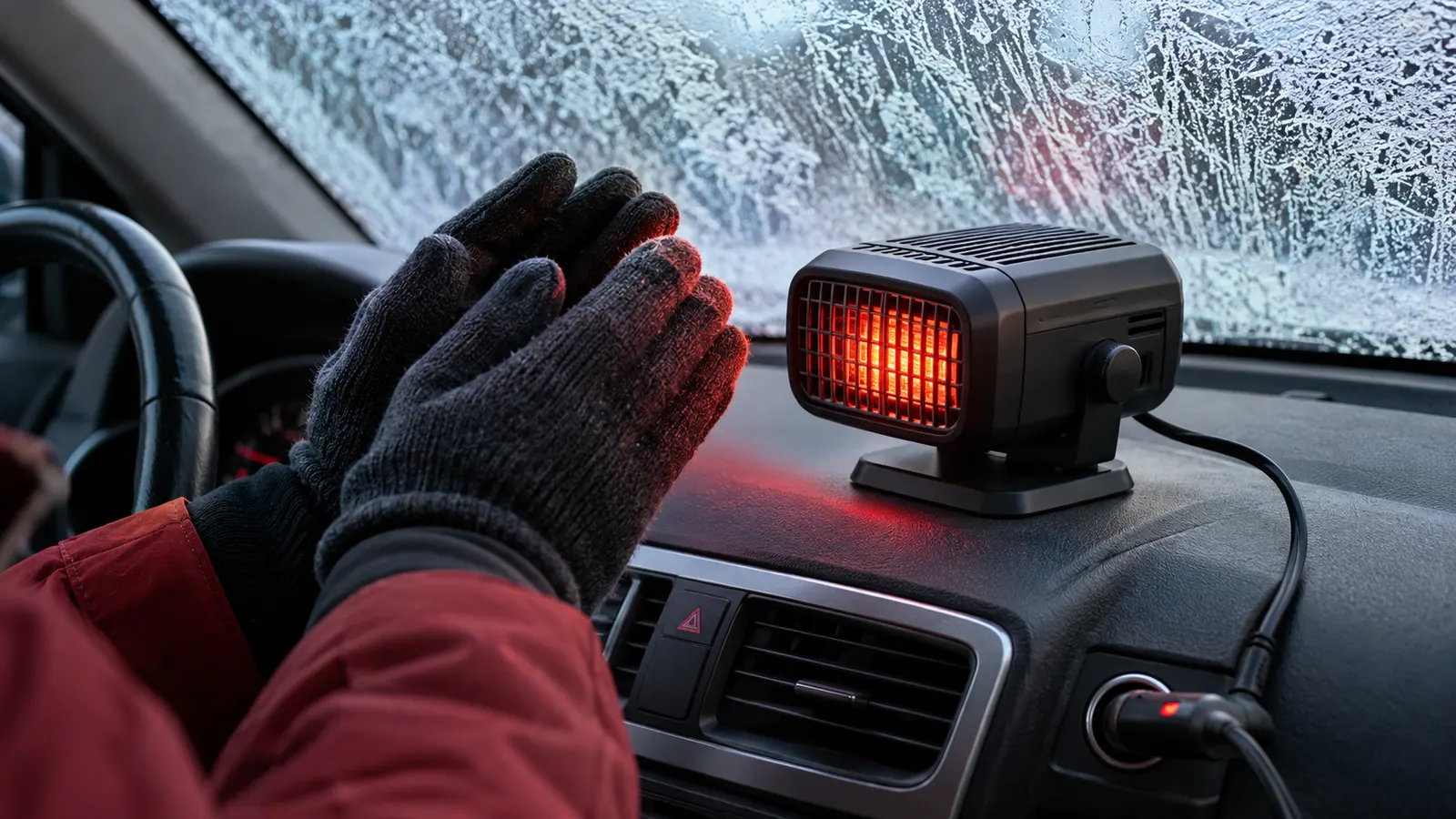
Portable Car Heaters: Do They Work, and Are They Safe?
Quick answer
A 12-volt portable heater can take the chill off a small area or help clear a patch of windscreen, but it produces a fraction of the heat of your car's own heater. Treat it as a stopgap and fix the real heater.
- Topic
- AC & Heating
- Sections
- 7
- Reading time
- 3 min
- Applies to
- All regions
Searches for portable car heaters have jumped this autumn, mostly from drivers whose car heater has stopped working. The honest answer is that a plug-in 12-volt heater can help a little, but it can't replace the heat your car's own system makes. Here's why, how to use one safely, and what usually fixes the real problem.
How your car normally makes heat
A petrol or diesel engine wastes a lot of energy as heat. Your car's heater reuses it. Hot coolant flows through the heater core, a small radiator behind the dashboard, and the blower pushes cabin air across it. Once the engine is warm, that's a lot of free heat.
Electric cars don't have that waste heat, so they use electric heaters or heat pumps powered by the main battery, which is far more capable than a 12-volt socket.
What a 12-volt portable heater can do
A plug-in heater draws power from the accessory socket, which is protected by a fuse, often around 10 to 20 amps. Simple physics (watts = volts × amps) caps a 12-volt device at roughly 120 to 240 watts. A household fan heater is often ten times that. In practice a 12-volt unit can:
- Warm your hands or a small area close to it.
- Help clear a small patch of windscreen when aimed at it.
- Take the edge off a short wait with the engine running.
What it can't do is heat the whole cabin on a freezing morning or keep a large windscreen clear while driving.
Safety: the risks to avoid
- Never use fuel-burning heaters (propane, butane or diesel units meant for tents or workshops) inside a car. They produce carbon monoxide. The CDC describes CO as odourless and colourless, and says it kills hundreds of people in the US each year.
- Don't overload the socket. A heater rated above your socket's fuse can blow it or overheat the wiring. Check your owner's manual for the socket's rating.
- Keep it secure. A loose heater can roll under the pedals or become a projectile in a crash.
- Keep it away from fabric, paper and children.
- Don't run it with the engine off. It will flatten the battery.
If you're stuck in winter weather, NHTSA's advice is to clear snow from the exhaust and run the engine only occasionally to keep warm, not for long periods with the windows closed.
Better ways to stay warm in winter
- Heated seats and steering wheel, if fitted, warm you directly using little power.
- A block heater in very cold climates warms the engine before you start, so heat arrives sooner. See our block heater guide.
- Dress for the weather and keep a blanket in the car. Both are on NHTSA's winter emergency kit list.
- Park in a garage where possible.
Why your car heater might not be working
Most heater failures have a simple cause that's cheaper to fix than you might expect:
| Symptom | Likely cause |
|---|---|
| Blows cold, temperature gauge stays low | Thermostat stuck open |
| Cold air, coolant level low | Coolant leak or air lock |
| Warm on one side only | Blend door actuator |
| No air at all on some speeds | Blower resistor or motor |
| Sweet smell, foggy windows | Heater core leak |
Start with car heater blowing cold air, and if it's slow rather than cold, car heater takes too long to warm up.
Keeping the windscreen clear without a heater
A fogged or iced windscreen is the real safety problem. Use the air conditioning on the screen setting (it dries the air), set fresh air rather than recirculate, and keep the inside of the glass clean. Our guide to car windows fogging up has the full routine.
The verdict
A 12-volt portable heater is a comfort gadget, not a fix. Use one only with the engine running, never use a fuel-burning heater inside a car, and get the actual heater looked at. It's usually a thermostat, low coolant or a blower part, and a technician can tell you which quickly.
Frequently asked questions
Can a portable car heater replace a broken heater?
No. A typical 12-volt unit is limited by the socket's fuse rating and produces only a small fraction of the heat your engine supplies through the heater core.
Is it safe to use a fuel-burning heater inside a car?
No. Anything that burns fuel produces carbon monoxide, which is odourless and can kill. Never use one in a closed vehicle.
Will a 12-volt heater drain my battery?
It can, quickly, if the engine isn't running. Only use it with the engine running.
Tools that can help
Need a mechanic?
Find rated garages near you by city, ZIP code or postcode, with directions.
About this guide
Written by Editorial Team using manufacturer documentation, government road-safety guidance and motoring-organisation advice. It explains likely causes and safe checks. It is not a diagnosis. How we write and check guides.
More from the blog
 Seasonal Driving
Winter Car Emergency Kit: What to Keep in Your Car
A winter car kit should keep you able to see, get moving, call for help and stay warm while you wait. Both NHTSA and the UK Highway Code publish lists: scraper and de-icer, shovel, traction aid, jump leads, torch, first aid kit, blankets, water and food.
Updated November 22, 2026Read Seasonal Driving
Should You Warm Up Your Car in Winter? What the Evidence Says
For most modern cars the answer is no: FuelEconomy.gov says most manufacturers recommend driving off gently after about 30 seconds, because the engine warms faster while driving. Clear all the glass first, though.
Updated November 22, 2026ReadSeasonal DrivingHow to Drive on Black Ice (and How to Spot It)
Black ice is a thin, clear glaze you can barely see. Slow down early, leave far more space (the Highway Code says stopping distances can be ten times longer on ice), and make every input gentle. If you skid, look and steer where you want to go.
Updated November 22, 2026Read