
Cabin Air Filter: When and Why to Replace It
Quick answer
A clogged cabin (pollen) filter causes weak airflow from the vents, musty smells and slow demisting. Many cars need a new one about once a year.
- Topic
- Servicing & Maintenance
- Sections
- 5
- Reading time
- 1 min
- Applies to
- All regions
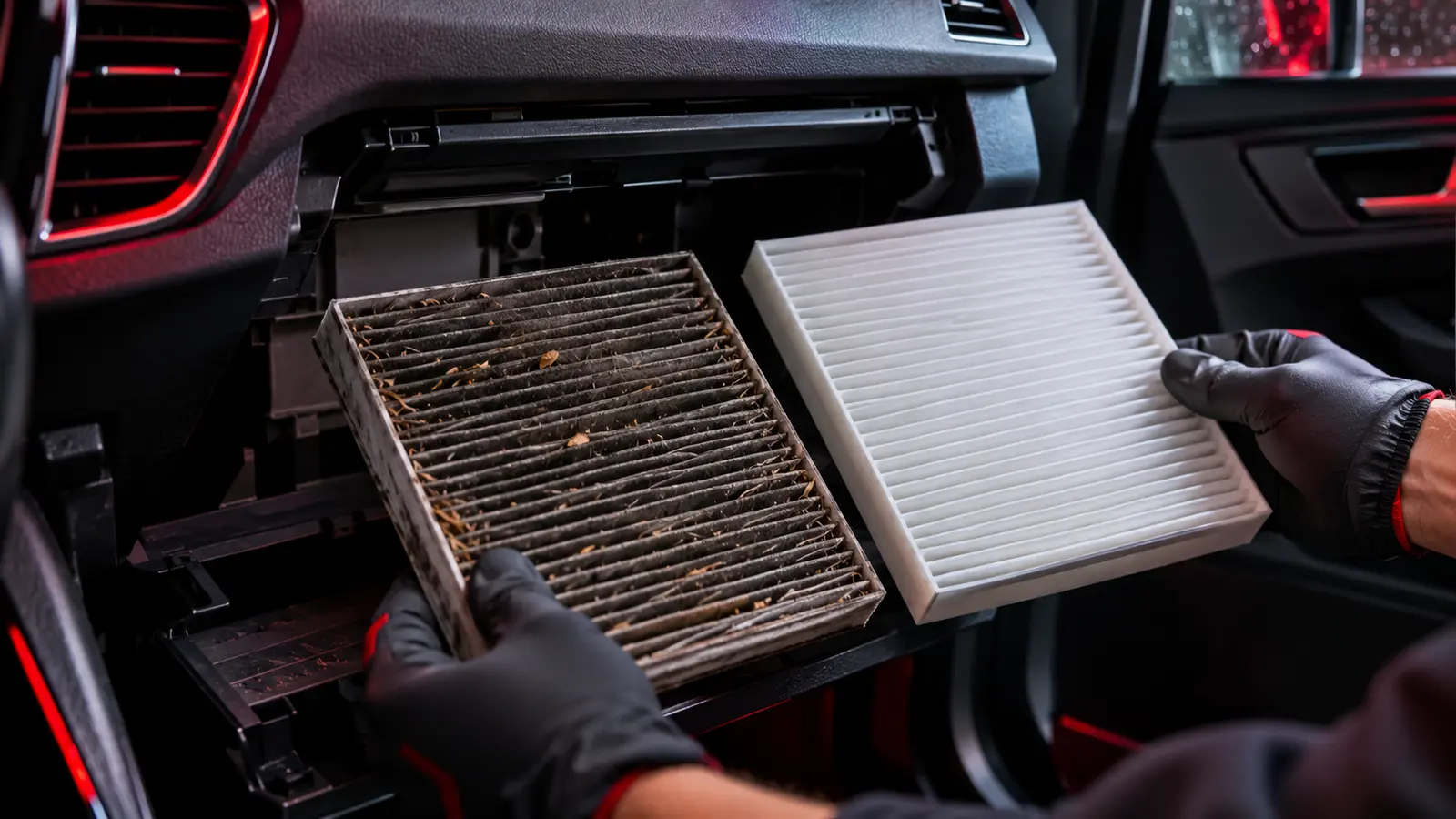
The cabin air filter (pollen filter) cleans air entering the passenger compartment. When it clogs, you get weak airflow from the vents, musty smells and slow demisting. Many cars need a new one about once a year or every 15,000–25,000 miles.
Signs it needs replacing
- Weak airflow even on high fan
- Musty or vinegar-like smell
- Windows slow to demist
- Leaves or debris visible in the vents
Interval at a glance
| Conditions | Typical guidance |
|---|---|
| Normal use | About yearly |
| City, pollen season, dusty roads | Sooner |
| Allergies | Consider carbon filters |
How to check it
- Find it (often behind the glovebox).
- Slide it out and look at both sides.
- Replace if dark, clogged or damp.
- Fit the new one with the airflow arrow the right way.
Why it matters
A clean filter improves air quality, keeps AC performance up and helps prevent odours.
Related guides
Frequently asked questions
Where is the cabin filter?
Often behind the glovebox or under the windscreen scuttle panel. The handbook shows how to reach it.
Is a charcoal cabin filter better?
Activated-carbon filters also reduce odours and some fumes. They cost a bit more.
Can a dirty cabin filter affect the AC?
It reduces airflow, so the AC and heater seem weaker, and it can help moulds grow.
Tools that can help
Need a mechanic?
Find rated garages near you by city, ZIP code or postcode, with directions.
About this guide
Written by Editorial Team using manufacturer documentation, government road-safety guidance and motoring-organisation advice. It explains likely causes and safe checks. It is not a diagnosis. How we write and check guides.
More servicing & maintenance guides
 Servicing & Maintenance
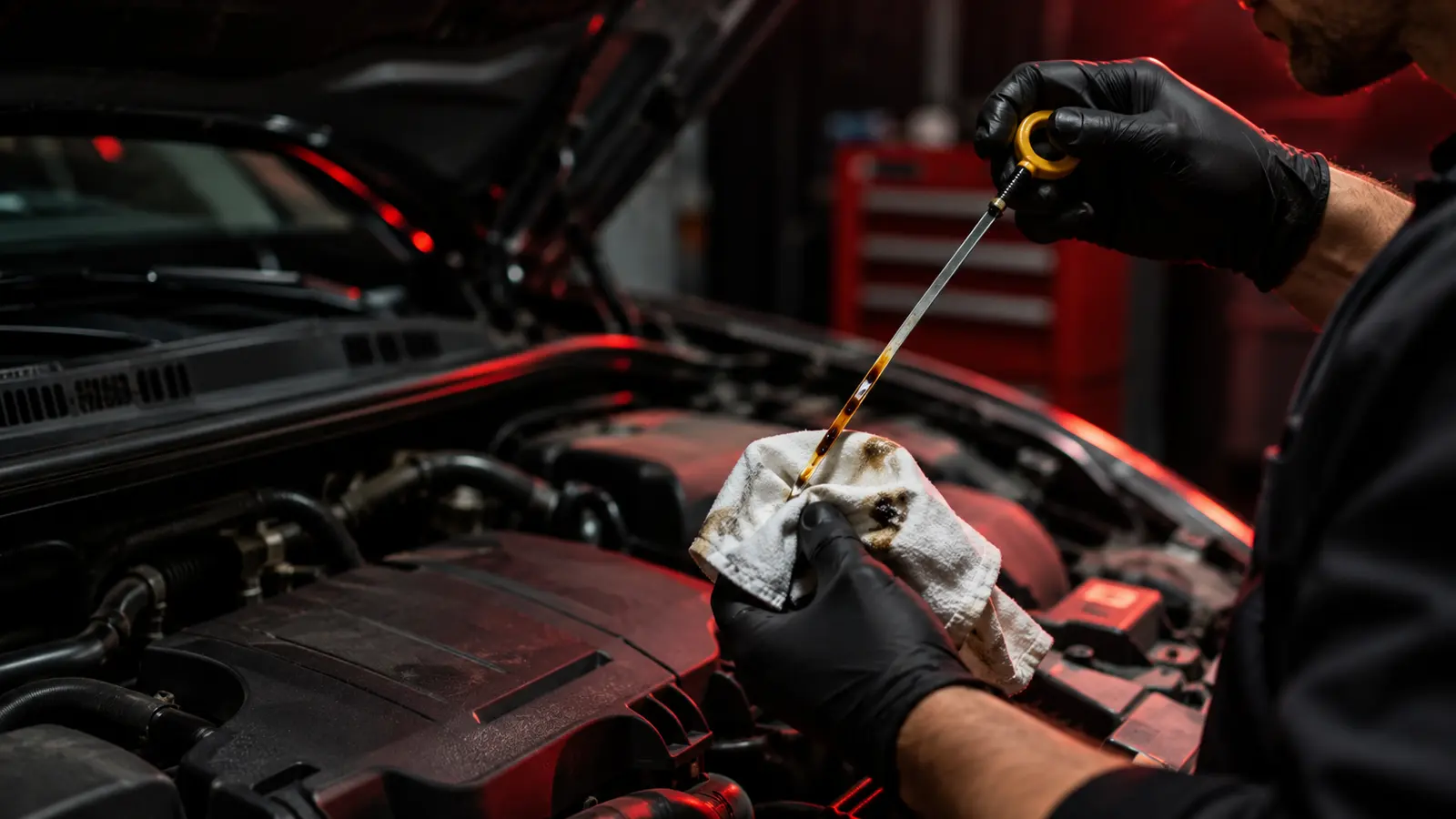
Engine Oil: The Complete Guide to Grades, Types, Checks and Changes
Engine oil lubricates, cools and cleans the engine. This guide explains what the numbers in 5W-30 mean, API and ACEA specifications, synthetic vs conventional oil, how to check the level, when to change it, and what leaks, smoke and warning lights are telling you.
Updated November 22, 2026Read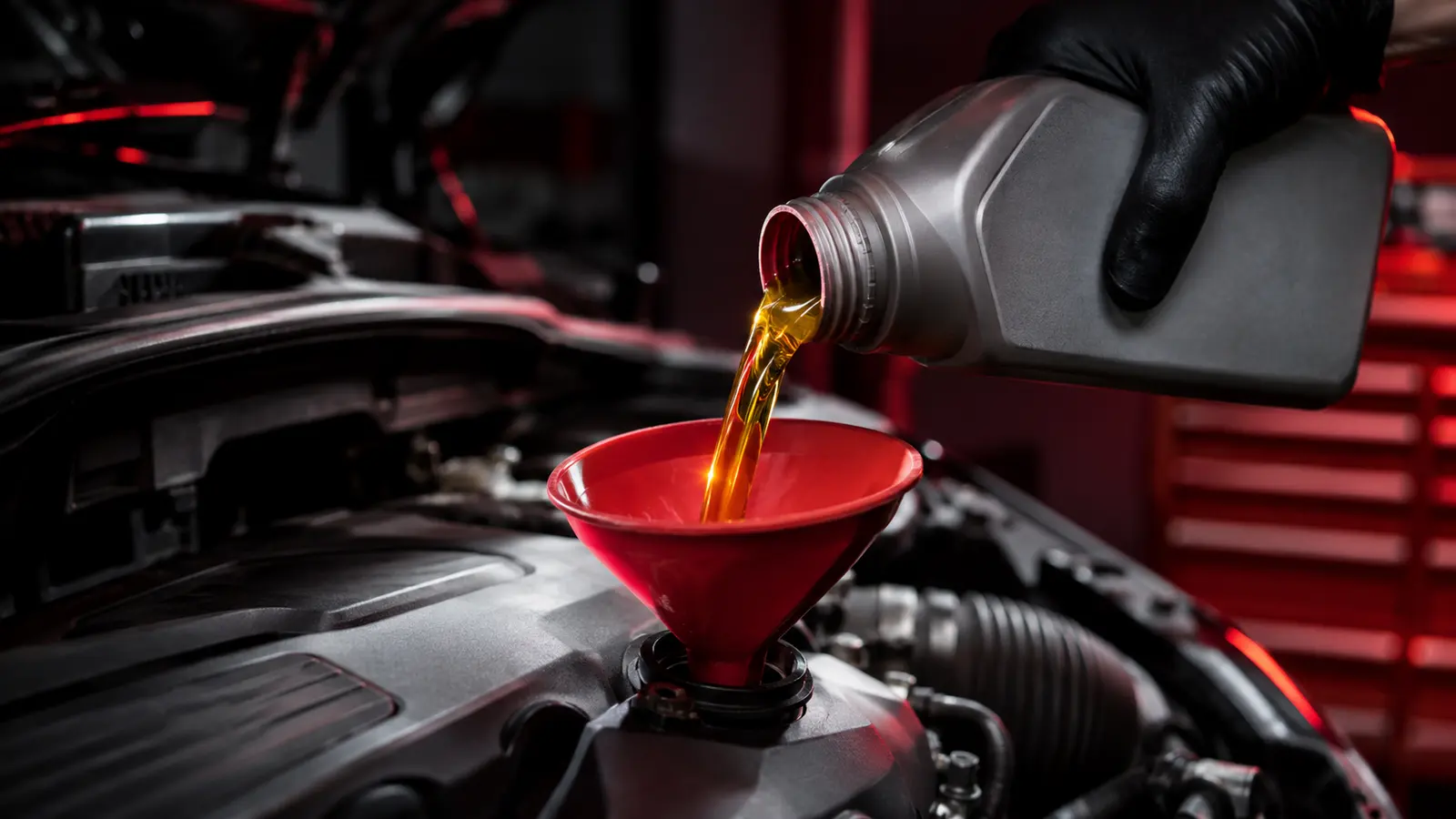 Servicing & Maintenance
Car Leaking Oil After an Oil Change: Why
Oil drips right after an oil change are usually from the job itself: a filter not tightened or with the old gasket stuck on, a drain plug without a new washer, overfilling, or oil spilled during the change that is now dripping off.
Updated November 22, 2026Read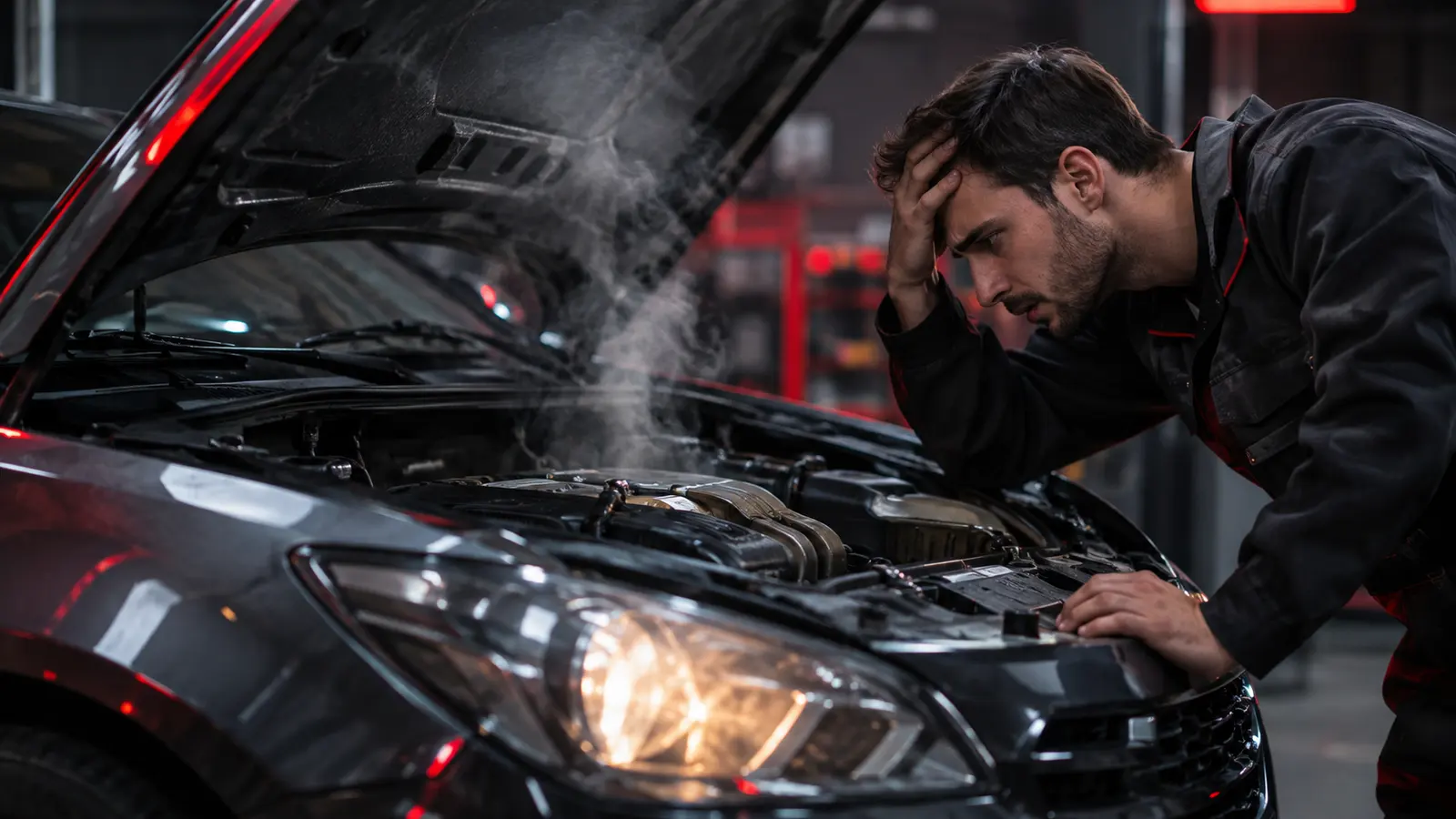 Servicing & Maintenance
Signs Your Car Needs a Mechanic
Red warning lights, a soft brake pedal, steam, a strong fuel smell, new noises, leaks, vibration and changes in steering or braking are signs your car needs professional attention.
Updated November 22, 2026Read