
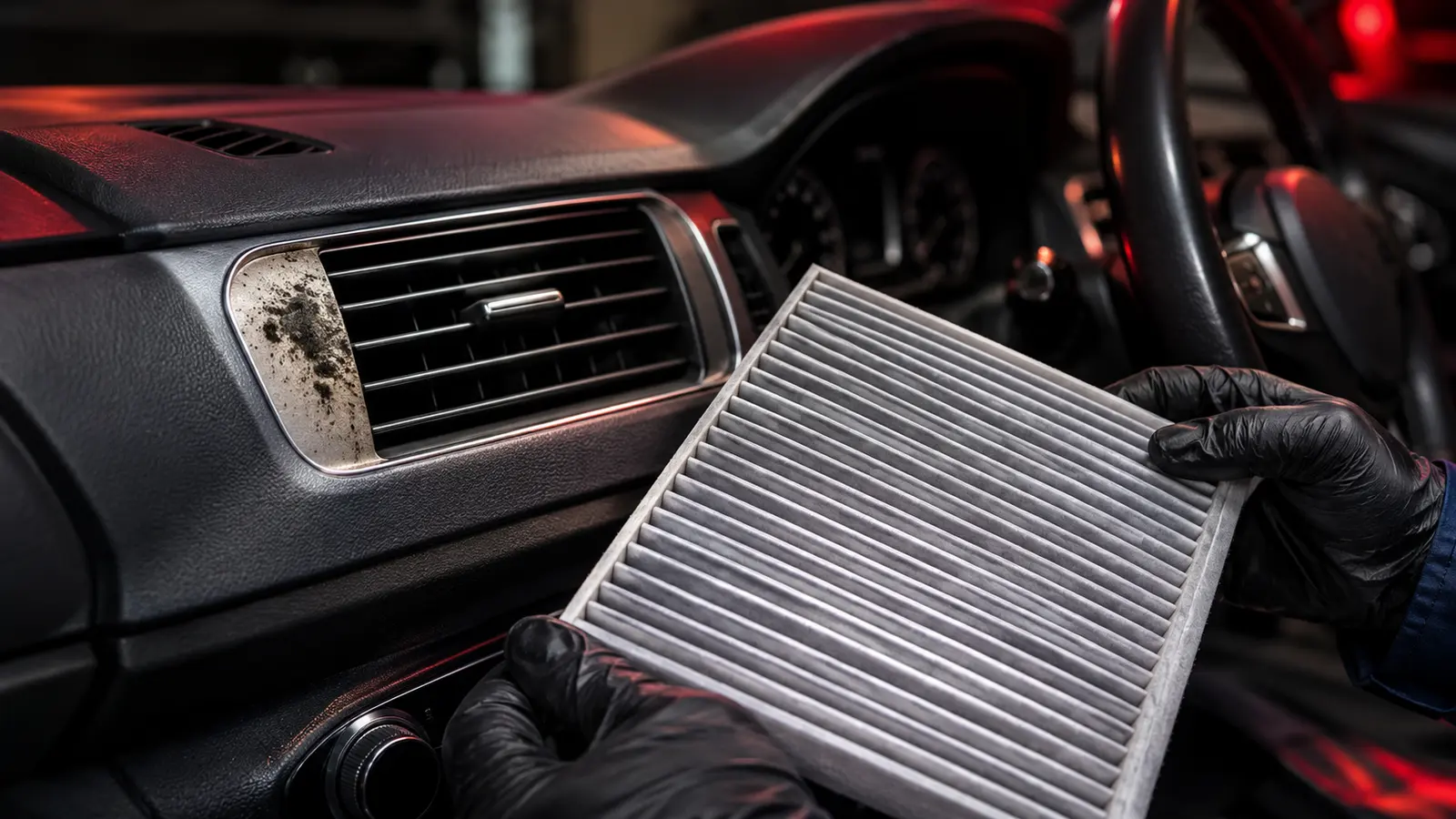
Car AC Smells Like Vinegar: Causes and How to Get Rid of It
Part of: Car Smells: What Each One Means
Quick answer
That sour smell is usually mould or bacteria growing on the damp evaporator. A new cabin filter and an evaporator clean fix most cases.
- Topic
- AC & Heating
- Sections
- 5
- Reading time
- 2 min
- Applies to
- All regions
A vinegar or sour smell when you switch on the air conditioning is usually caused by mould or bacteria growing on the AC evaporator, the cold, damp radiator-like part behind the dashboard. A clogged cabin air filter makes it worse. Replacing the filter and cleaning the evaporator fixes most cases.
Why it happens
The evaporator cools air by condensing moisture out of it. That water should drain out under the car, but the evaporator stays damp and dark — ideal for mould. Leaves, dust and food debris in the vents feed it.
Causes, from most to least common
Mould on the evaporator
The smell is strongest in the first minute after switching on the AC and fades as the system dries.
Dirty cabin air filter
An old filter traps moisture and organic debris and restricts airflow. Many makers suggest replacing it every year.
Blocked evaporator drain
If the drain tube clogs, water pools in the housing. You may notice a damp passenger footwell or no drip under the car on a humid day.
Leaking battery
An acidic smell that isn't linked to the vents may come from a battery that is overcharging or leaking. Look for corrosion or a swollen case — and don't touch leaking acid.
Fixes you can do
- Replace the cabin filter. It is usually behind the glovebox and takes minutes.
- Use an evaporator or AC cleaning treatment made for cars, following the product instructions carefully.
- Dry the system after driving: switch the AC off and run the fan for a few minutes before parking.
- Clean out the vents and scuttle area below the windscreen of leaves and debris.
When to see a technician
If the smell persists after a new filter and cleaner, a technician can clear the evaporator drain, clean the evaporator directly, and check the system for leaks. Get professional help straight away if you see battery corrosion or swelling.
Prevention
Change the cabin filter on schedule, run the AC regularly (even in winter, it dries the air for demisting) and keep the fan running briefly after turning the AC off.
Frequently asked questions
Is a vinegar smell from the AC dangerous?
Mould spores can irritate allergies and asthma, so don't ignore it. An acidic smell from under the bonnet can also be a leaking battery, which needs checking.
How do I stop the smell coming back?
Turn off the AC (compressor) but leave the fan running for the last few minutes of a drive so the evaporator dries out.
Tools that can help
How the parts involved work
Need a mechanic?
Find rated garages near you by city, ZIP code or postcode, with directions.
About this guide
Written by Editorial Team using manufacturer documentation, government road-safety guidance and motoring-organisation advice. It explains likely causes and safe checks. It is not a diagnosis. How we write and check guides.
More ac & heating guides
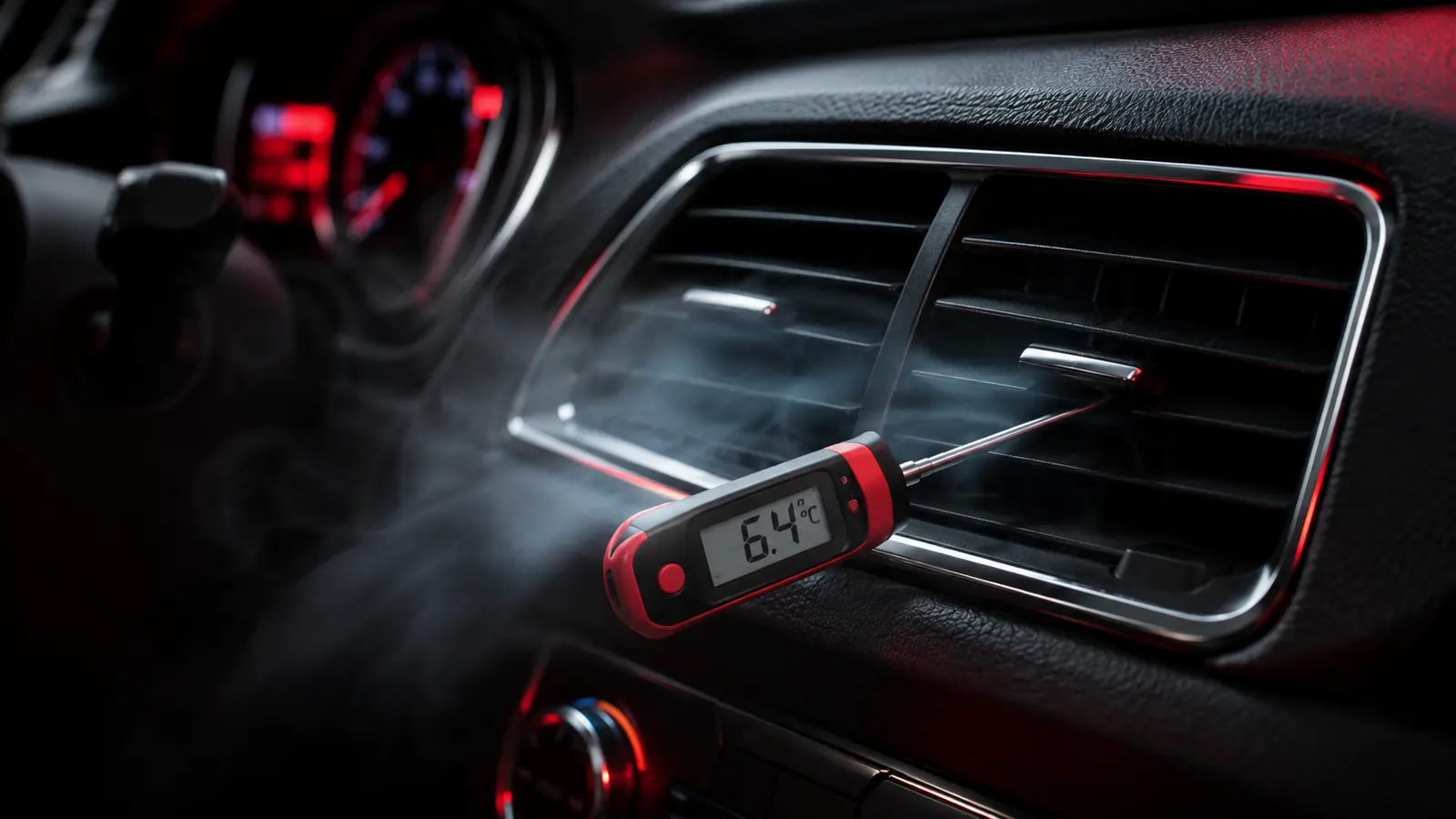 AC & Heating
Car Air Conditioning and Heating: The Complete Guide
Car AC pumps refrigerant through a sealed loop to pull heat and moisture out of the cabin; the heater reuses engine heat through the heater core. This guide covers how both work, why they fail, how to demist fast, and how to keep them healthy.
Updated November 22, 2026ReadAC & HeatingCar AC Recharge: What It Is and When It's Needed
An AC recharge (regas) refills the refrigerant. Systems are sealed, so being low usually means a leak. A proper service recovers the old refrigerant, checks for leaks and refills the exact amount your car needs.
Updated November 22, 2026Read AC & Heating
Car Smells Musty or Mouldy After Rain: Why
A musty, mildew smell after rain means water is getting into the car and staying there: blocked scuttle or sunroof drains, a failed door seal, or a damp carpet and cabin filter. Find and fix the leak first, then dry everything.
Updated November 22, 2026Read