
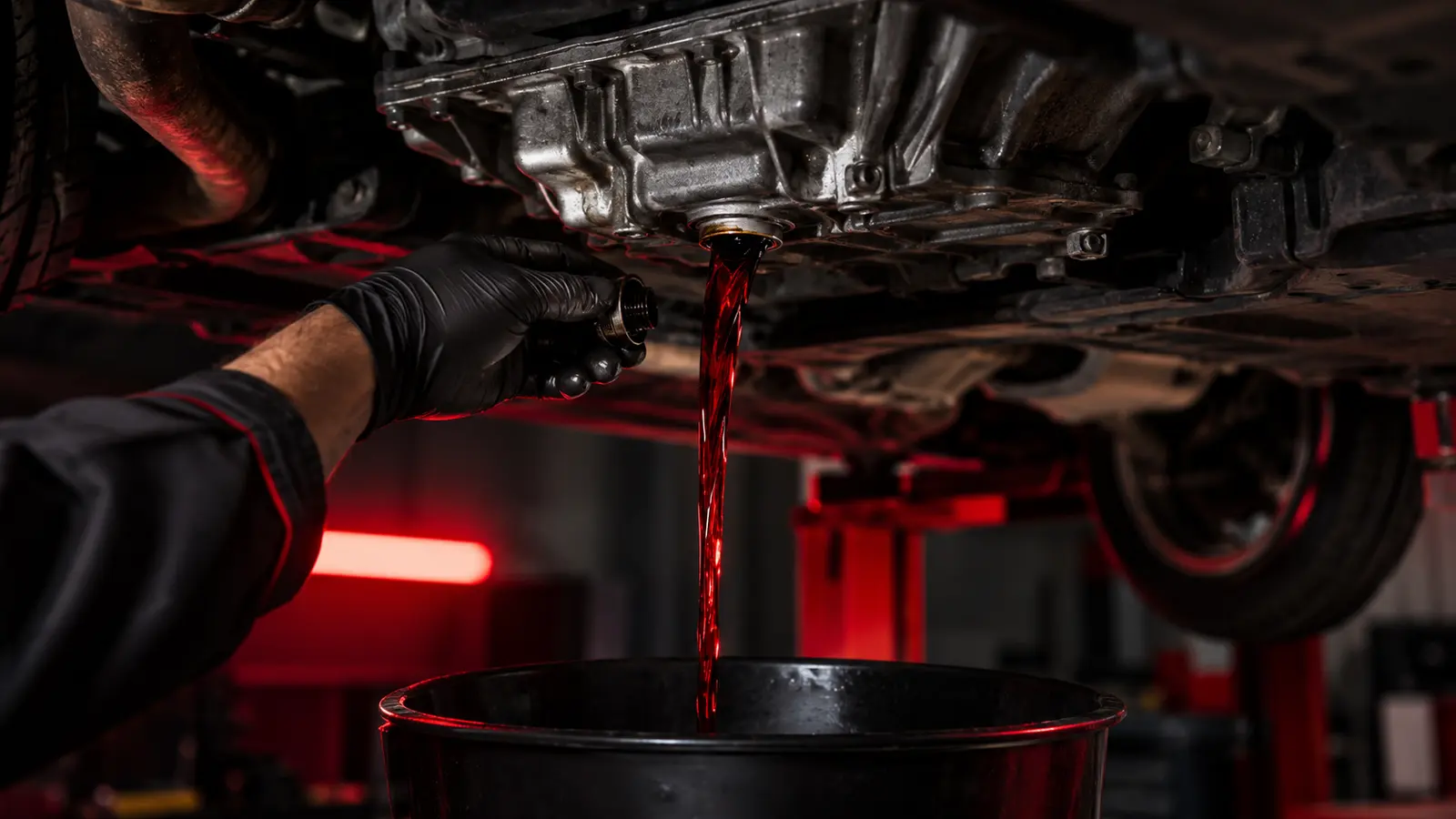
Car Won't Go Into Gear: Manual and Automatic Causes
Part of: Transmission Problems: Slipping, Shifting and Leaks
Quick answer
In a manual, the clutch usually isn't fully disengaging, often a hydraulic leak. In an automatic stuck in Park, the brake light switch or shift interlock is a common culprit.
- Topic
- Transmission & Clutch
- Sections
- 6
- Reading time
- 1 min
- Applies to
- All regions
If your car won't go into gear, the cause depends on the gearbox. In a manual, the clutch is usually not fully disengaging, often because of a hydraulic leak (clutch master or slave cylinder) or low clutch fluid. In an automatic stuck in Park, a faulty brake light switch or shift interlock is a common cause.
Is it safe to drive?
If you can't select gears reliably, don't drive. Forcing gears causes damage.
Causes at a glance
| Symptom | Likely cause |
|---|---|
| Manual, grinding into every gear | Clutch not disengaging |
| Clutch pedal soft or stays down | Hydraulic leak, low fluid |
| Manual, only one gear hard | Worn synchro or linkage |
| Automatic stuck in Park | Brake light switch, interlock, fuse |
| Automatic, no drive in any gear | Low fluid or internal fault |
Check these in order
- Manual: check clutch fluid level (often shares the brake reservoir).
- Automatic: check the brake lights work.
- Try the shift lock release described in the handbook.
- Look for fluid around the clutch pedal and gearbox.
What a mechanic will do
They'll test clutch hydraulics, adjust or repair the linkage, and check the brake switch and interlock circuit.
How to prevent problems
- Change clutch fluid when brake fluid is changed, if they share a reservoir.
Related guides
Frequently asked questions
What is the shift lock release?
A small slot or button near the gear lever that releases the lever manually if the interlock fails. Check your handbook.
Why is my clutch pedal staying on the floor?
Usually loss of hydraulic pressure: low fluid, or a failed master or slave cylinder.
Is it just cold weather?
Very cold gear oil can make shifting stiff for the first minutes. Persistent problems need checking.
Tools that can help
How the parts involved work
Need a mechanic?
Find rated garages near you by city, ZIP code or postcode, with directions.
About this guide
Written by Editorial Team using manufacturer documentation, government road-safety guidance and motoring-organisation advice. It explains likely causes and safe checks. It is not a diagnosis. How we write and check guides.
More transmission & clutch guides
Transmission & ClutchCar Transmissions: The Complete Guide to Manual, Automatic, CVT and Dual-Clutch
The transmission (gearbox) sends engine power to the wheels at the right speed and torque. This guide explains manual, conventional automatic, CVT and dual-clutch designs, what the fluid does, the warning signs of trouble and how to make a gearbox last.
Updated November 22, 2026Read Transmission & Clutch
Car Won't Move in Drive: Automatic Transmission Causes
If an automatic revs in Drive but won't move, check the parking brake and transmission fluid first. Other causes include a broken shift cable, a failed torque converter or internal transmission damage.
Updated November 22, 2026Read Transmission & Clutch
Transmission Slipping: Symptoms and Causes
If the revs rise but the car doesn't speed up as it should, the transmission or clutch is slipping. Low or worn fluid, a worn clutch and internal wear are common causes.
Updated November 22, 2026Read