
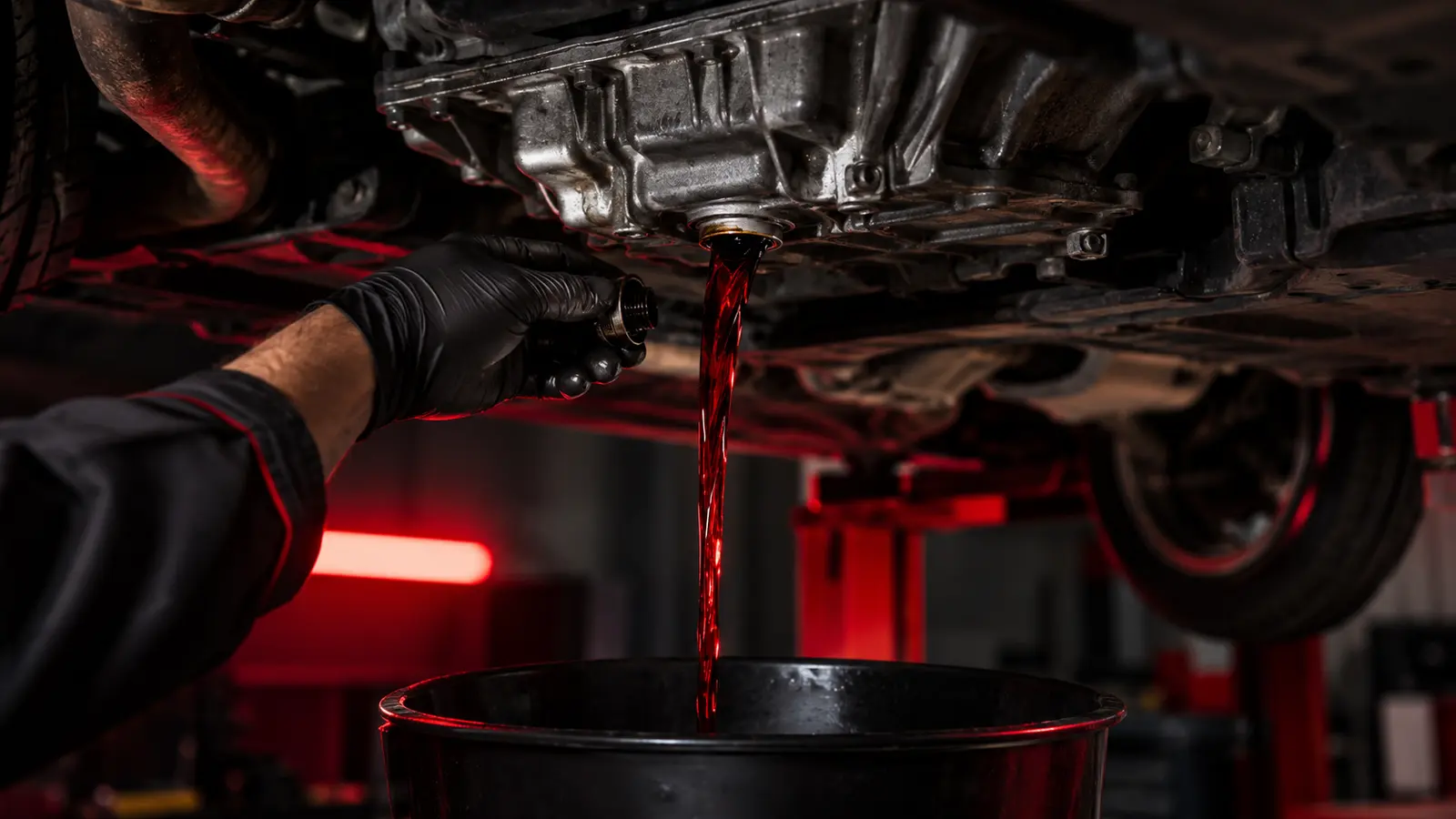
Car Transmissions: The Complete Guide to Manual, Automatic, CVT and Dual-Clutch
Part of: Transmission Problems: Slipping, Shifting and Leaks
Quick answer
The transmission (gearbox) sends engine power to the wheels at the right speed and torque. This guide explains manual, conventional automatic, CVT and dual-clutch designs, what the fluid does, the warning signs of trouble and how to make a gearbox last.
- Topic
- Transmission & Clutch
- Sections
- 10
- Reading time
- 4 min
- Applies to
- All regions
A car's transmission (gearbox) takes power from the engine and delivers it to the wheels at the right combination of speed and force. Engines only work well within a limited rev range, so the transmission changes gear ratios to let the car pull away, climb hills and cruise efficiently. This AllInformations Automotive guide explains each transmission type, what the fluid does, the warning signs of trouble and how to make a gearbox last.
Having a problem now? See transmission slipping, automatic shifting hard or late or car won't move in drive.
What a transmission does
Gear ratios
Low gears multiply torque for pulling away; high gears let the engine turn slowly at cruising speed. The transmission switches between these ratios, manually or automatically.
Neutral and reverse
The transmission can also disconnect the engine from the wheels (neutral) and reverse the direction of drive.
Getting power to the wheels
After the gearbox, power travels through the differential, driveshafts and CV joints to the wheels. Which wheels are driven depends on the layout: see FWD vs RWD and AWD vs 4WD.
Manual transmissions
How they work
The driver uses a clutch to disconnect the engine while selecting a gear with the lever. Synchronisers match shaft speeds so gears engage smoothly.
The clutch and flywheel
The clutch plate is pressed against the flywheel by the pressure plate. It wears gradually, especially with lots of slipping in traffic or on hills. See clutch slipping symptoms.
Strengths and trade-offs
Manuals are mechanically simpler and give the driver direct control, but demand more effort in traffic. See manual vs automatic.
Conventional automatic transmissions
Planetary gearsets
The most common automatic is the hydraulic type, which typically uses planetary (epicyclic) gearsets, with clutches and bands applied by fluid pressure to select each ratio.
The torque converter
The automatic connects to the engine through a torque converter, a fluid coupling that lets the car sit stationary in gear and multiplies torque when pulling away. Many converters include a lock-up clutch that joins engine and gearbox directly at cruising speed to cut losses.
Electronic control
Modern automatics are controlled by a computer that reads speed, throttle and load to pick shift points, and can store fault codes.
Continuously variable transmissions (CVT)
How they work
The most common CVT uses two pulleys connected by a belt (or chain). By changing the pulleys' effective diameters, it varies the ratio smoothly with no fixed steps.
What they feel like
Engine revs can stay steady while the car accelerates, which some drivers find unusual. Many CVTs simulate "steps" to feel more conventional.
Care
CVTs are particular about their fluid. Use exactly the specified type. See CVT vs automatic.
Dual-clutch transmissions (DCT)
How they work
A dual-clutch gearbox uses two separate clutches, one for the odd gears and one for the even gears. The next gear is pre-selected, so shifts are very quick.
What to expect
DCTs can feel slightly jerky at very low speeds or when creeping in traffic, because they're working clutches rather than a fluid coupling.
Transmission fluid
What it does
Fluid lubricates gears and bearings, carries heat away, and in automatics also transmits hydraulic pressure that operates the clutches.
Checking it
Some automatics have a dipstick; many newer ones have no user check and must be checked by a workshop. See how to check automatic transmission fluid.
Changing it
Intervals vary widely, and some gearboxes are described as "filled for life". Heat and towing shorten fluid life. See how often to change transmission fluid.
Leaks
Automatic fluid is usually red or pink. See transmission fluid leak.
Warning signs of transmission trouble
Symptoms and likely causes
| Symptom | Possible cause |
|---|---|
| Revs rise but the car doesn't accelerate | Slipping clutch or internal wear, low fluid |
| Harsh, late or delayed shifts | Fluid condition, sensors, control unit |
| Won't go into gear | Clutch hydraulics, linkage, internal fault |
| Whining that rises with speed | Bearings, low fluid, differential |
| Red fluid under the car | Transmission leak |
| Shudder at low speed | Torque converter or clutch judder |
See car won't go into gear and whining noise when accelerating.
Limp mode
Many automatics hold a single gear when the computer detects a serious fault, to protect themselves. The car feels sluggish and won't change up. Get it checked promptly.
Warning lights
A transmission fault often sets the check engine light or a dedicated gearbox warning.
Making a transmission last
Driving habits
- Come to a complete stop before selecting reverse or drive.
- Don't rest your foot on the clutch pedal in a manual.
- Use the handbrake on hills rather than holding the car on the clutch.
- Let the engine warm up gently in very cold weather.
Servicing
Follow the fluid interval for your use, fix leaks early, and have shifting problems diagnosed before they cause further wear.
Diagnosis and repair
What a technician does
They read fault codes, check fluid level and condition, road-test, and may run pressure tests. Some problems are fixed by a fluid service or software update; others need repair or replacement.
Related guides
Frequently asked questions
Do automatic transmissions need fluid changes?
Many do, but intervals vary widely and some are described as 'filled for life'. Follow your handbook, and shorten the interval for towing or heavy use if it says so.
Is a CVT less reliable than a normal automatic?
Not inherently. CVTs are sensitive to the correct fluid and to how they're treated, so follow the maker's servicing exactly.
Can I tow with an automatic?
Many automatics can tow within the rated limits; heavy towing heats the fluid, so check what your handbook says about servicing and cooling.
Tools that can help
Need a mechanic?
Find rated garages near you by city, ZIP code or postcode, with directions.
About this guide
Written by Editorial Team using manufacturer documentation, government road-safety guidance and motoring-organisation advice. It explains likely causes and safe checks. It is not a diagnosis. How we write and check guides.
More transmission & clutch guides
 Transmission & Clutch
Car Won't Move in Drive: Automatic Transmission Causes
If an automatic revs in Drive but won't move, check the parking brake and transmission fluid first. Other causes include a broken shift cable, a failed torque converter or internal transmission damage.
Updated November 22, 2026Read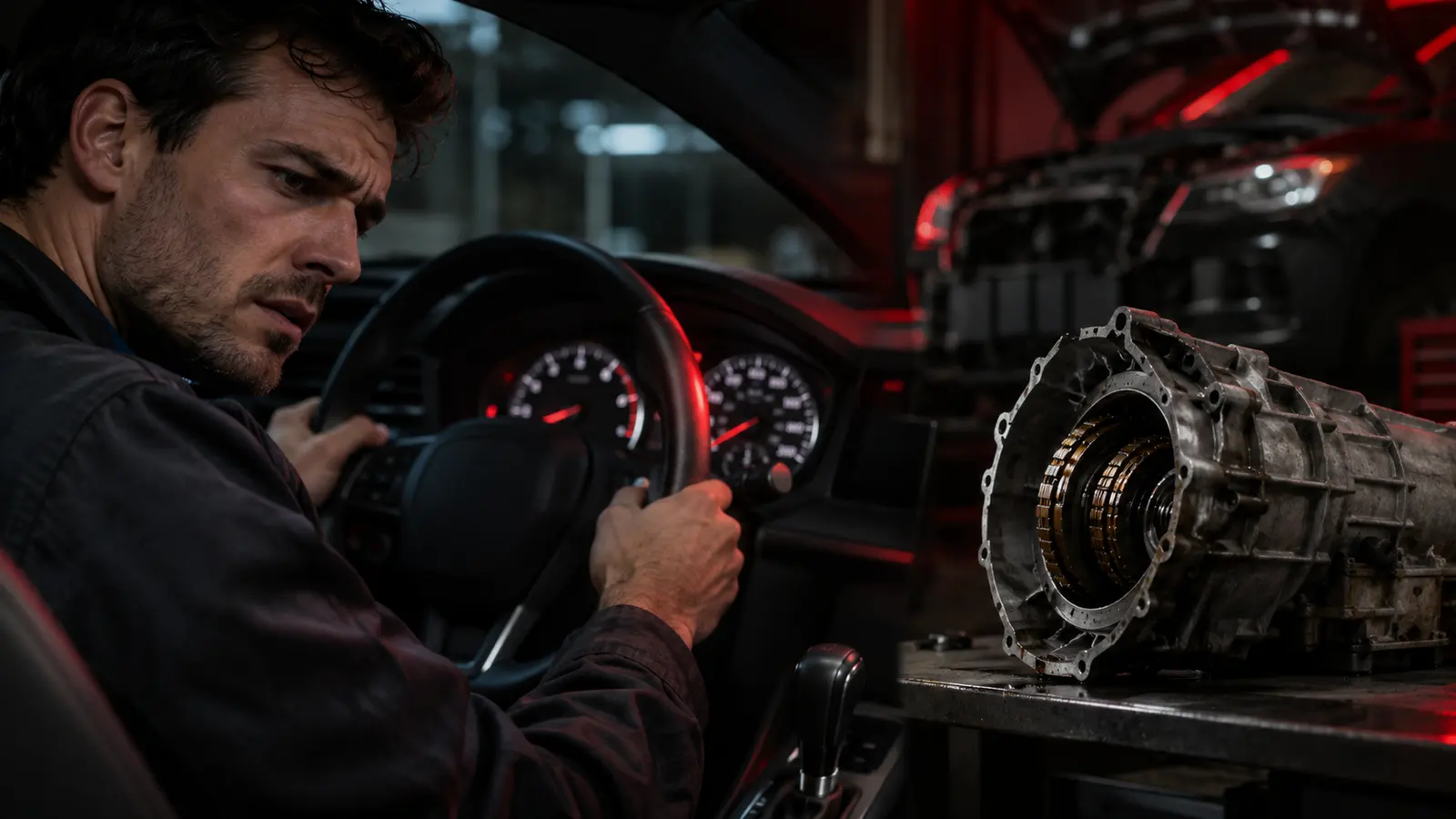 Transmission & Clutch
Transmission Slipping: Symptoms and Causes
If the revs rise but the car doesn't speed up as it should, the transmission or clutch is slipping. Low or worn fluid, a worn clutch and internal wear are common causes.
Updated November 22, 2026Read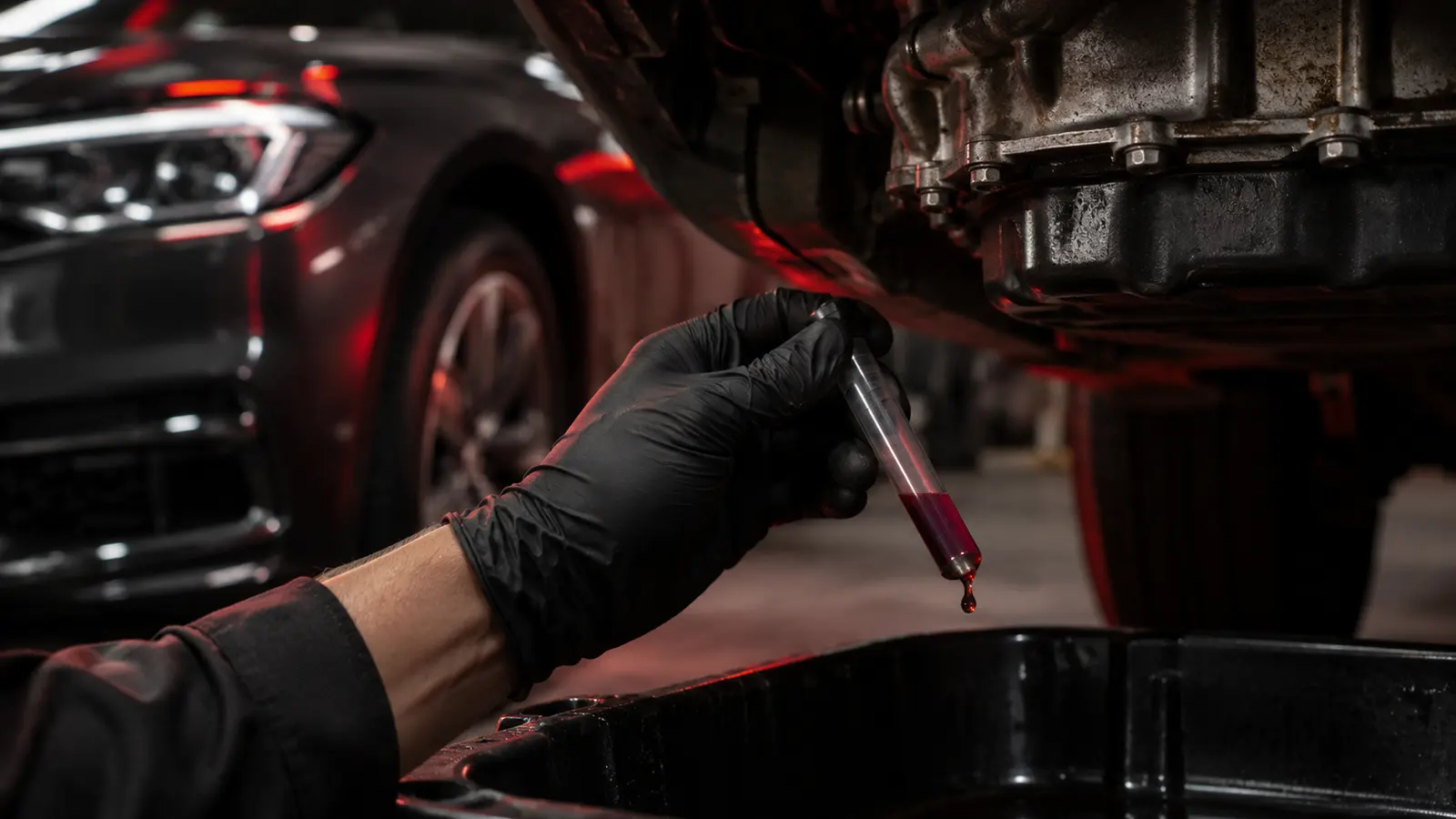 Transmission & Clutch
How Often Should You Change Transmission Fluid?
It varies widely. Many automatic gearboxes call for a change somewhere between about 30,000 and 100,000 miles. Some makers say 'lifetime', but towing, heat and stop-start traffic shorten fluid life.
Updated November 22, 2026Read