
How Often Should You Change Transmission Fluid?
Part of: Transmission Problems: Slipping, Shifting and Leaks
Quick answer
It varies widely. Many automatic gearboxes call for a change somewhere between about 30,000 and 100,000 miles. Some makers say 'lifetime', but towing, heat and stop-start traffic shorten fluid life.
- Topic
- Transmission & Clutch
- Sections
- 8
- Reading time
- 1 min
- Applies to
- All regions
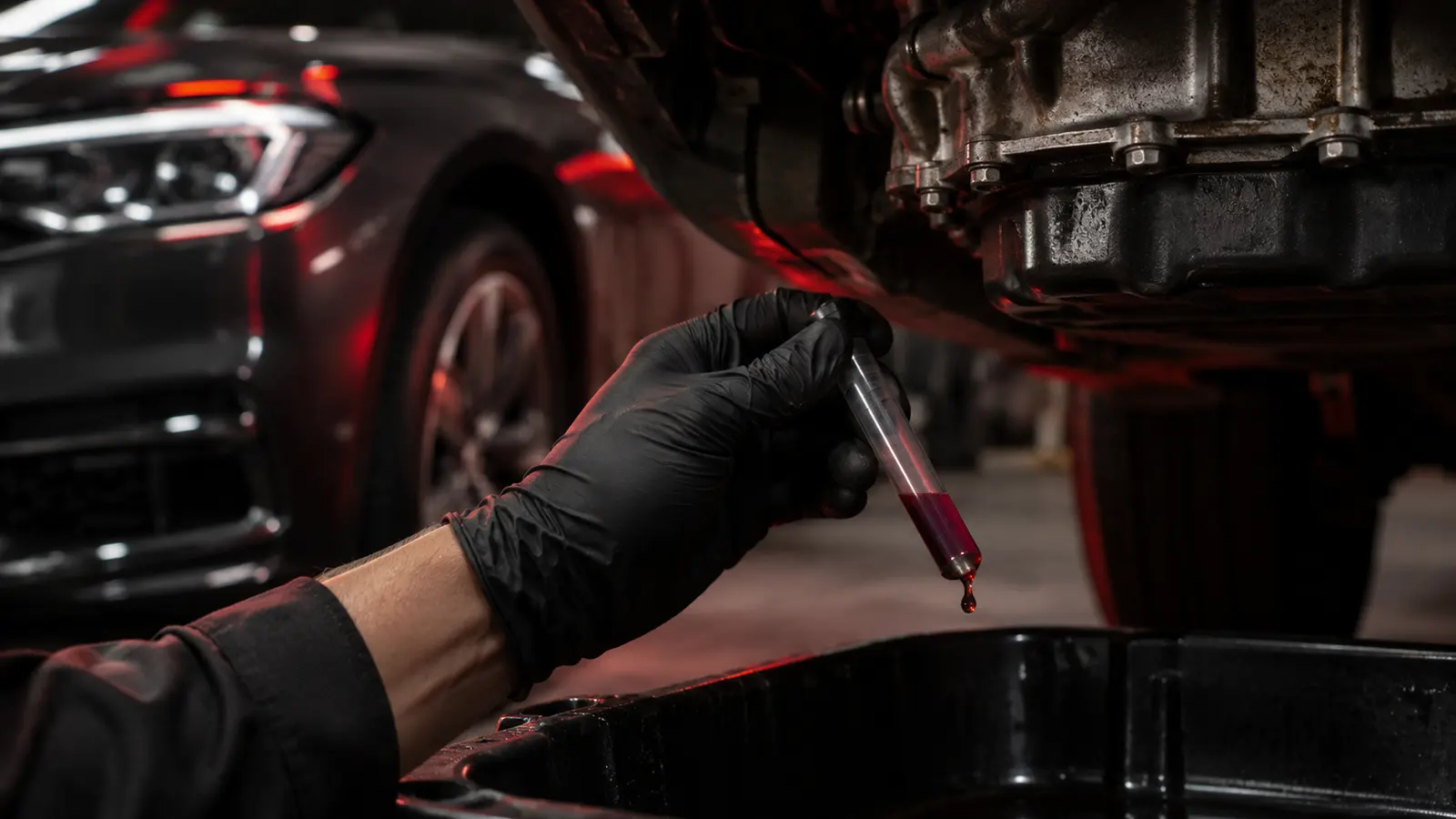
Transmission fluid intervals vary more than almost any other service item. Many automatic gearboxes call for a change somewhere between about 30,000 and 100,000 miles. Some makers list the fluid as "lifetime". Manual gearbox oil is often changed less frequently. Towing, heat, hills and stop-start traffic all shorten fluid life.
Signs the fluid needs attention
- Slipping, flaring revs or delayed engagement
- Harsh or late shifts
- Shudder at light throttle
- Dark, burnt-smelling fluid (if your gearbox has a dipstick)
- A transmission warning light or codes such as P0700
Intervals at a glance
| Gearbox type | Typical guidance |
|---|---|
| Conventional automatic | 30,000–100,000 miles, or "lifetime" by some makers |
| CVT | Often shorter intervals; use the specific CVT fluid |
| Dual-clutch (DCT) | Many have fixed intervals for fluid and filter |
| Manual gearbox | Often long intervals or lifetime |
| Severe use (towing, heat, taxi) | Shorter, per handbook |
Check these in order
- Read the handbook for both normal and severe service.
- Check service history for previous fluid changes.
- If there's a dipstick, check level and colour with the engine at the specified temperature.
- Note any shifting changes, as they are early warnings.
Why fluid ages
Automatic transmission fluid lubricates, cools and transmits hydraulic pressure. Heat breaks it down and friction material wears into it.
Drain-and-fill vs flush
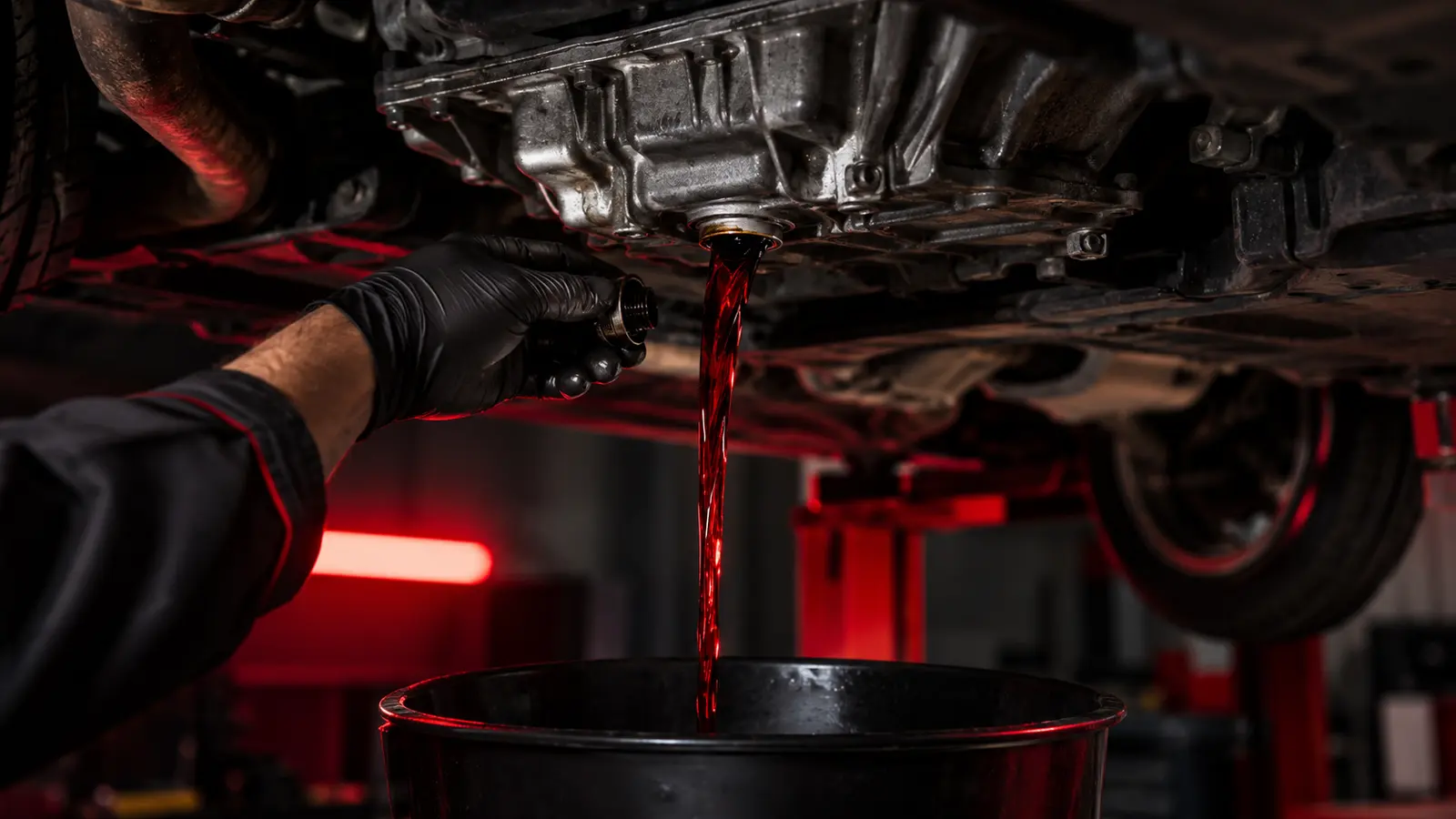
A drain-and-fill replaces part of the fluid. A machine exchange replaces more. Follow the maker's procedure; some gearboxes need a specific fill and level-check process.
What affects the cost
Fluid type and amount, whether a filter is included, and the fill procedure. CVT and DCT services are often more involved.
How to prevent problems
- Use exactly the fluid specified.
- Use a transmission cooler if you tow heavy loads regularly.
Related problems
Frequently asked questions
What does 'lifetime' transmission fluid mean?
Usually that the maker doesn't schedule a change in normal use. Many specialists still recommend changing it under severe use such as towing or heavy traffic.
Can changing old fluid cause problems?
On very high-mileage gearboxes that have never been serviced, a change occasionally coincides with problems. Get advice from a transmission specialist first.
Do CVTs need special fluid?
Yes. CVTs need their own specific fluid. The wrong fluid can damage them.
Tools that can help
Need a mechanic?
Find rated garages near you by city, ZIP code or postcode, with directions.
About this guide
Written by Editorial Team using manufacturer documentation, government road-safety guidance and motoring-organisation advice. It explains likely causes and safe checks. It is not a diagnosis. How we write and check guides.
More transmission & clutch guides
 Transmission & Clutch
Car Transmissions: The Complete Guide to Manual, Automatic, CVT and Dual-Clutch
The transmission (gearbox) sends engine power to the wheels at the right speed and torque. This guide explains manual, conventional automatic, CVT and dual-clutch designs, what the fluid does, the warning signs of trouble and how to make a gearbox last.
Updated November 22, 2026Read Transmission & Clutch
Car Won't Move in Drive: Automatic Transmission Causes
If an automatic revs in Drive but won't move, check the parking brake and transmission fluid first. Other causes include a broken shift cable, a failed torque converter or internal transmission damage.
Updated November 22, 2026Read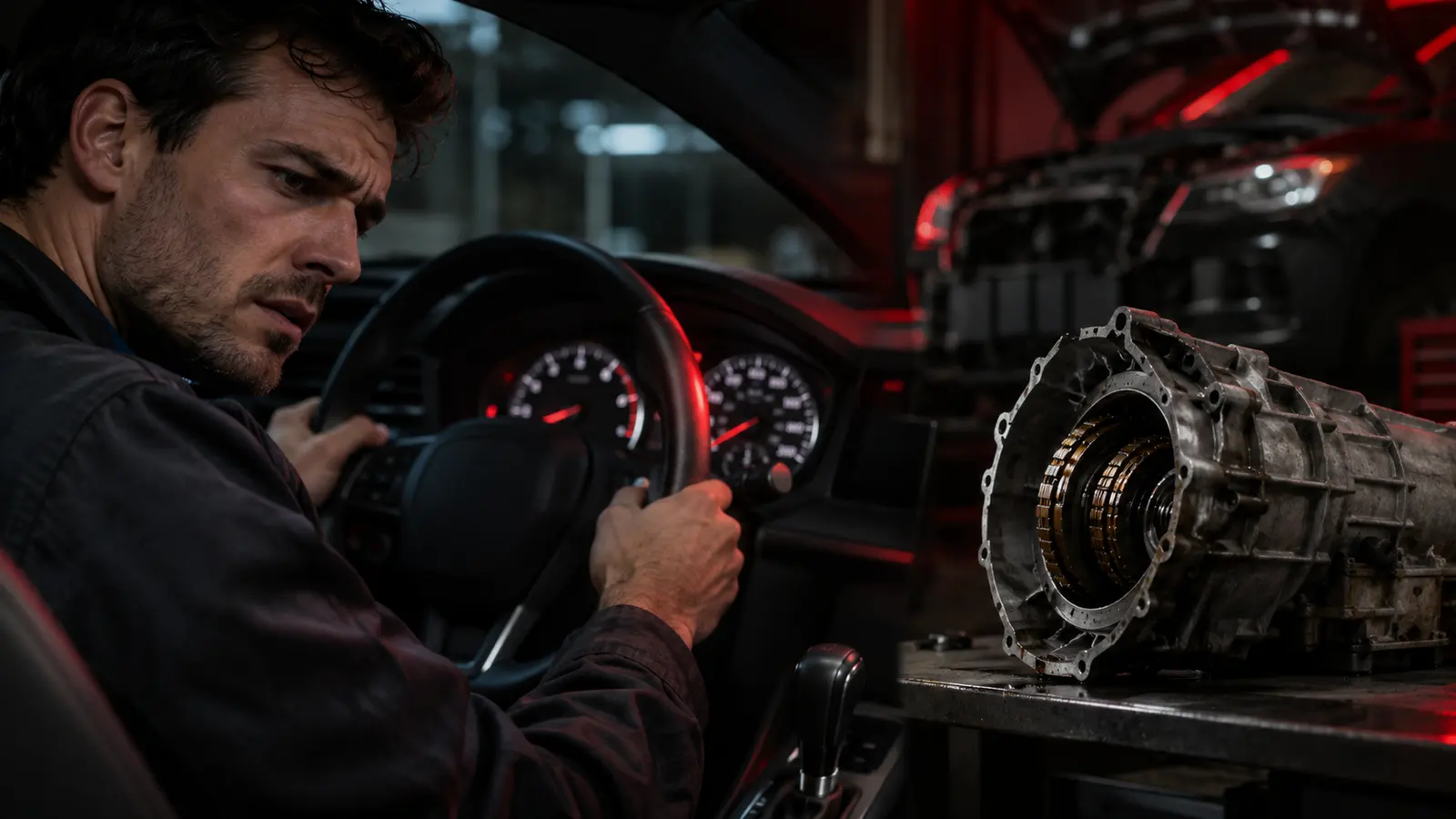 Transmission & Clutch
Transmission Slipping: Symptoms and Causes
If the revs rise but the car doesn't speed up as it should, the transmission or clutch is slipping. Low or worn fluid, a worn clutch and internal wear are common causes.
Updated November 22, 2026Read