
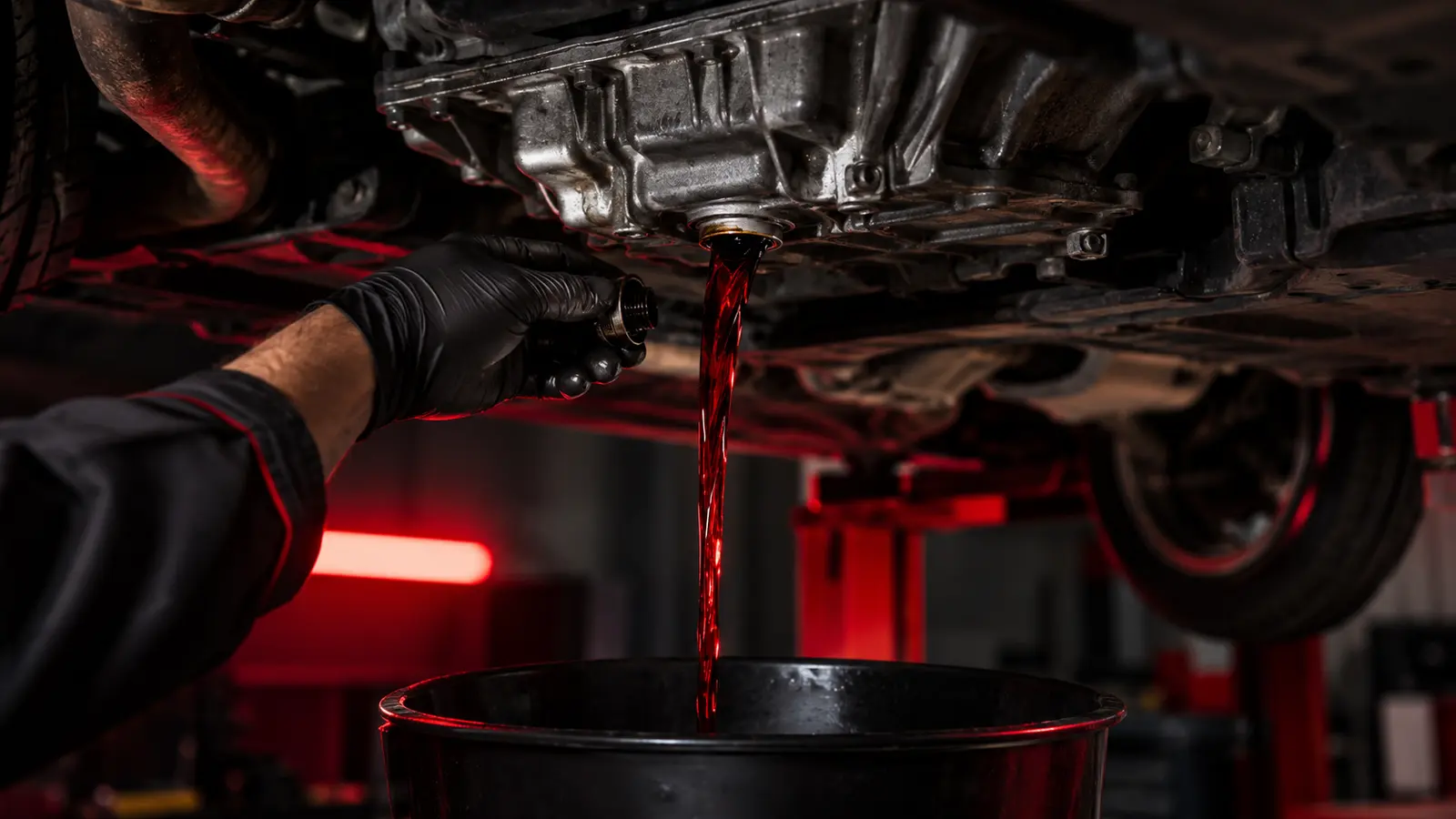
Transmission Fluid Leak: Signs and Causes
Part of: Car Leaking Fluid: Identify It by Colour · Transmission Problems: Slipping, Shifting and Leaks
Quick answer
Red or pink, slightly oily fluid under the middle or front of the car is usually automatic transmission fluid. Leaks often come from the pan gasket, cooler lines or seals.
- Topic
- Transmission & Clutch
- Sections
- 6
- Reading time
- 1 min
- Applies to
- All regions
Red or pink, slightly oily fluid under the middle or front of the car is usually automatic transmission fluid (ATF). Common transmission fluid leak sources are the pan gasket, cooler lines to the radiator, axle seals and the front pump seal.
Is it safe to drive?
A small seep with correct fluid level: yes, short term. If shifting changes, the car slips, or the level is low, don't drive far. Low fluid can destroy a gearbox.
Clues at a glance
| Where | Likely source |
|---|---|
| Middle of the car | Transmission pan gasket |
| Front, near radiator | Cooler lines or fittings |
| At the inner wheel joints | Axle (driveshaft) seals |
| Between engine and gearbox | Front pump seal |
| Front, near steering | Power steering, not transmission |
Check these in order
- Put white card under the car overnight.
- Check fluid level if there's a dipstick.
- Note shifting changes.
What a mechanic will do
They'll clean and trace the leak, replace gaskets or seals, and top up with the correct fluid.
How to prevent problems
- Service fluid on schedule.
- Use the exact fluid specified.
Related guides
Frequently asked questions
How do I tell transmission fluid from power steering fluid?
Both can be red. Location helps: transmission leaks are usually mid-car; power steering near the front by the steering rack or pump.
Can I drive with a transmission leak?
Only if the level is correct and the leak is small. Low fluid can quickly damage the transmission.
Does old transmission fluid look different?
It turns darker brown and can smell burnt.
Tools that can help
Need a mechanic?
Find rated garages near you by city, ZIP code or postcode, with directions.
About this guide
Written by Editorial Team using manufacturer documentation, government road-safety guidance and motoring-organisation advice. It explains likely causes and safe checks. It is not a diagnosis. How we write and check guides.
More transmission & clutch guides
Transmission & ClutchCar Transmissions: The Complete Guide to Manual, Automatic, CVT and Dual-Clutch
The transmission (gearbox) sends engine power to the wheels at the right speed and torque. This guide explains manual, conventional automatic, CVT and dual-clutch designs, what the fluid does, the warning signs of trouble and how to make a gearbox last.
Updated November 22, 2026Read Transmission & Clutch
Car Won't Move in Drive: Automatic Transmission Causes
If an automatic revs in Drive but won't move, check the parking brake and transmission fluid first. Other causes include a broken shift cable, a failed torque converter or internal transmission damage.
Updated November 22, 2026Read Transmission & Clutch
Transmission Slipping: Symptoms and Causes
If the revs rise but the car doesn't speed up as it should, the transmission or clutch is slipping. Low or worn fluid, a worn clutch and internal wear are common causes.
Updated November 22, 2026Read