
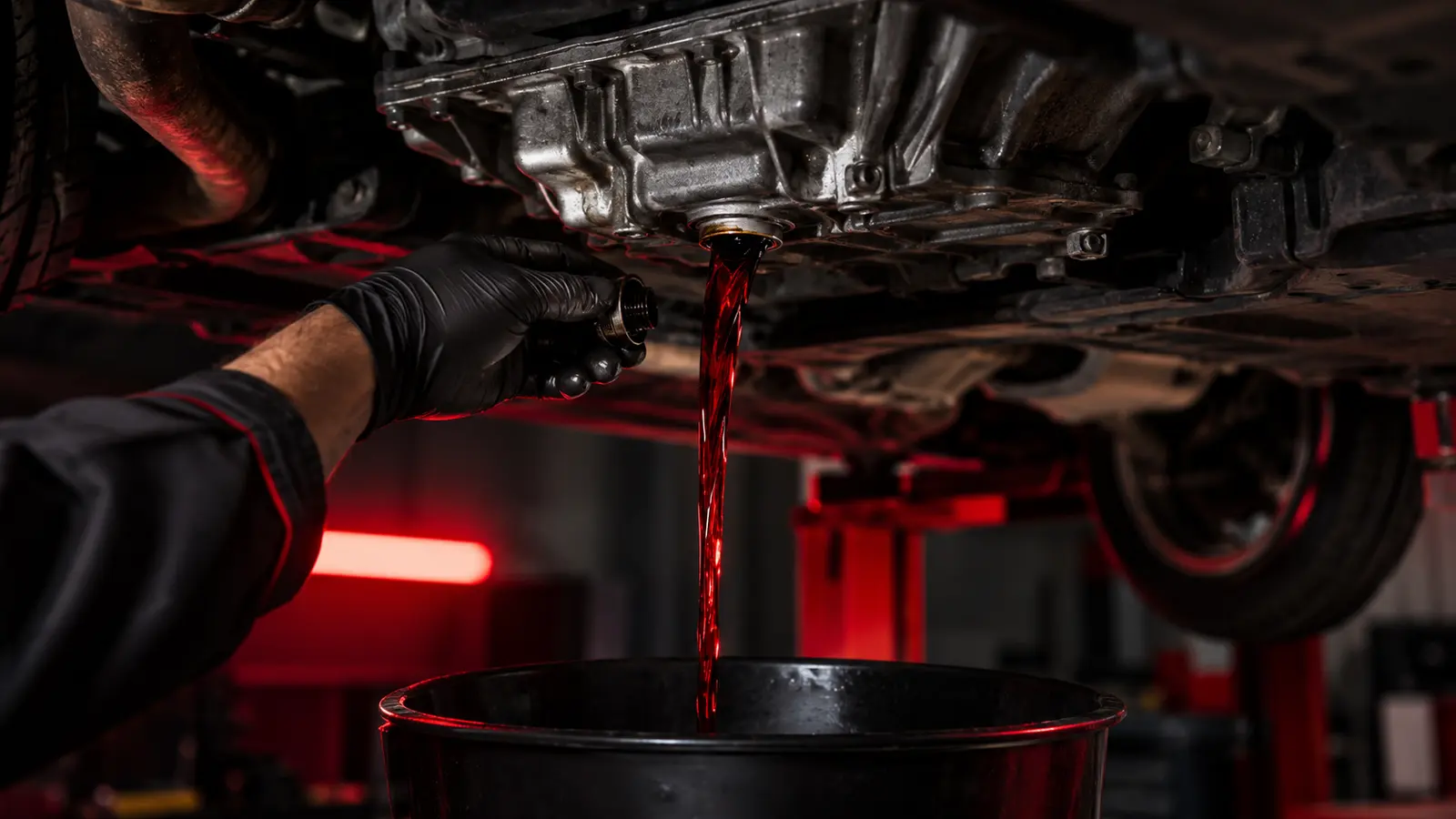
Automatic Transmission Shifting Hard or Late
Part of: Transmission Problems: Slipping, Shifting and Leaks
Quick answer
Harsh, late or clunky gear changes in an automatic are often caused by low or old fluid, failing shift solenoids, sensor faults, or the gearbox's adaptive settings.
- Topic
- Transmission & Clutch
- Sections
- 6
- Reading time
- 1 min
- Applies to
- All regions
If your automatic transmission is shifting hard or late, the usual causes are low or degraded fluid, failing shift solenoids, sensor faults (speed, throttle position) and adaptive settings that need resetting after repairs.
Is it safe to drive?
Usually, carefully. If the transmission light is on, the car is in limp mode (stuck in one gear), or it slips, get it to a specialist.
Causes at a glance
| Symptom | Likely cause |
|---|---|
| Harsh shifts warm and cold | Fluid, solenoids |
| Late upshifts, high revs | Sensor fault or limp mode |
| Clunk into Drive or Reverse | Engine mounts or fluid level |
| Stuck in one gear, warning light | Limp mode |
| After battery disconnect | Adaptations relearning |
Check these in order
- Scan for codes including P0700.
- Check fluid if your gearbox has a dipstick.
- Note conditions: cold, warm, which gear change.
What a mechanic will do
They'll read transmission codes and data, check fluid level and condition, test solenoids, and reset adaptations.
How to prevent problems
- Service fluid per the handbook.
Related guides
Frequently asked questions
Is a harsh first shift when cold normal?
Some gearboxes shift firmer until the fluid warms. If it continues once warm, have it checked.
What is transmission adaptation?
Many automatics learn your driving style and component wear. After repairs, adaptations may need resetting with a scan tool.
Can engine problems affect shifting?
Yes. Throttle sensor or misfire problems can upset shift timing.
Tools that can help
Need a mechanic?
Find rated garages near you by city, ZIP code or postcode, with directions.
About this guide
Written by Editorial Team using manufacturer documentation, government road-safety guidance and motoring-organisation advice. It explains likely causes and safe checks. It is not a diagnosis. How we write and check guides.
More transmission & clutch guides
Transmission & ClutchCar Transmissions: The Complete Guide to Manual, Automatic, CVT and Dual-Clutch
The transmission (gearbox) sends engine power to the wheels at the right speed and torque. This guide explains manual, conventional automatic, CVT and dual-clutch designs, what the fluid does, the warning signs of trouble and how to make a gearbox last.
Updated November 22, 2026Read Transmission & Clutch
Car Won't Move in Drive: Automatic Transmission Causes
If an automatic revs in Drive but won't move, check the parking brake and transmission fluid first. Other causes include a broken shift cable, a failed torque converter or internal transmission damage.
Updated November 22, 2026Read Transmission & Clutch
Transmission Slipping: Symptoms and Causes
If the revs rise but the car doesn't speed up as it should, the transmission or clutch is slipping. Low or worn fluid, a worn clutch and internal wear are common causes.
Updated November 22, 2026Read