
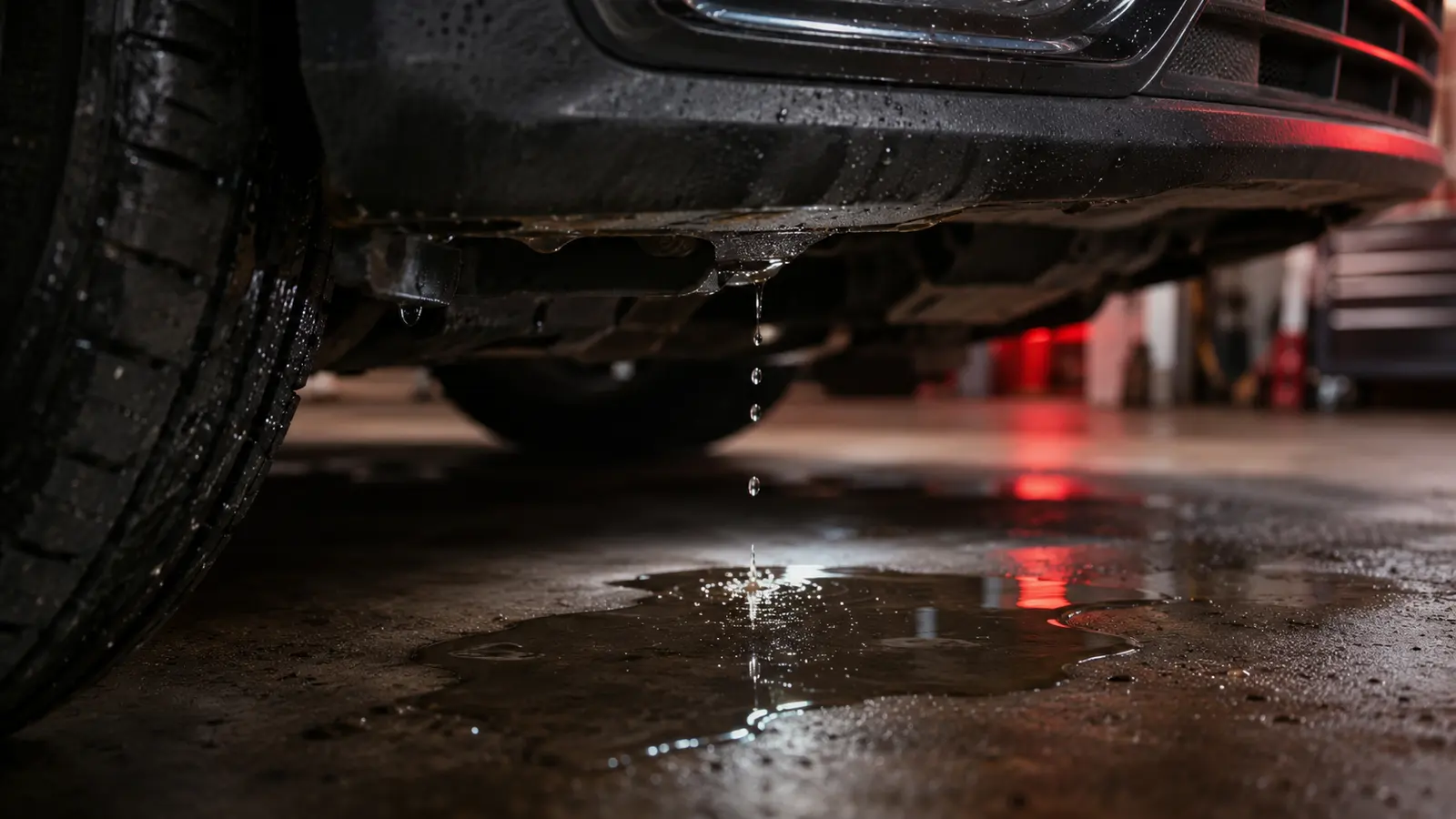
Car Leaking Clear Fluid: Water or Something Else?
Quick answer
Clear, odourless water under the front of the car after using the AC is normal condensation. Clear fluid that's oily (brake fluid) or smells of fuel is not.
- Topic
- Engine Problems
- Sections
- 8
- Reading time
- 2 min
- Applies to
- All regions
If your car is leaking clear fluid, it's most likely water from the air conditioning, which is completely normal. The AC removes moisture from the cabin air and drains it under the car, usually near the front passenger footwell. Clear fluid that is oily (possibly brake fluid) or smells of fuel is not normal.
Is it safe to drive?
Water: yes. Brake fluid: don't drive. Check the fluid level and brake pedal feel first. Fuel: don't drive, and keep ignition sources away.
Identify it by touch and smell
| Feels and smells like | What it is | Action |
|---|---|---|
| Water, no smell, front passenger side | AC condensation | Normal |
| Water at the tailpipe on cold start | Exhaust condensation | Normal |
| Oily, slightly yellow, near a wheel | Brake fluid | Don't drive |
| Strong fuel smell | Petrol or diesel | Don't drive |
| Thin, slightly soapy, blue tint | Washer fluid | Fix when convenient |
| Slightly sweet, may be clear-ish | Coolant (some types) | Check level |
Check these in order
- Dab some on white paper. Water dries without a trace. Oil-based fluids leave a ring.
- Smell it carefully. Fuel and coolant are distinctive.
- Note the location: under the passenger footwell, near a wheel, at the back.
- Check brake fluid and coolant levels in their reservoirs.
Causes explained
AC condensation
Hot weather and AC use can produce a surprising amount of water. It's a sign the AC is working.
Brake fluid
Leaks can come from calipers, hoses or the master cylinder. Fluid near a wheel or on the inside of a tyre is serious.
Washer fluid
Cracked reservoirs and loose hoses leak washer fluid, which is often blue but can be clear.
Fuel
Diesel and petrol can look clear. The smell gives them away.
What a mechanic will do
They'll identify the fluid, check levels, and trace leaks from brake lines, calipers, washer hoses or the fuel system.
What affects the cost
Washer hoses are cheap. Brake hoses and calipers are moderate but essential. AC drips cost nothing.
How to prevent it
- Check brake fluid level at every service.
- Clear the AC drain if water collects inside the car instead of dripping out.
Related problems
Frequently asked questions
Is water dripping from my car normal?
If it's clear, odourless and under the front passenger side after using the AC, yes. It's condensation from the evaporator.
What does brake fluid look like?
Clear to light yellow or brown, slightly oily and slippery. Brake fluid leaks are a safety risk.
Could clear fluid be from the exhaust?
Yes. Water drips from the exhaust tailpipe on cold starts, which is normal condensation.
Tools that can help
How the parts involved work
Need a mechanic?
Find rated garages near you by city, ZIP code or postcode, with directions.
About this guide
Written by Editorial Team using manufacturer documentation, government road-safety guidance and motoring-organisation advice. It explains likely causes and safe checks. It is not a diagnosis. How we write and check guides.
More engine problems guides
 Engine Problems
Car Exhaust and Emissions: The Complete Guide to Catalytic Converters, Sensors and Smoke
The exhaust system carries burnt gases away, cleans them with a catalytic converter (and on diesels a DPF and SCR), and quietens the engine. This guide explains each part, what different smoke colours and noises mean, catalytic converter theft, and emissions tests.
Updated November 22, 2026Read Engine Problems
Engine Cooling System: The Complete Guide to Coolant, Overheating and Repairs
The cooling system carries heat away from the engine using coolant, a water pump, a thermostat, a radiator and fans, all under pressure so coolant can run above 100 °C. This guide explains each part, why engines overheat, how to spot leaks and how to check coolant safely.
Updated November 22, 2026Read Engine Problems
Diesel Engines: The Complete Guide to How They Work, DPF, AdBlue and Care
Diesel engines ignite fuel by compression rather than a spark. Modern diesels add glow plugs, a particulate filter, AdBlue and EGR to start reliably and cut emissions. This guide explains each system, the warning lights and how to keep a diesel healthy.
Updated November 22, 2026Read