
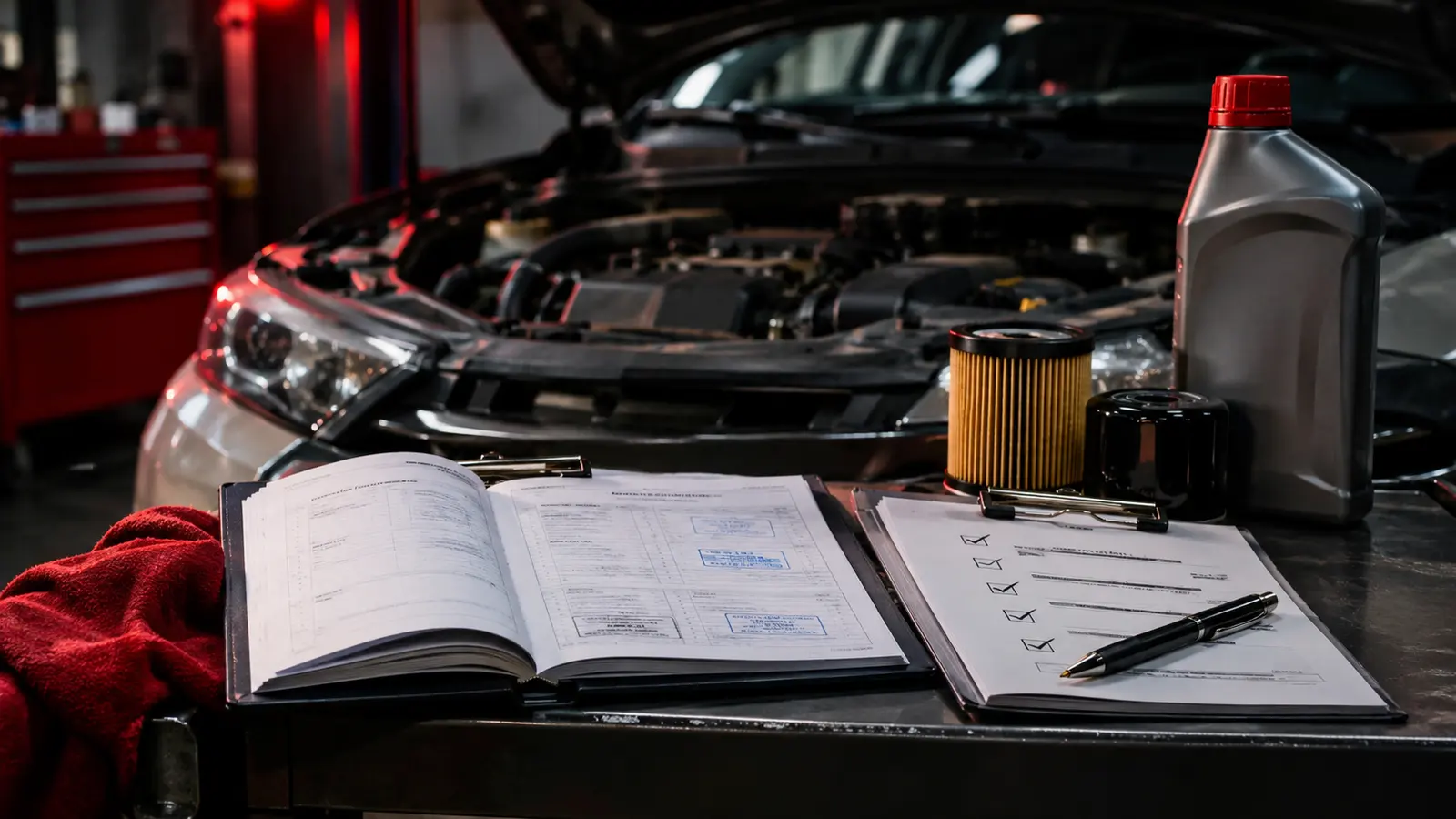
Logbook Service vs Regular Service: What's the Difference?
Quick answer
A logbook service follows the maker's schedule and keeps your warranty records intact. A basic service covers the essentials between them.
- Topic
- Servicing & Maintenance
- Sections
- 5
- Reading time
- 2 min
- Applies to
- Australia
A logbook service follows the exact checks and replacements your car's manufacturer lists for that kilometre or time interval, and is stamped in the logbook to prove the car has been maintained. A regular (basic) service is a lighter, more flexible check — typically an oil and filter change plus safety inspection — that isn't tied to the maker's schedule.
Side-by-side
| Logbook service | Basic service | |
|---|---|---|
| Follows manufacturer schedule | Yes | No |
| Keeps warranty records | Yes | Not on its own |
| Typical content | Oil, filters, fluids, plugs, belts and inspections as listed for that interval | Oil and filter, fluid top-ups, safety check |
| Best for | Cars under warranty; buyers who value full history | Older cars between logbook intervals |
Why the logbook matters
Your manufacturer's warranty can require evidence that the car was serviced on schedule. A stamped logbook (or digital service record) is that evidence — and a complete history also helps resale value.
Can an independent mechanic do it?
In Australia you can generally have your logbook service done by a qualified independent workshop without voiding your new-car warranty, as long as they follow the manufacturer's schedule and use parts and fluids that meet the specification. Keep the invoices.
What a logbook service usually covers
Exact items vary by model and interval, but often include:
- Engine oil and filter replacement
- Air and cabin filter inspection or replacement
- Brake, coolant and transmission fluid checks — and replacement at specified intervals
- Spark plugs at major intervals
- Tyre, brake, suspension, lights and battery inspection
Which should you choose?
- Under warranty: stick to logbook services on time.
- Out of warranty, high kilometres: follow the logbook for major items (timing belt, fluids) and use basic services in between if you drive a lot.
- Lots of short trips, towing or dusty roads: your logbook may list a "severe" schedule with shorter intervals — follow it.
Ask your workshop for a written quote listing what the service includes. Naming isn't standardised, so "full", "major", "minor" and "logbook" can mean different things at different shops. A qualified mechanic can confirm what your car's interval requires.
Frequently asked questions
Do I have to use the dealer for a logbook service?
In Australia, you can generally have a logbook service done by a qualified independent mechanic without voiding your warranty, provided they follow the manufacturer's schedule and use suitable parts and fluids.
How often is a logbook service?
It depends on the manufacturer — commonly every 10,000–15,000 km or 12 months, whichever comes first. Check the logbook for your car.
Tools that can help
Need a mechanic?
Find rated garages near you by city, ZIP code or postcode, with directions.
About this guide
Written by Editorial Team using manufacturer documentation, government road-safety guidance and motoring-organisation advice. It explains likely causes and safe checks. It is not a diagnosis. How we write and check guides.
More servicing & maintenance guides
 Servicing & Maintenance
Engine Oil: The Complete Guide to Grades, Types, Checks and Changes
Engine oil lubricates, cools and cleans the engine. This guide explains what the numbers in 5W-30 mean, API and ACEA specifications, synthetic vs conventional oil, how to check the level, when to change it, and what leaks, smoke and warning lights are telling you.
Updated November 22, 2026Read Servicing & Maintenance
Car Leaking Oil After an Oil Change: Why
Oil drips right after an oil change are usually from the job itself: a filter not tightened or with the old gasket stuck on, a drain plug without a new washer, overfilling, or oil spilled during the change that is now dripping off.
Updated November 22, 2026Read Servicing & Maintenance
Signs Your Car Needs a Mechanic
Red warning lights, a soft brake pedal, steam, a strong fuel smell, new noises, leaks, vibration and changes in steering or braking are signs your car needs professional attention.
Updated November 22, 2026Read