
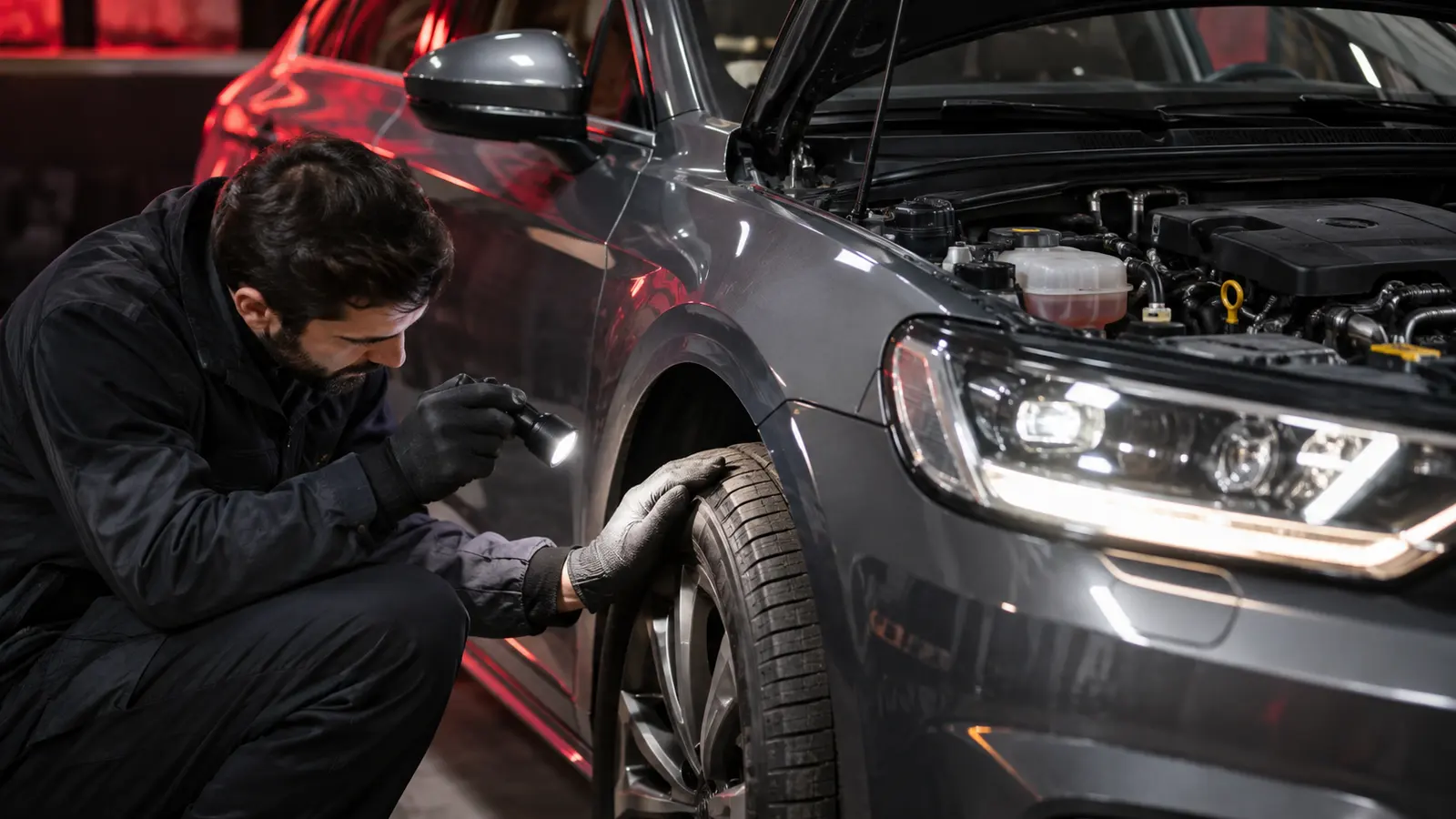
Used Car Inspection Checklist: What to Check Before You Buy
Quick answer
Check the paperwork and history first, then the body, tyres, under the bonnet and interior, followed by a proper test drive. For anything expensive, pay for a professional inspection.
- Topic
- Inspections (MOT, WOF, Roadworthy)
- Sections
- 6
- Reading time
- 1 min
- Applies to
- All regions
A careful used car inspection starts with paperwork and history, then the body, tyres, engine bay and interior, and finishes with a proper test drive. For anything costly, a professional pre-purchase inspection is worth paying for.
Paperwork and history
- Registration document matches seller and VIN
- Service history and receipts
- History check for finance, write-off, theft
- Inspection history (for example MOT history in the UK)
- Recalls completed
Exterior
- Panel gaps even, paint colour consistent
- Rust, especially sills and arches
- Tyres: matching brands, even wear, tread depth
- Lights and lenses intact
- Windscreen free of cracks
Under the bonnet (engine cold)
- Oil level and condition; no milky residue
- Coolant level and colour
- Signs of leaks
- Belts and hoses
- Cold start: no smoke, knocking or warning lights left on
Interior
- Warning lights come on at key-on, then go off
- Mileage plausible for wear
- AC, heater, windows, locks all work
- No damp or musty smell
Test drive
- Straight-line tracking and braking
- Smooth gear changes
- No vibration at speed
- No noises over bumps or turning
Related guides
Frequently asked questions
Should I get a professional inspection?
For most purchases, yes. It costs little compared with the car and can reveal hidden problems.
What history checks are available?
Options vary by country: VIN history reports in the US and Canada, MOT history and HPI-style checks in the UK, and PPSR checks in Australia.
Should I check the car cold?
Yes. Ask the seller not to start it before you arrive, so you can hear a cold start.
Tools that can help
Need a mechanic?
Find rated garages near you by city, ZIP code or postcode, with directions.
About this guide
Written by Editorial Team using manufacturer documentation, government road-safety guidance and motoring-organisation advice. It explains likely causes and safe checks. It is not a diagnosis. How we write and check guides.
More inspections (mot, wof, roadworthy) guides
Inspections (MOT, WOF, Roadworthy)How to Buy a Used Car: The Complete Guide to Checks, Paperwork and Red Flags
Buying a used car safely is about evidence: the car's history, its condition and the paperwork. This guide walks through research, recall and history checks, a structured inspection and test drive, mileage-fraud warning signs, and the questions to ask before you pay.
Updated November 22, 2026Read Inspections (MOT, WOF, Roadworthy)
Is It Safe to Drive With a Cracked Windscreen (Windshield)?
Small chips away from the driver's line of sight are usually fine for a short time and often repairable. Cracks in front of the driver, long cracks or damage that blocks the view are unsafe and fail inspections like the UK MOT.
Updated November 22, 2026Read Inspections (MOT, WOF, Roadworthy)
MOT Checklist: How to Prepare Your Car and Avoid Easy Fails
Many MOT failures come from simple things you can check at home: bulbs, tyre tread, wipers, washer fluid, warning lights and number plates. Check them before the test.
Updated November 22, 2026Read