
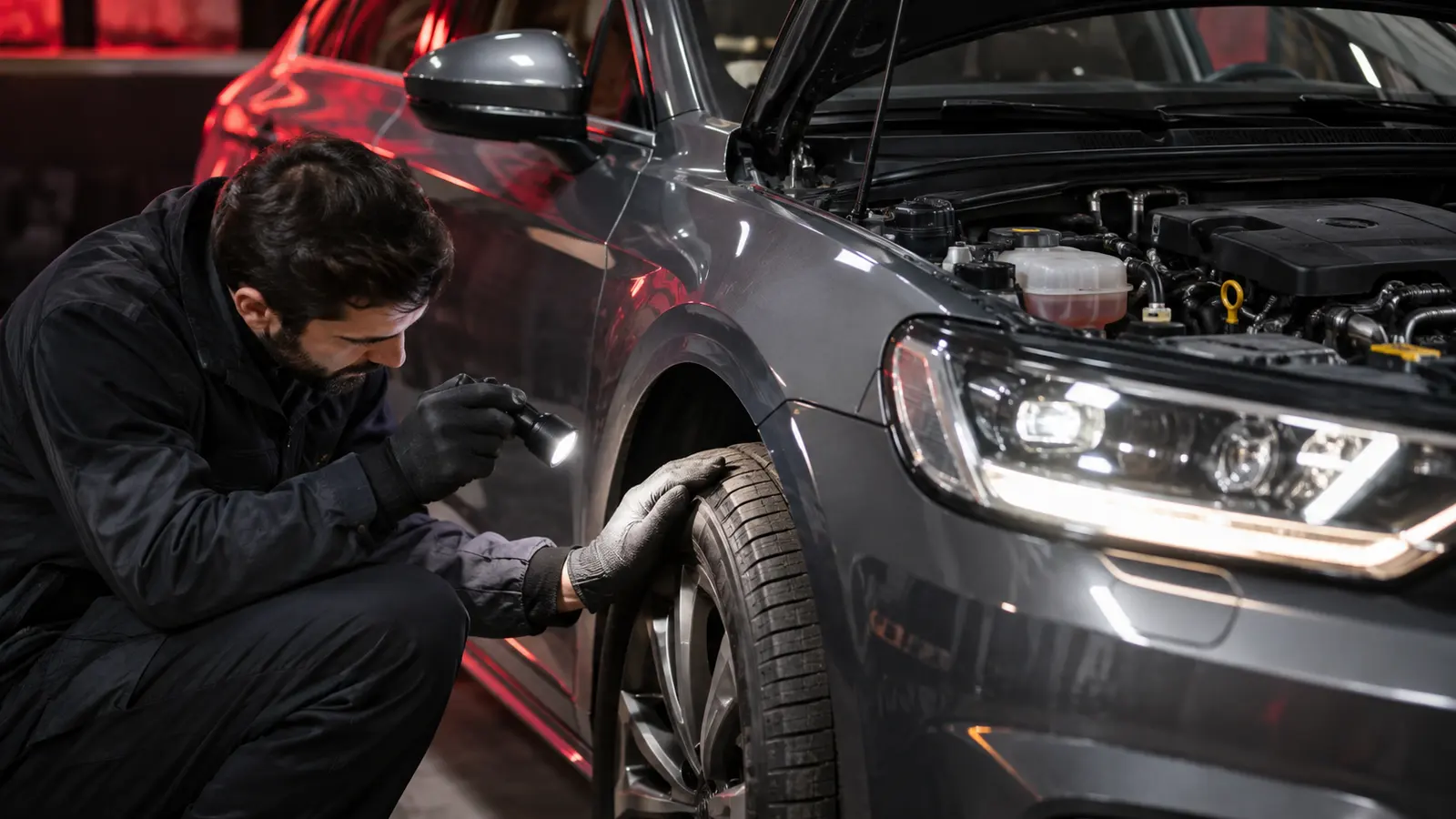
How to Buy a Used Car: The Complete Guide to Checks, Paperwork and Red Flags
Quick answer
Buying a used car safely is about evidence: the car's history, its condition and the paperwork. This guide walks through research, recall and history checks, a structured inspection and test drive, mileage-fraud warning signs, and the questions to ask before you pay.
- Topic
- Inspections (MOT, WOF, Roadworthy)
- Sections
- 9
- Reading time
- 4 min
- Applies to
- All regions
Buying a used car well comes down to three things: the car's history, its condition and the paperwork. A careful buyer gathers evidence for each before handing over money. This AllInformations Automotive guide takes you step by step from research to driving away.
For a printable inspection list, see the used car inspection checklist.
Before you look at any cars
Decide what you need
Think about your typical journeys, passengers, load space, running costs and parking. For mostly short trips, a diesel may not suit (see diesel engines: the complete guide); an EV or hybrid might.
Research the model
Look up common faults, recalls and running costs for the models you're considering. Check the maintenance needs: see petrol vs electric maintenance and manual vs automatic.
Set a total budget
Include insurance, tax, servicing, tyres and a fund for early repairs.
History checks
Recalls
Check for open safety recalls using the VIN: NHTSA's search in the US, GOV.UK's recall checker in the UK. See how to check car recalls and how to find your VIN.
MOT and inspection history
In the UK, GOV.UK's free MOT history check shows past results, failures, advisories and recorded mileage. See how to check MOT history. Other countries have similar records for inspections.
Mileage fraud ("clocking")
Odometer fraud is known as "clocking" in the UK and "busting miles" in the US. Compare the odometer with inspection and service records, and look for wear that doesn't match the mileage: a shiny steering wheel, worn pedals or a sagging driver's seat on a "low-mileage" car.
Ownership and finance
Check that the seller has the right to sell the car and that no outstanding finance is attached, using the services available in your country.
Inspecting the car
Bodywork and structure
Look along the panels for ripples, mismatched paint and uneven gaps that suggest crash repairs. Check for rust on sills, wheel arches and under the car.
Tyres and brakes
Uneven tyre wear can reveal alignment or suspension problems. Check tread depth and tyre age. See car tyres: the complete guide and uneven tyre wear causes.
Under the bonnet
With the engine cold, check oil (no milky residue), coolant level and colour, signs of leaks, and belts and hoses. See engine oil: the complete guide.
Inside
Test every electric function: windows, locks, lights, AC, heater, infotainment. Check the warning lights come on at start-up and then go out. See car warning lights: the complete guide.
Signs of water damage
Damp carpets, a musty smell or rust in odd places can point to flood damage. See car smells musty after rain.
The test drive
Starting
Start the engine from cold if you can. Listen for knocks, rattles or a struggle to start, and watch the exhaust for smoke.
On the road
- Gears should change smoothly; the clutch shouldn't slip.
- The car should track straight and brake without pulling or shaking.
- Listen for clunks over bumps and noise when turning.
- Watch the temperature gauge stays steady.
See transmission slipping, car pulling to one side and car shakes when braking.
After the drive
Look under the car again for fresh drips, and check for warning lights.
Professional inspection
Why it's worth considering
A mechanic can lift the car, check suspension and exhaust, scan for stored fault codes and spot problems an untrained eye misses. See signs your car needs a mechanic.
Read stored codes
Even with no warning light, stored codes can reveal recent faults. See how to use an OBD2 scanner.
Paperwork
Documents to check
- Registration document matches the seller's details and the car's VIN.
- Service history and receipts.
- Inspection certificates where required.
- Records of major work such as timing belt replacement.
Timing belt history
If the engine has a timing belt and there's no record of a change due, budget for one. See symptoms of a bad timing belt.
Red flags
Walk away if
- The seller won't allow a test drive or inspection.
- The VIN doesn't match the documents.
- The mileage doesn't match the history or wear.
- There's pressure to pay quickly, or in cash, without paperwork.
- Warning lights have been disabled or codes cleared just before your visit.
After you buy
First jobs
Change the oil and filter if the history is unclear, check tyre pressures, register any recall repairs and read the handbook's service schedule. See the car maintenance checklist.
Related guides
Frequently asked questions
Should I get an independent inspection?
For anything beyond a cheap runaround, a professional pre-purchase inspection is worth considering, especially if you're not confident checking cars yourself.
How do I spot a clocked car?
Compare the odometer with the MOT or service history, and look for wear that doesn't match the mileage.
What if the seller won't let me test drive?
Treat that as a red flag. Walk away unless there's a very good reason.
Tools that can help
Need a mechanic?
Find rated garages near you by city, ZIP code or postcode, with directions.
About this guide
Written by Editorial Team using manufacturer documentation, government road-safety guidance and motoring-organisation advice. It explains likely causes and safe checks. It is not a diagnosis. How we write and check guides.
More inspections (mot, wof, roadworthy) guides
 Inspections (MOT, WOF, Roadworthy)
Is It Safe to Drive With a Cracked Windscreen (Windshield)?
Small chips away from the driver's line of sight are usually fine for a short time and often repairable. Cracks in front of the driver, long cracks or damage that blocks the view are unsafe and fail inspections like the UK MOT.
Updated November 22, 2026ReadInspections (MOT, WOF, Roadworthy)Used Car Inspection Checklist: What to Check Before You Buy
Check the paperwork and history first, then the body, tyres, under the bonnet and interior, followed by a proper test drive. For anything expensive, pay for a professional inspection.
Updated November 22, 2026Read Inspections (MOT, WOF, Roadworthy)
MOT Checklist: How to Prepare Your Car and Avoid Easy Fails
Many MOT failures come from simple things you can check at home: bulbs, tyre tread, wipers, washer fluid, warning lights and number plates. Check them before the test.
Updated November 22, 2026Read