
Road Trip Car Checklist: What to Check Before You Go
Quick answer
Before a long drive, check tyres (including the spare), oil and coolant, lights, wipers, brakes and battery, then pack an emergency kit and plan rest stops.
- Topic
- Seasonal Driving
- Sections
- 6
- Reading time
- 1 min
- Applies to
- All regions
Before a long drive, a road trip car checklist covers what's most likely to strand you: tyres, fluids, battery, lights and brakes. Add an emergency kit and planned rest stops.
The checklist
- Tyre pressures, including the spare, set for the load
- Tread depth and sidewalls
- Engine oil level
- Coolant level (cold)
- Brake fluid level
- Washer fluid topped up
- Wipers in good condition
- All lights working
- Battery tested if 3+ years old
- Brakes feel normal, no noises
- Warning lights none on
- Service not due during the trip
- Breakdown cover details saved
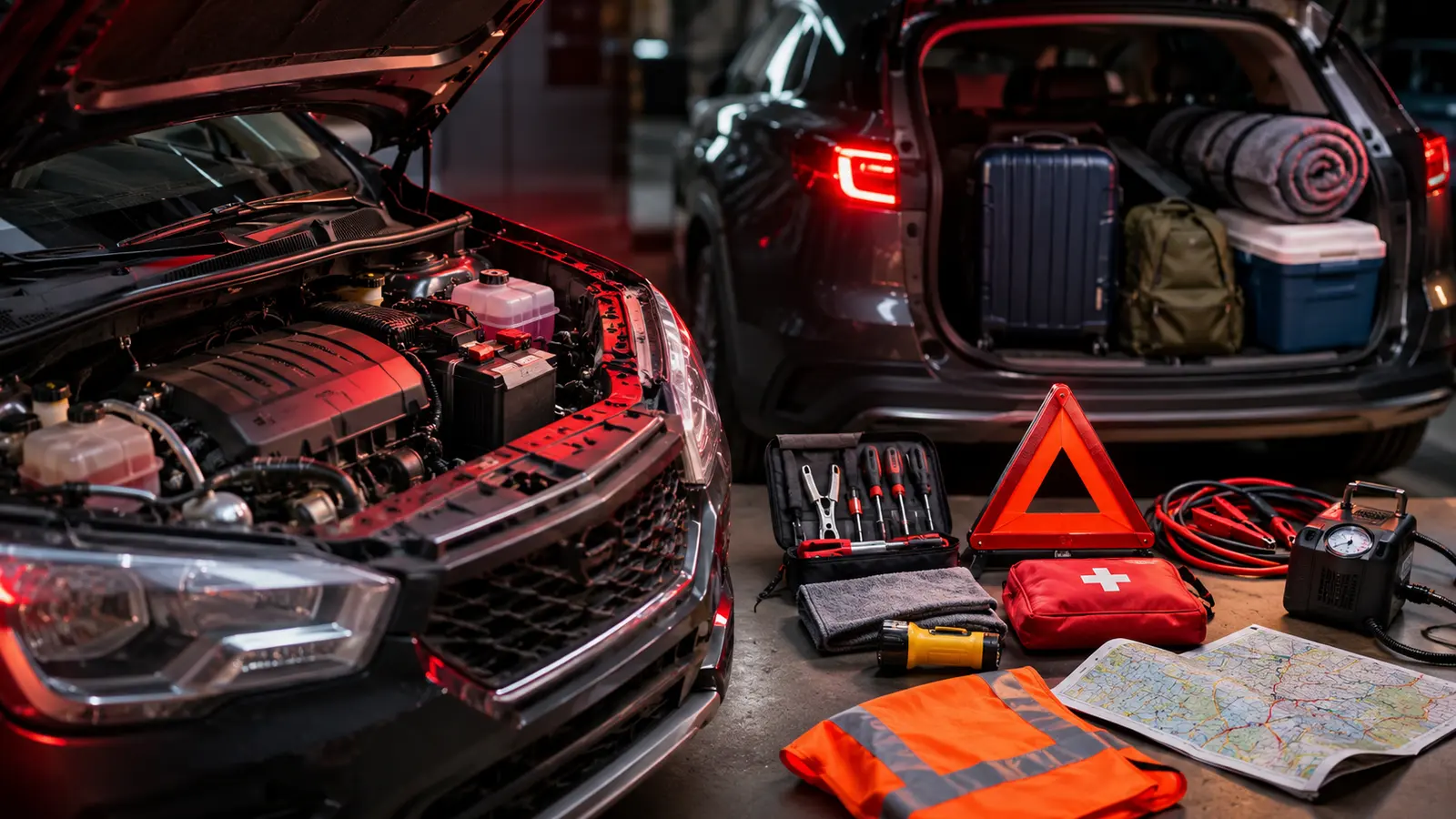
- Emergency kit: torch, warning triangle, first aid, water, charger
- Route and rest stops planned
Warning signs to fix before you leave
| Sign | Why it matters on a long trip |
|---|---|
| Any warning light | Small faults get worse with hours of driving |
| Squealing or grinding brakes | Long descents and heavy loads add heat |
| Temperature gauge creeping up | Heat and towing push cooling to the limit |
| Slow cranking | A battery that fails at a remote stop strands you |
| Vibration at speed | Could be a tyre about to fail |
Emergency kit
Torch, warning triangle or hi-vis vest, first-aid kit, water, snacks, phone charger, jump leads or a jump pack, and a basic tool kit. In winter, add warm layers and a blanket.
Loading the car
Keep heavy items low and secure. Don't exceed the maximum load or roof-box weight.
On the road
Take regular breaks. Watch the temperature gauge in heat and traffic.
Related guides
Frequently asked questions
Should I service my car before a road trip?
If a service is due within the trip's mileage, do it before you go.
Should I adjust tyre pressures for a loaded car?
Many placards list a higher pressure for full loads. Check yours.
How often should I take breaks?
Many road safety bodies suggest a break at least every two hours.
Tools that can help
Need a mechanic?
Find rated garages near you by city, ZIP code or postcode, with directions.
About this guide
Written by Editorial Team using manufacturer documentation, government road-safety guidance and motoring-organisation advice. It explains likely causes and safe checks. It is not a diagnosis. How we write and check guides.
More seasonal driving guides
 Seasonal Driving
Winter Driving: The Complete Guide to Preparing Your Car and Driving Safely
Winter tests batteries, tyres and drivers. This guide brings together how to prepare your car, what to carry, how to drive on snow and ice, what to do in a skid or if you're stranded, and how cold affects EVs and fuel economy, using NHTSA and UK Highway Code advice.
Updated November 22, 2026Read Seasonal Driving
Windscreen Washer Fluid Frozen: What to Do
Washer fluid freezes when it's too weak for the temperature, often because it was topped up with plain water. Thaw it by parking somewhere warmer or driving with the engine warm, then switch to a winter screenwash rated for your climate.
Updated November 22, 2026Read Seasonal Driving
Car Door Frozen Shut: How to Open It Safely
Push firmly against the frozen door to break the ice seal, then pull. Try other doors and run the engine and heater. Use de-icer on locks and seals; never pour boiling water on the glass. Prevent it by treating the rubber seals before frosts.
Updated November 22, 2026Read