
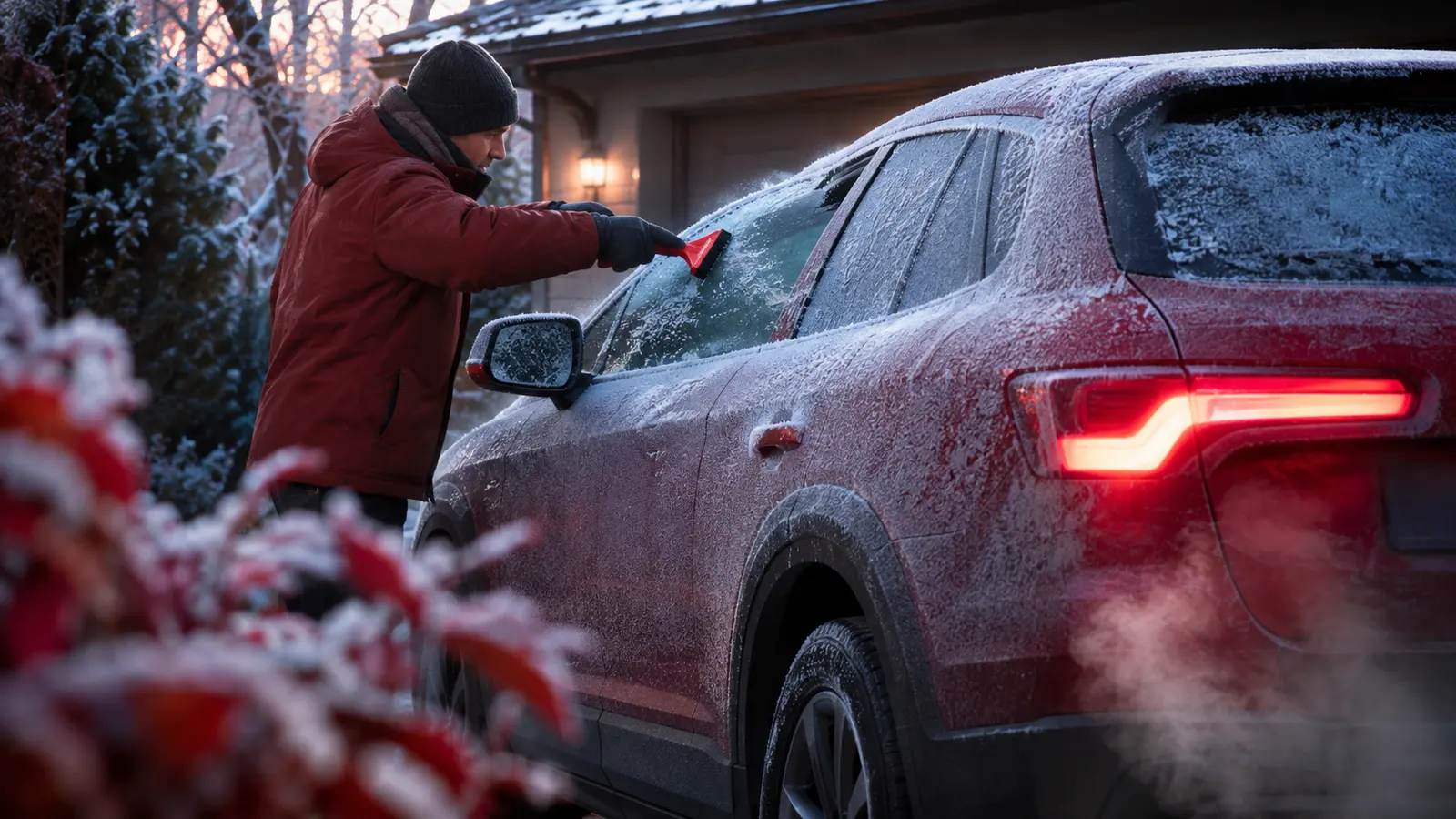
Car Door Frozen Shut: How to Open It Safely
Quick answer
Push firmly against the frozen door to break the ice seal, then pull. Try other doors and run the engine and heater. Use de-icer on locks and seals; never pour boiling water on the glass. Prevent it by treating the rubber seals before frosts.
- Topic
- Seasonal Driving
- Sections
- 5
- Reading time
- 1 min
- Applies to
- All regions
A car door frozen shut is usually water that's frozen between the rubber seal and the body, or inside the lock. The fix is patience, not force: push firmly on the door to crack the ice, try other doors, and use de-icer on locks and seals. Never pour boiling water on the car.
How to open it
- Push hard against the door, around its edges, to break the ice seal, then pull the handle gently.
- Try every door, including the tailgate. Once inside, run the engine and heater to warm the car.
- Spray de-icer into a frozen lock and along the seal.
- Warm the key in your hands (not with a flame) if the lock is stiff.
- Don't yank the handle hard: handles and seals break easily in the cold.
What not to do
- No boiling water: thermal shock can crack glass, and the water refreezes.
- No naked flames.
- Don't chip at seals with sharp tools.
Frozen windows and screens
Clear all glass fully before driving. The Highway Code and NHTSA both stress visibility in winter. See how to defrost a windscreen fast.
Prevent it
- Wipe seals dry and treat them with a rubber or silicone care product before frosts.
- Use a car cover or park in a garage when frost is forecast.
- Keep a de-icer outside the car (not locked inside).
- Fill up with winter screenwash: see washer fluid frozen.
Related guides
Frequently asked questions
Can I pour hot water on it?
Never boiling water: it can crack glass and refreezes. Lukewarm water on the seal only, as a last resort, then dry it.
How do I stop it happening?
Keep the rubber seals clean and treat them with a silicone or rubber-care product before cold spells.
Tools that can help
Need a mechanic?
Find rated garages near you by city, ZIP code or postcode, with directions.
About this guide
Written by Editorial Team using manufacturer documentation, government road-safety guidance and motoring-organisation advice. It explains likely causes and safe checks. It is not a diagnosis. How we write and check guides.
More seasonal driving guides
 Seasonal Driving
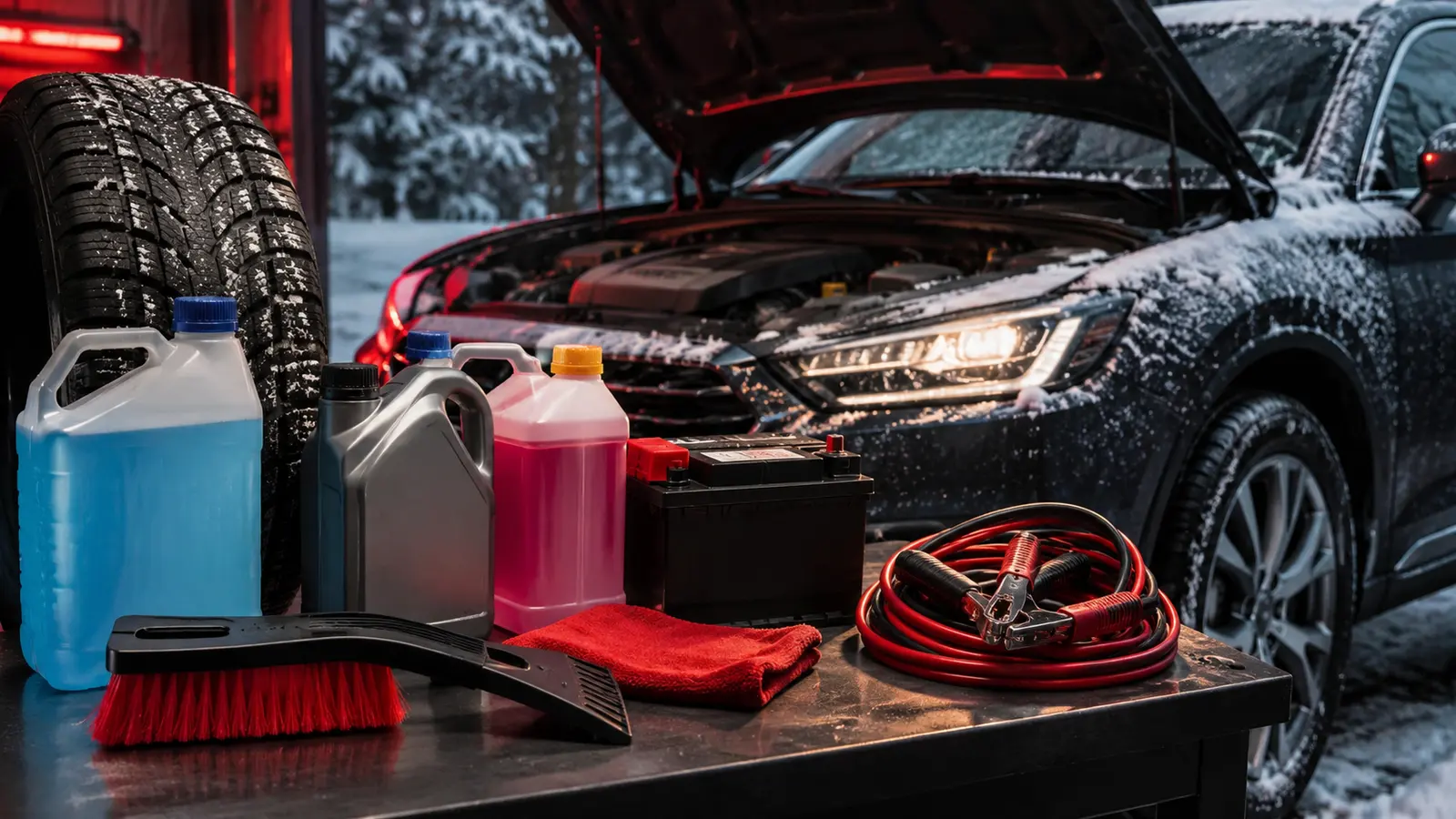
Winter Driving: The Complete Guide to Preparing Your Car and Driving Safely
Winter tests batteries, tyres and drivers. This guide brings together how to prepare your car, what to carry, how to drive on snow and ice, what to do in a skid or if you're stranded, and how cold affects EVs and fuel economy, using NHTSA and UK Highway Code advice.
Updated November 22, 2026Read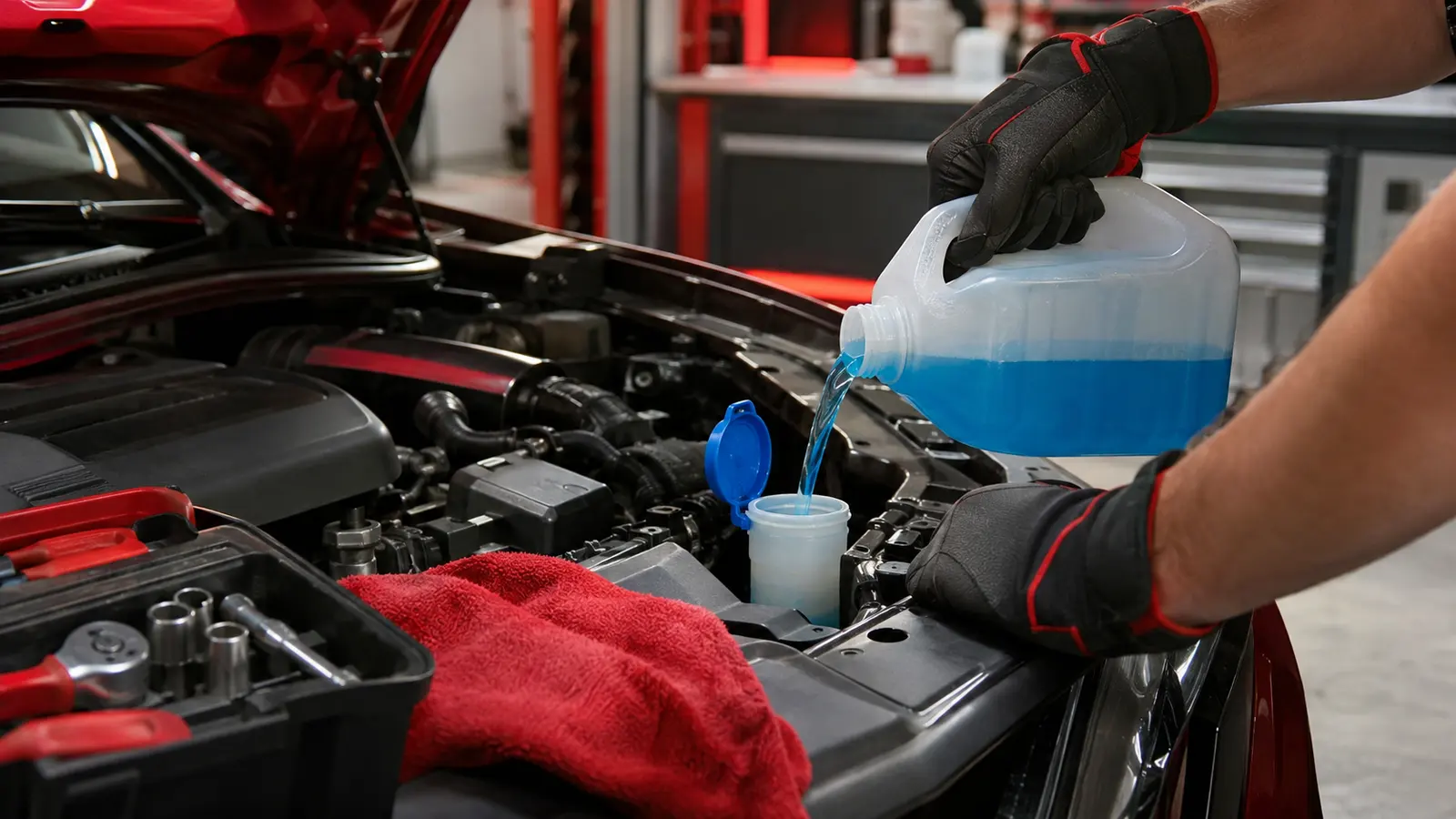 Seasonal Driving
Windscreen Washer Fluid Frozen: What to Do
Washer fluid freezes when it's too weak for the temperature, often because it was topped up with plain water. Thaw it by parking somewhere warmer or driving with the engine warm, then switch to a winter screenwash rated for your climate.
Updated November 22, 2026Read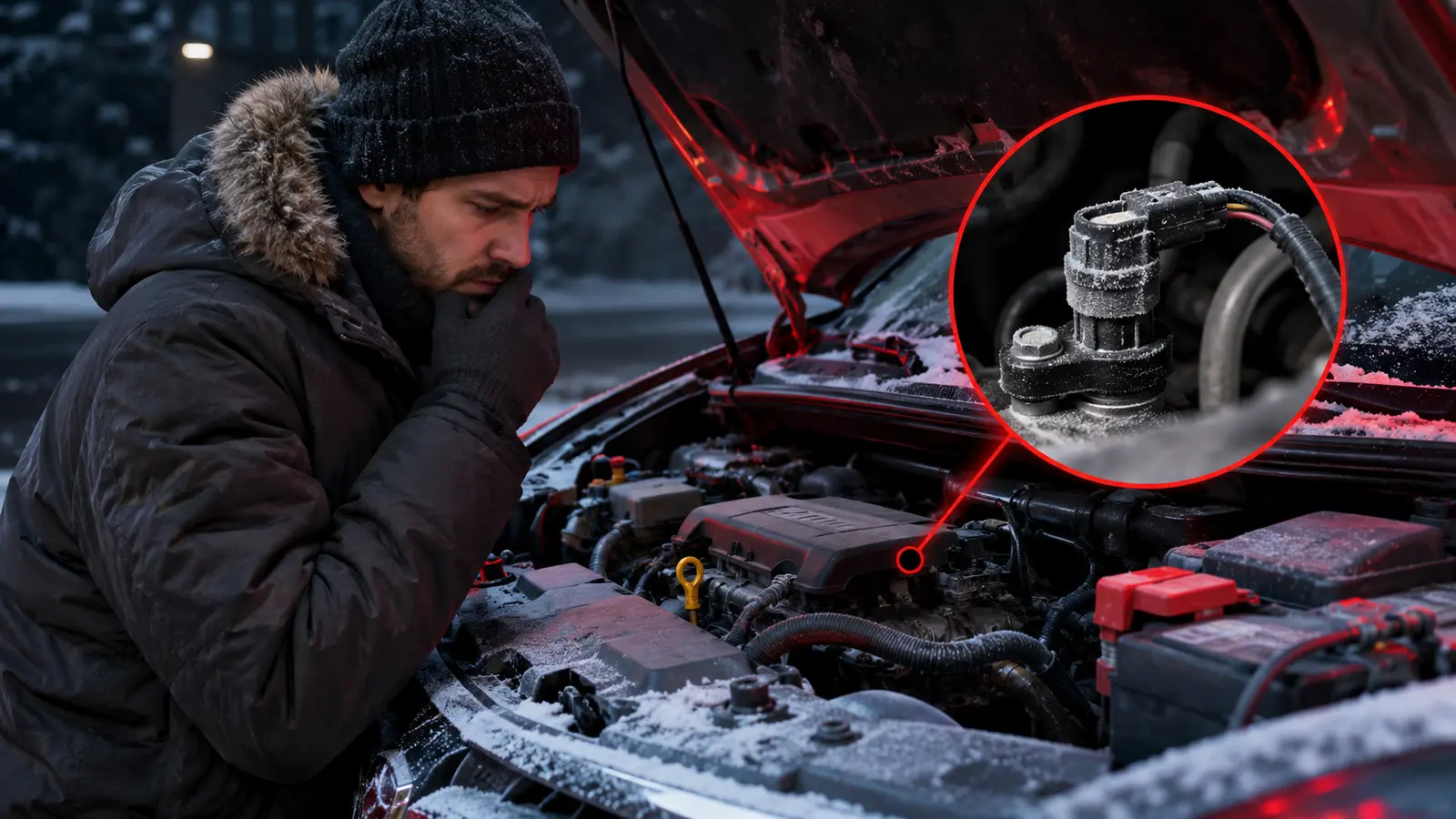 Seasonal Driving
Car Won't Start in the Cold but the Battery Is Good
Cranking but not catching in the cold usually means fuel, spark or a sensor problem — or a battery that only looks fine at rest.
Updated November 22, 2026Read