
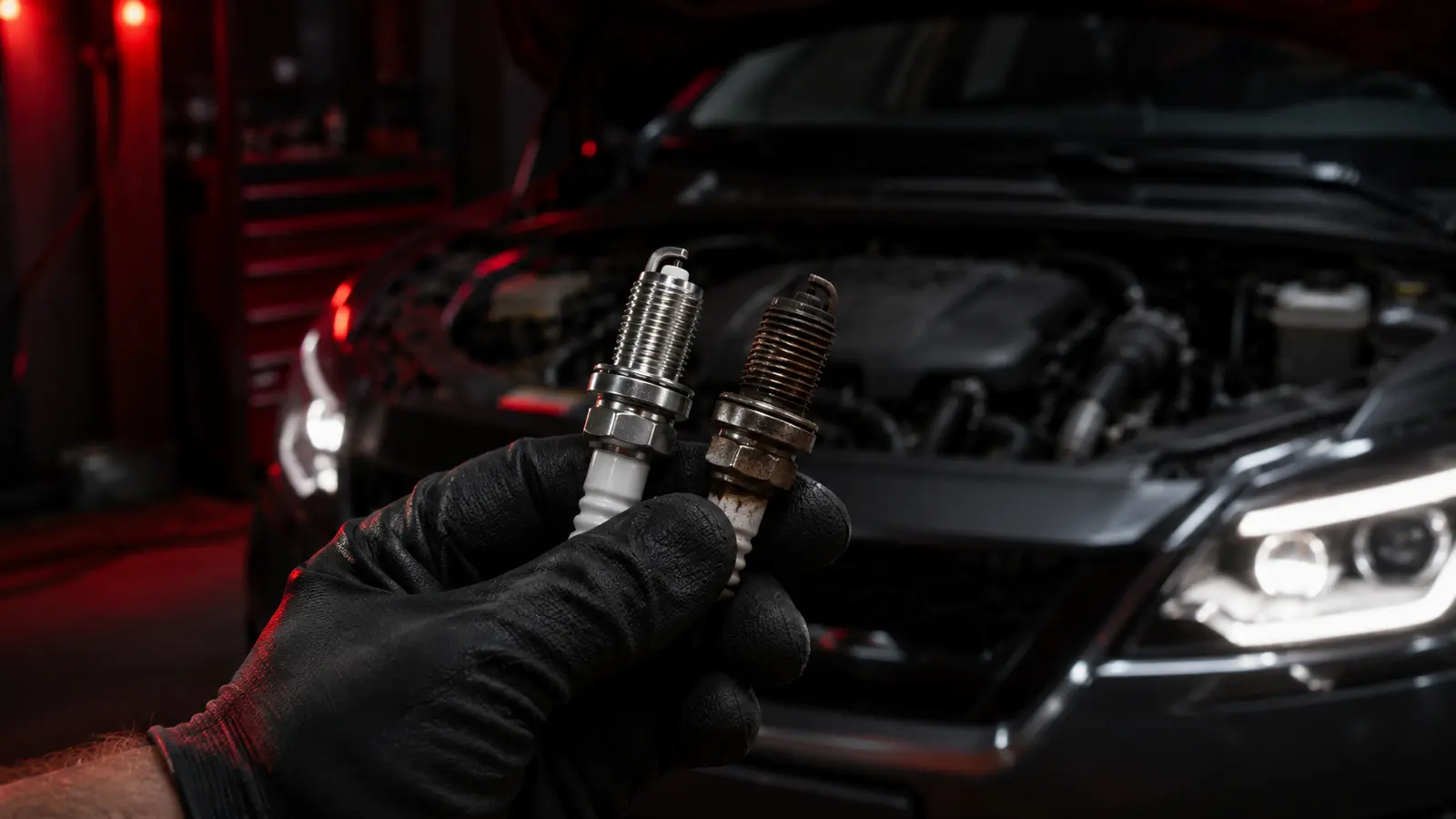
How Often Should You Change Spark Plugs?
Quick answer
It depends on the plug type and engine. Copper plugs often last around 20,000–30,000 miles, while platinum and iridium plugs commonly go 60,000–100,000 miles or more.
- Topic
- Servicing & Maintenance
- Sections
- 9
- Reading time
- 1 min
- Applies to
- All regions
How often you should change spark plugs depends on the plug type. Copper plugs often last around 20,000–30,000 miles. Platinum and iridium plugs, now fitted to most petrol cars, commonly last 60,000–100,000 miles or more. Your handbook gives the exact interval for your engine.
Signs your plugs are due
- Rough idle or shaking at idle
- Misfires and a check engine light (codes P0300–P0308)
- Hard starting
- Hesitation when accelerating
- Worse fuel economy
Typical intervals at a glance
| Plug type | Typical life (check handbook) |
|---|---|
| Copper / nickel | 20,000–30,000 miles |
| Single platinum | 60,000 miles or so |
| Double platinum / iridium | 60,000–100,000+ miles |
| Turbo direct-injection petrol | Often shorter than non-turbo; follow handbook |
Check these in order
- Look up the interval for your exact engine.
- Check service records to see when they were last done.
- Scan for misfire codes if you feel roughness.
Why plugs wear
Each spark erodes the electrodes slightly, widening the gap. A bigger gap needs more voltage, until the coil can't always fire it. Deposits from oil or rich running also foul plugs.
Why it matters for other parts
Misfires send unburnt fuel to the catalytic converter, which can overheat it. Worn plugs also make ignition coils work harder and fail sooner.
What a mechanic will do
They'll remove the coils, replace the plugs gapped and torqued to specification, and inspect old plugs for signs of oil, fuel or overheating.
What affects the cost
Plug type and number of cylinders, and access. On some V6 engines the rear plugs need the intake removed.
How to prevent problems
- Use the plug type specified by the maker.
- Fix oil leaks into plug wells. They cause misfires.
Related problems
Frequently asked questions
What happens if I don't change spark plugs?
Worn plugs need more voltage to spark, which can cause misfires, rough idle, poor fuel economy and extra strain on ignition coils.
Do diesel engines have spark plugs?
No. Diesels use compression to ignite fuel. They have glow plugs to help cold starts.
Should I change all the plugs at once?
Yes. They wear at the same rate, and engines run best with matched plugs.
Tools that can help
How the parts involved work
Need a mechanic?
Find rated garages near you by city, ZIP code or postcode, with directions.
About this guide
Written by Editorial Team using manufacturer documentation, government road-safety guidance and motoring-organisation advice. It explains likely causes and safe checks. It is not a diagnosis. How we write and check guides.
More servicing & maintenance guides
 Servicing & Maintenance
Engine Oil: The Complete Guide to Grades, Types, Checks and Changes
Engine oil lubricates, cools and cleans the engine. This guide explains what the numbers in 5W-30 mean, API and ACEA specifications, synthetic vs conventional oil, how to check the level, when to change it, and what leaks, smoke and warning lights are telling you.
Updated November 22, 2026Read Servicing & Maintenance
Car Leaking Oil After an Oil Change: Why
Oil drips right after an oil change are usually from the job itself: a filter not tightened or with the old gasket stuck on, a drain plug without a new washer, overfilling, or oil spilled during the change that is now dripping off.
Updated November 22, 2026Read Servicing & Maintenance
Signs Your Car Needs a Mechanic
Red warning lights, a soft brake pedal, steam, a strong fuel smell, new noises, leaks, vibration and changes in steering or braking are signs your car needs professional attention.
Updated November 22, 2026Read