
Option A
Catalytic converter
Option B
Diesel particulate filter
Catalytic Converter vs DPF
Short answer
A catalytic converter uses precious-metal catalysts to turn harmful gases into less harmful ones. Petrol and diesel cars both have one. A diesel particulate filter (DPF) is a physical filter that traps soot from diesel exhaust and periodically burns it off.
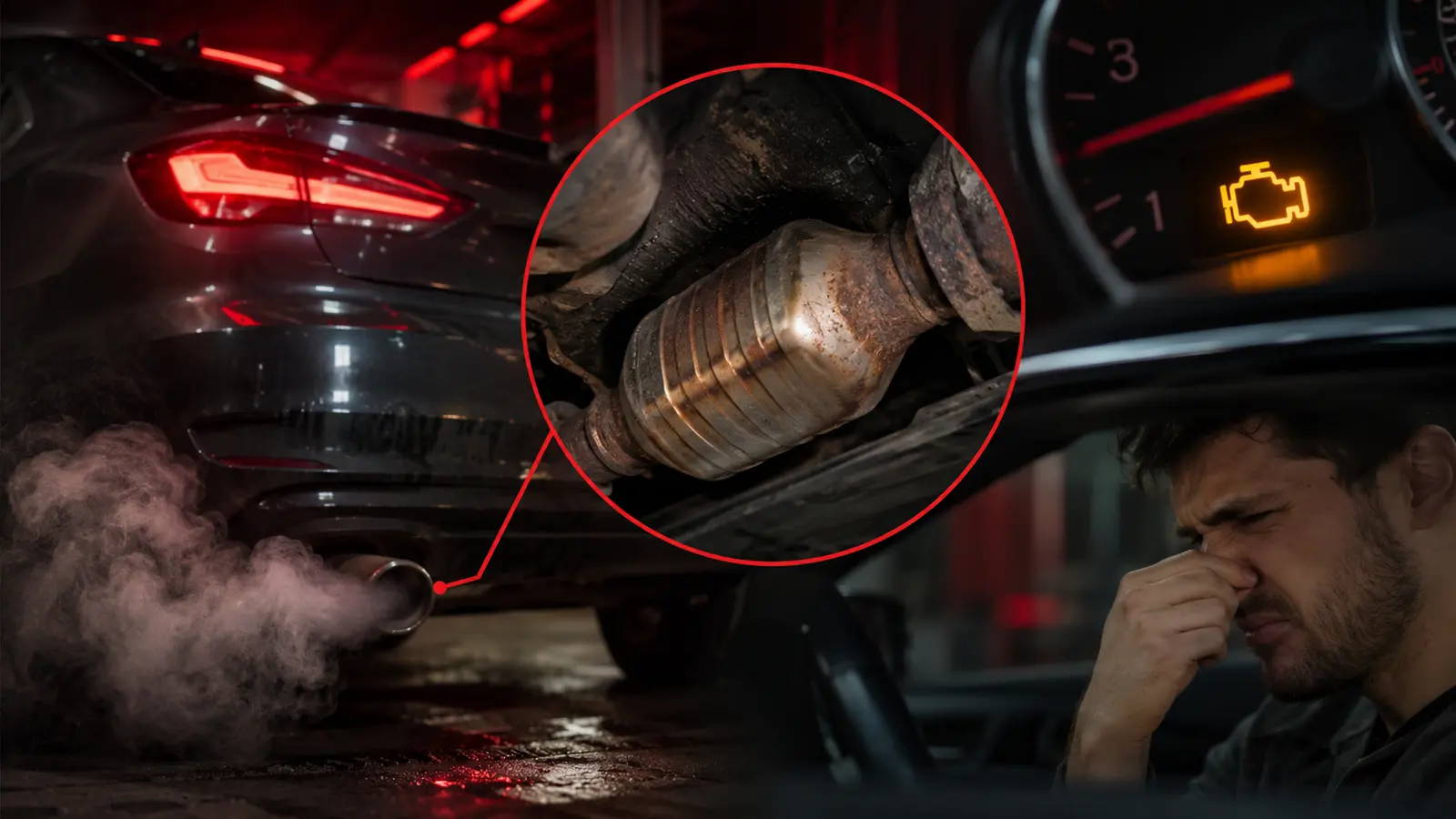
Side-by-side comparison
| Feature | Catalytic converter | Diesel particulate filter |
|---|---|---|
| Works by | Chemical reactions | Filtering soot |
| Fitted to | Petrol and diesel | Diesel (and petrol GPF on some) |
| Needs regeneration | No | Yes |
| Main cause of failure | Misfires, oil burning | Short trips, EGR/injector faults |
| Warning | Check engine light (P0420) | DPF light |
| Theft target | Yes (precious metals) | Less common |
Why choose Catalytic converter
- Works passively
- Long life with a healthy engine
- Cuts CO and hydrocarbons
Why choose Diesel particulate filter
- Removes visible soot
- Self-cleaning with the right driving
- Big cut in particulate emissions
Which should you choose?
Choose Catalytic converter if…
Protect it by fixing misfires and oil burning quickly.
Choose Diesel particulate filter if…
Protect it with regular longer drives and low-ash oil.
Our verdict
The bottom line
Both are legal requirements. Removing either is illegal on road cars in most countries and fails inspections.
Frequently asked questions
What is a GPF?
A gasoline particulate filter: a DPF equivalent fitted to some direct-injection petrol engines.
Can a DPF be cleaned?
Specialists can clean some, but fixing the cause matters most.
Related guides
More comparisons
General information, not a diagnosis. If a warning light is red, the car drives abnormally or you're unsure, stop safely and have a qualified technician inspect the vehicle.