
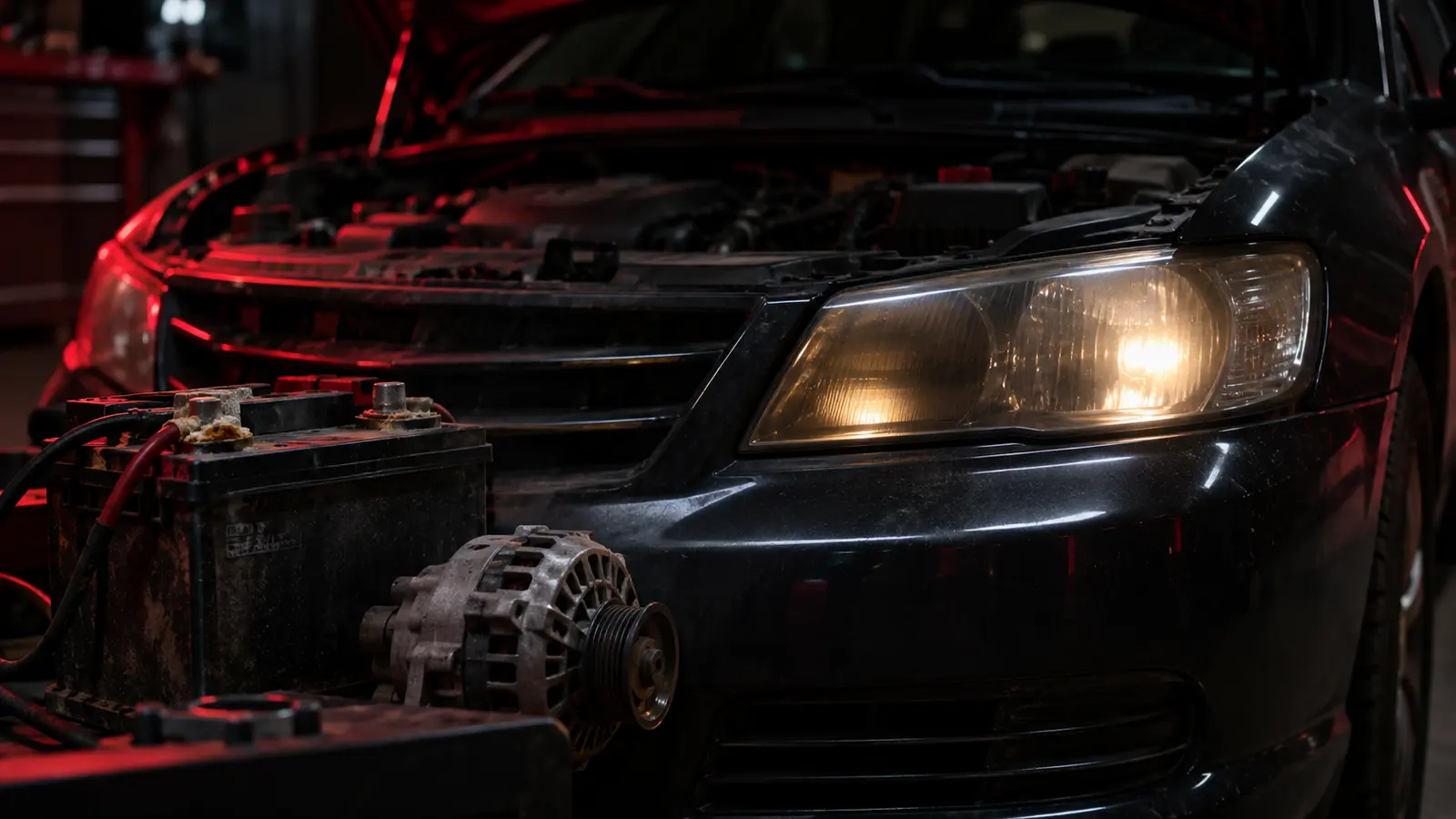
Headlights Dim or Flickering: Causes
Quick answer
Dim or flickering headlights usually point to a charging problem (alternator or battery), a poor earth connection, loose wiring, or bulbs near the end of their life.
- Topic
- Electrical
- Sections
- 7
- Reading time
- 1 min
- Applies to
- All regions
Dim or flickering headlights usually point to a charging problem (alternator, belt or battery), a poor earth (ground) connection, loose wiring or bulbs near the end of their life. If all the lights dim together, think electrical supply. If one light flickers, think bulb or connector.
Is it safe to drive?
Visibility matters. If lights are very dim or the battery light is on, avoid driving at night and get the charging system tested.
Causes at a glance
| Pattern | Likely cause |
|---|---|
| All lights dim at idle, brighter when revving | Weak alternator or slipping belt |
| Lights flicker with battery light on | Charging fault |
| One headlight flickers | Bulb, connector or earth on that side |
| Lights dim when using windows or fan | Weak alternator or battery |
| HID/xenon flickering then going out | Ageing bulb or ballast |
| Lights look yellow and weak | Hazy, oxidised lenses |
Check these in order
- Watch the battery light while driving.
- Measure charging voltage: roughly 13.8–14.7 V with the engine running.
- Check the headlight connectors for corrosion.
- Look at the lenses for haze.
Causes explained
Alternator and belt
Low output means lights get only what the battery can supply.
Earth connections
A corroded earth strap causes voltage drops that make lights flicker.
Bulbs and ballasts
Halogen bulbs dim with age. HID bulbs flicker before failing.
Lens haze
Oxidised plastic lenses scatter light. Restoration kits or new lenses help.
What a mechanic will do
They'll test the charging system and do voltage-drop tests on the lighting circuits.
How to prevent problems
- Replace bulbs in pairs.
- Keep connectors and earth points clean.
Related guides
Frequently asked questions
Why do my headlights dim at idle and brighten when I rev?
That's a classic sign of weak alternator output or a slipping belt.
Can one headlight be dimmer than the other?
Yes. A bulb near end of life, a poor connection or a hazy lens on that side are common causes.
Are flickering lights an MOT or inspection issue?
Lights must work correctly. A flickering or dim headlight can fail an inspection.
Tools that can help
How the parts involved work
Need a mechanic?
Find rated garages near you by city, ZIP code or postcode, with directions.
About this guide
Written by Editorial Team using manufacturer documentation, government road-safety guidance and motoring-organisation advice. It explains likely causes and safe checks. It is not a diagnosis. How we write and check guides.
More electrical guides
 Electrical
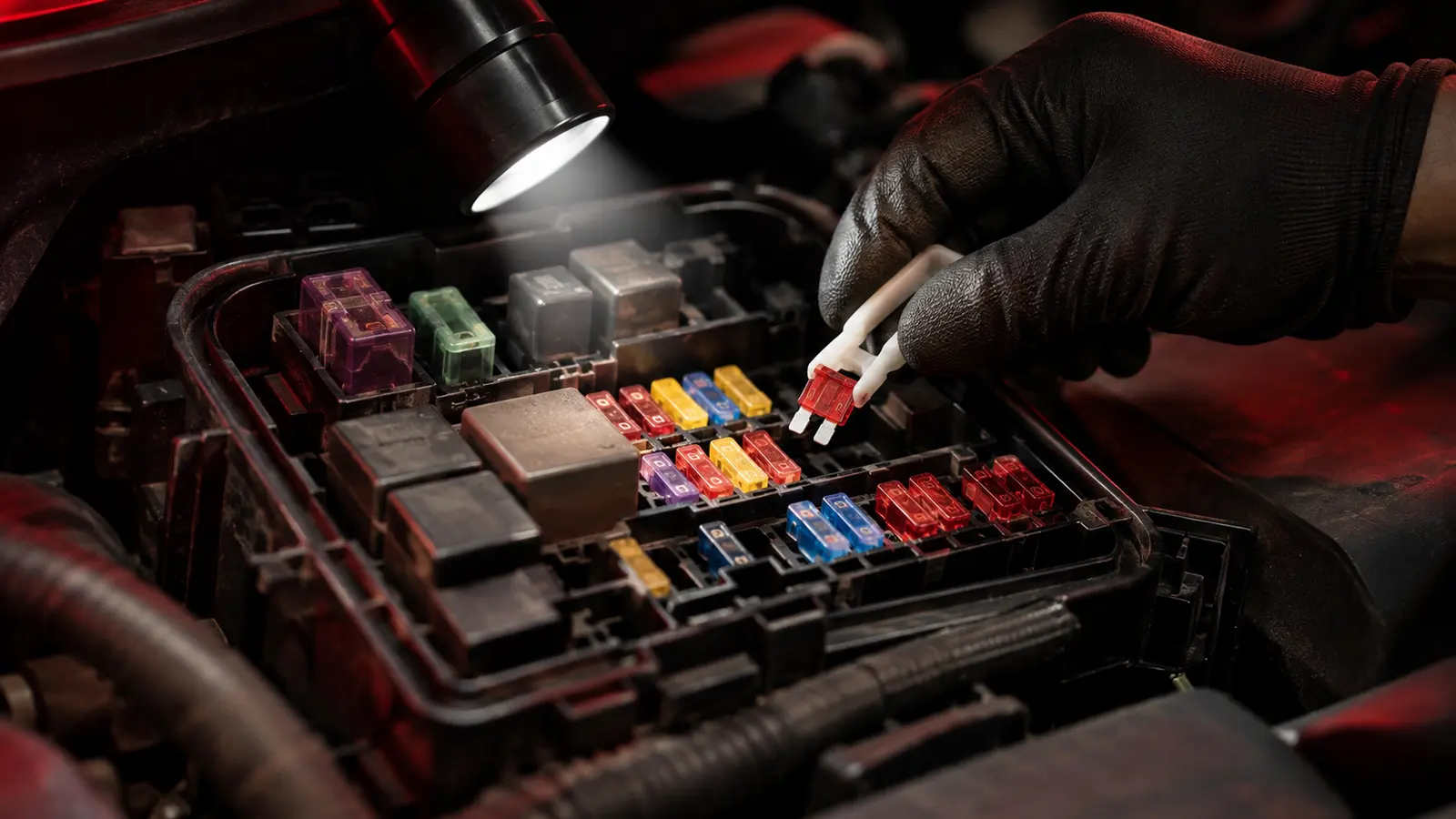
Car Electrical System: The Complete Guide to Fuses, Wiring, Lights and Faults
A car's electrical system runs on 12 volts from the battery and alternator, protected by fuses and switched by relays and computer modules that talk over a network. This guide explains how it fits together and how to approach common faults safely.
Updated November 22, 2026Read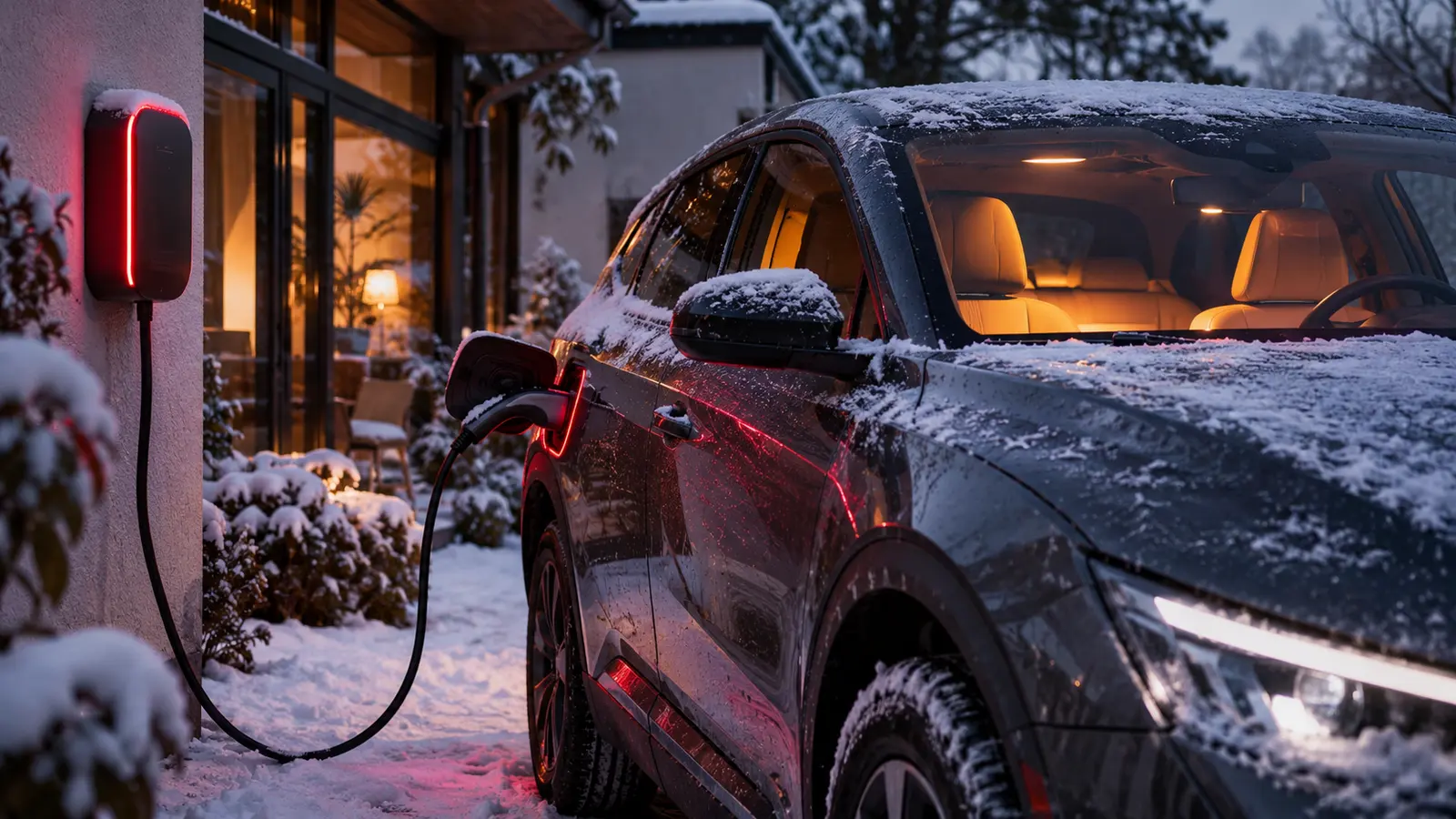 Electrical
Electric and Hybrid Cars: The Complete Ownership and Maintenance Guide
Electric cars run on a rechargeable lithium-ion battery and motors; hybrids pair an engine with an electric motor. This guide covers how they work, charging levels and times, battery and range in cold weather, regenerative braking, and the maintenance they still need.
Updated November 22, 2026ReadElectricalSpeedometer Not Working: Causes
Modern speedometers read from a gearbox or ABS wheel-speed sensor. A dead or erratic speedometer usually means a faulty sensor, damaged wiring or an instrument cluster fault.
Updated November 22, 2026Read