
Car Electrical System: The Complete Guide to Fuses, Wiring, Lights and Faults
Quick answer
A car's electrical system runs on 12 volts from the battery and alternator, protected by fuses and switched by relays and computer modules that talk over a network. This guide explains how it fits together and how to approach common faults safely.
- Topic
- Electrical
- Sections
- 10
- Reading time
- 3 min
- Applies to
- All regions
A car's electrical system runs on 12 volts. The battery starts the engine and the alternator powers everything once it's running. Fuses protect each circuit, relays switch high-current loads, and dozens of computer modules control everything from the engine to the windows, talking to each other over a network. This AllInformations Automotive guide explains how it fits together and how to approach common faults.
Power sources
The battery
The battery supplies the starter and powers the car when the engine is off. See car batteries: the complete guide.
The alternator
Once the engine runs, the alternator supplies the car and recharges the battery, regulated to about 13.5–14.5 volts. See symptoms of a bad alternator.
Earth (ground) connections
Every circuit returns through the car's metal body via earth straps. A corroded earth causes flickering lights and odd faults.
Fuses and relays
Blade fuses
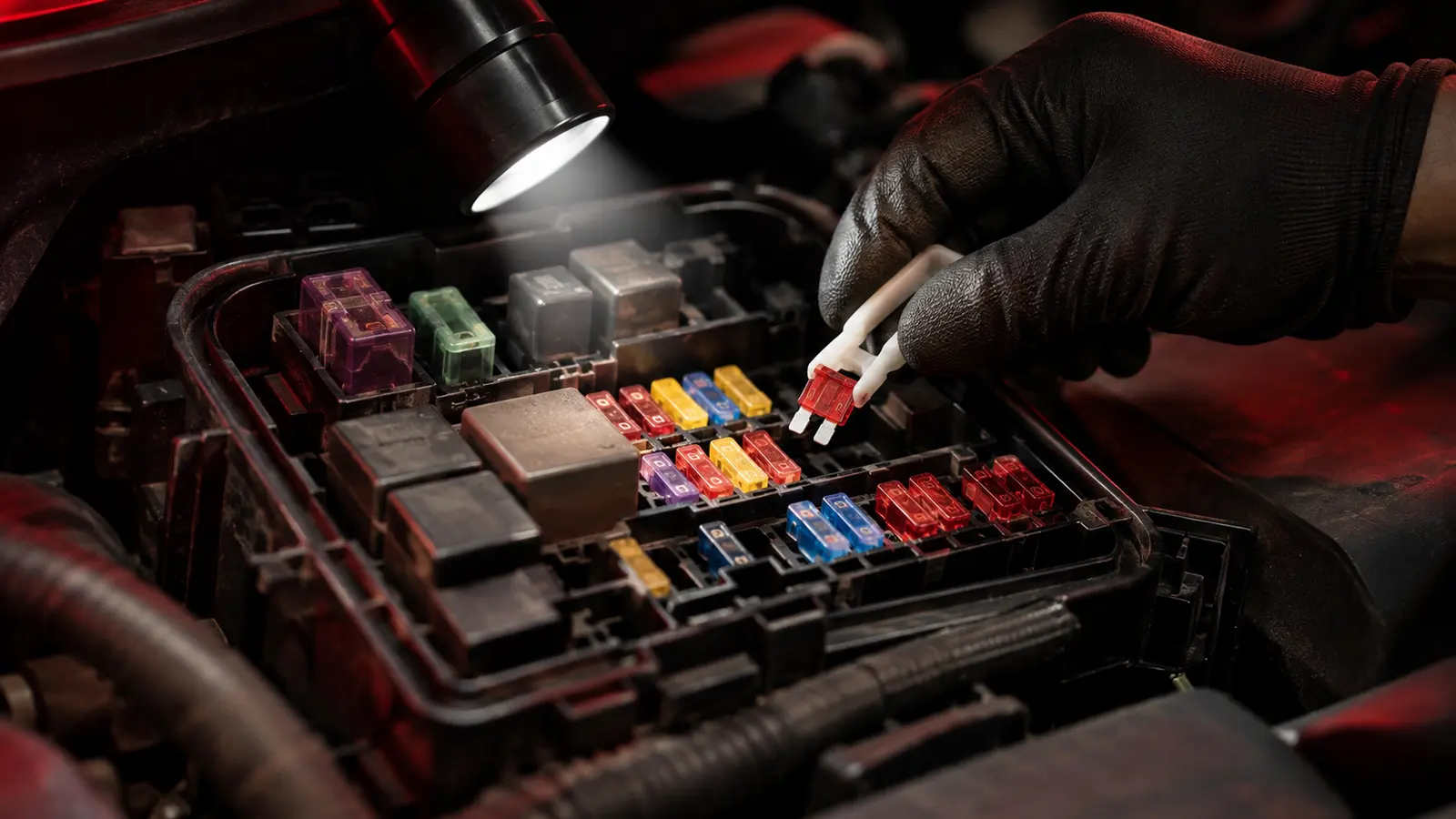
Most cars use blade fuses (plastic bodies with two prongs) in mini, regular and maxi sizes. Each protects a circuit by melting if too much current flows.
Fuse boxes
Cars usually have a fuse box under the bonnet (hood) and another inside the cabin. The lid or handbook shows which fuse does what.
Never upsize a fuse
A fuse that keeps blowing means a fault. Fitting a higher rating can overheat wiring and cause a fire. See blown fuse symptoms and how to replace a car fuse.
Relays
A relay lets a small switch control a high-current load, such as the fuel pump, fans or horn. A failed relay can make a whole system stop.
Computer modules and networks
Control units
The engine control unit manages the engine; other modules control the gearbox, ABS, airbags, body electrics and more.
The CAN bus
Modules communicate over a vehicle network such as the CAN bus, a standard originally designed to multiplex wiring within cars and save on copper. One faulty module or connection can affect several systems.
Fault codes
Modules store fault codes that a scan tool can read. See how to use an OBD2 scanner.
Lighting
Headlights
Dim or flickering headlights often point to charging or earth problems. See headlights dim or flickering, headlights and how to change a headlight bulb.
Brake lights
Brake lights that stay on usually point to the pedal switch. See brake lights stay on.
Headlight technology
See LED vs halogen and HID vs halogen.
Body electrics
Windows and locks
Fuses, switches, motors and door wiring (which flexes every time the door opens) are common failure points. See power windows not working and central locking not working.
Keys and security
Key fob batteries, the immobiliser and keyless entry can all stop the car unlocking or starting. See car key fob not working.
Alarms
See car alarm going off randomly.
Instruments
Gauges and warning lights
The instrument cluster reads data from sensors and modules. See speedometer not working, fuel gauge not working and dashboard lights flickering.
Diagnosing electrical faults
A logical order
| Step | What to check |
|---|---|
| 1 | Battery voltage and terminals |
| 2 | The fuse for that circuit |
| 3 | Relays and switches |
| 4 | Connectors and earth points |
| 5 | Fault codes in the relevant module |
Parasitic drain
If the battery goes flat overnight, something may be staying awake. See car battery keeps dying.
Intermittent faults
Faults that come and go over bumps or in wet weather often point to a connector, earth or water ingress.
Aftermarket accessories
Wire them properly
Dash cams, chargers and lights should be fused and connected correctly. Poor aftermarket wiring is a common cause of drains and faults.
Safety
Before you start
Switch off the ignition and remove the key before changing fuses or bulbs. Don't probe airbag connectors. On hybrids and EVs, never touch orange high-voltage cables.
Related guides
Frequently asked questions
Why does the same fuse keep blowing?
A repeating blown fuse means a fault downstream, such as a short circuit. Never fit a higher-rated fuse; find the cause.
Can a weak battery cause strange electrical faults?
Yes. Low voltage can make modules behave oddly and light up several warnings at once.
Is it safe to work on car wiring myself?
Simple jobs like fuses and bulbs are fine with the car off. Airbag circuits and high-voltage hybrid/EV systems must be left to professionals.
Tools that can help
Need a mechanic?
Find rated garages near you by city, ZIP code or postcode, with directions.
About this guide
Written by Editorial Team using manufacturer documentation, government road-safety guidance and motoring-organisation advice. It explains likely causes and safe checks. It is not a diagnosis. How we write and check guides.
More electrical guides
 Electrical
Electric and Hybrid Cars: The Complete Ownership and Maintenance Guide
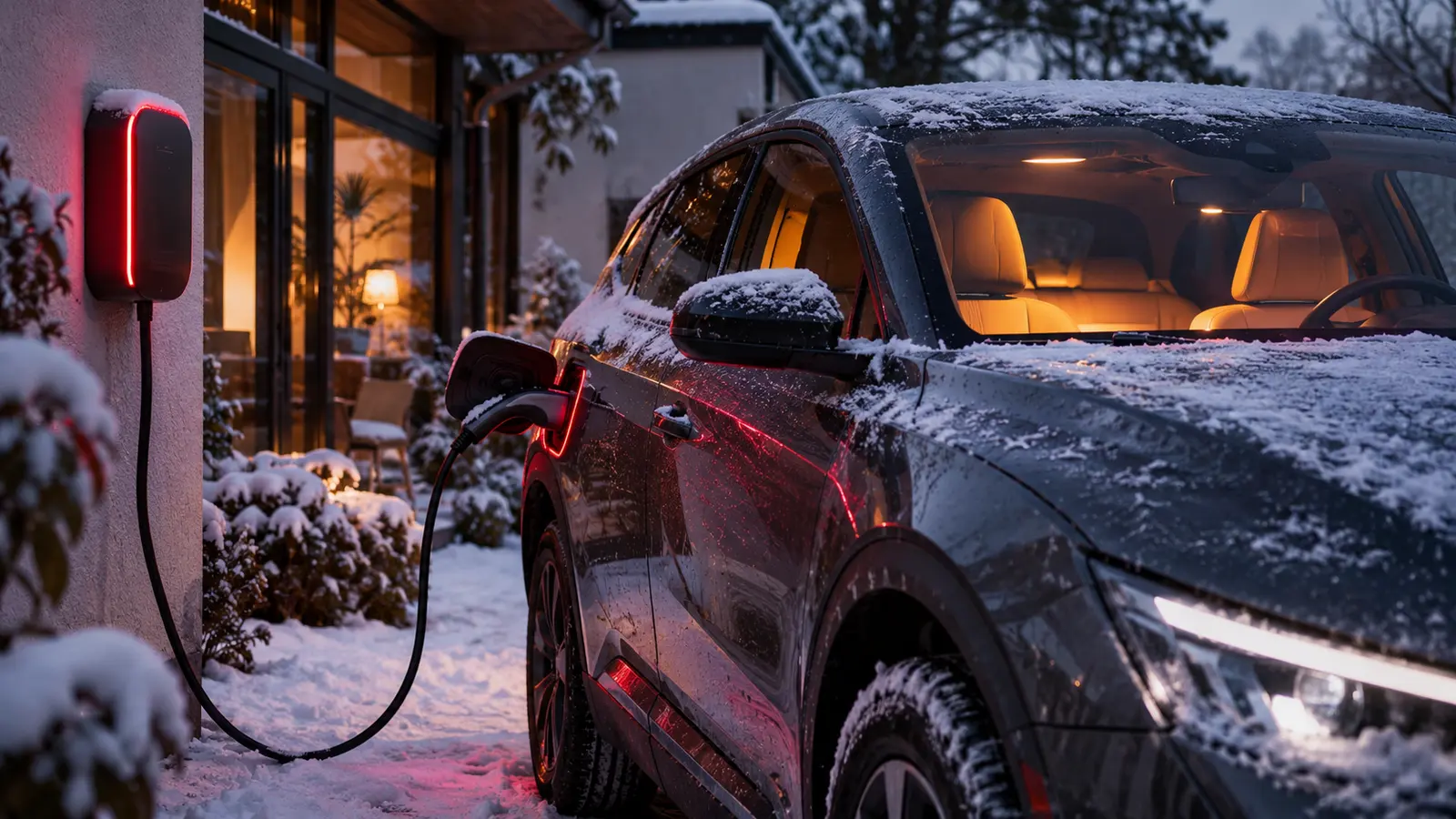
Electric cars run on a rechargeable lithium-ion battery and motors; hybrids pair an engine with an electric motor. This guide covers how they work, charging levels and times, battery and range in cold weather, regenerative braking, and the maintenance they still need.
Updated November 22, 2026ReadElectricalSpeedometer Not Working: Causes
Modern speedometers read from a gearbox or ABS wheel-speed sensor. A dead or erratic speedometer usually means a faulty sensor, damaged wiring or an instrument cluster fault.
Updated November 22, 2026Read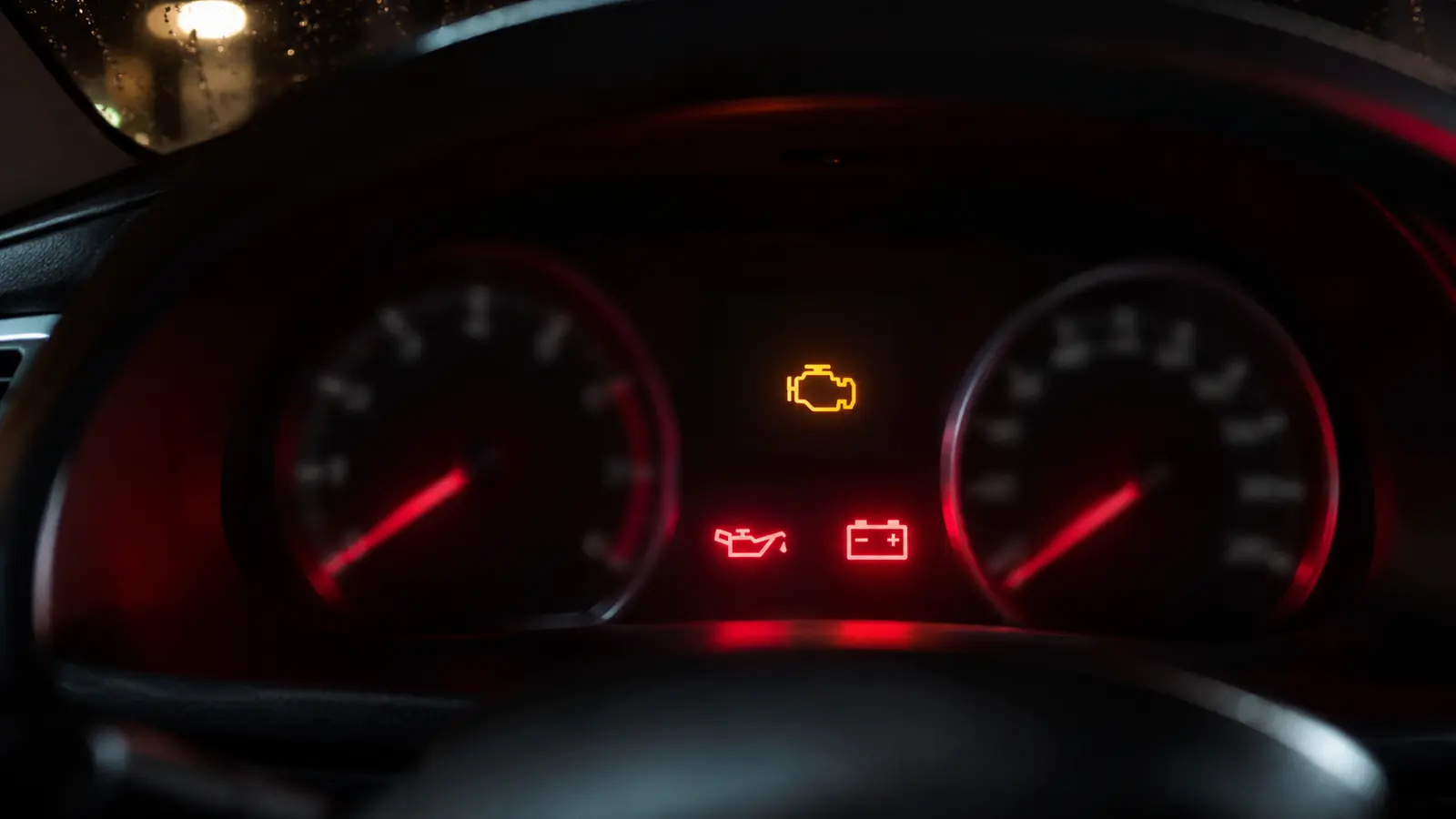 Electrical
Fuel Gauge Not Working: Causes
A fuel gauge that's stuck, jumpy or inaccurate usually has a faulty sending unit (the float in the tank), a wiring or earth problem, or less often an instrument cluster fault.
Updated November 22, 2026Read