
Quick answer
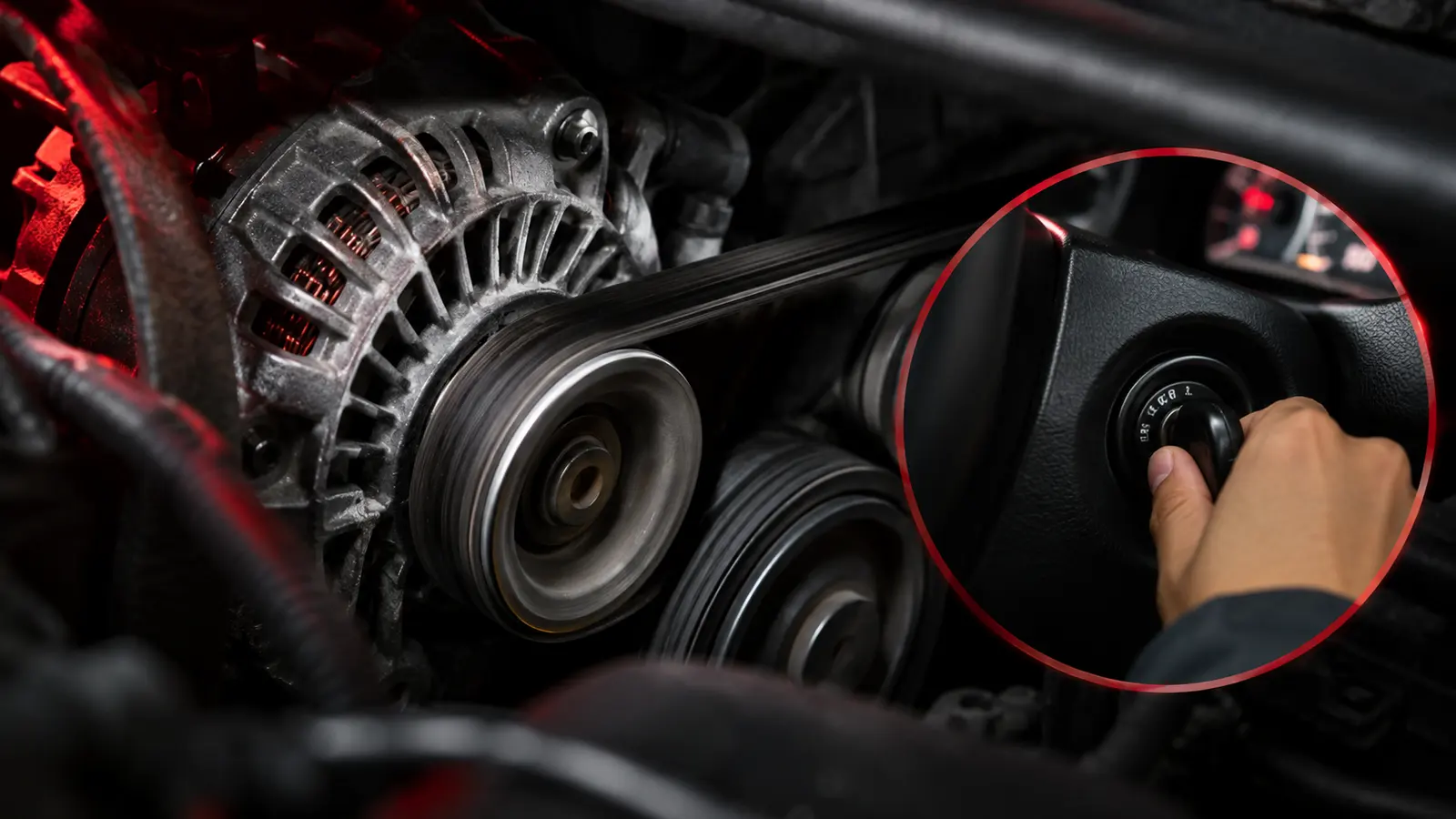
A high-pitched squeal for a few seconds after starting usually means the accessory drive belt is slipping: it's worn or glazed, the tensioner is weak, or a pulley is dragging.
- Topic
- Engine Problems
- Sections
- 6
- Reading time
- 1 min
- Applies to
- All regions
A squealing noise when starting the car usually comes from the accessory drive belt slipping on its pulleys. Common causes are a worn or glazed belt, a weak tensioner, a dragging pulley (alternator, water pump, idler) or fluid contaminating the belt.
Is it safe to drive?
A brief squeal is a warning, not an emergency. If the squeal is constant, comes with the battery light, or the temperature rises, get it checked: a broken belt can stop charging and, on many engines, the water pump.
Causes at a glance
| Clue | Likely cause |
|---|---|
| Squeal for seconds on cold mornings | Glazed or worn belt |
| Squeal when turning or with AC on | Belt slipping under load |
| Tensioner arm jumping | Weak tensioner |
| Growl or grind from one pulley | Bearing in that pulley |
| Belt shiny with oil | Leak contaminating the belt |
Check these in order
- Look at the belt (engine off) for cracks, glazing and missing chunks.
- Watch the tensioner at idle (from a safe distance) for bouncing.
- Check for leaks onto the belt.
- Listen with a mechanic's stethoscope or a long screwdriver held against stationary parts.
Why it matters
The belt drives the alternator and often the water pump and power steering. If it fails, several systems stop at once.
Prevention
- Replace the belt and tensioner at the recommended interval.
- Fix oil or coolant leaks that reach the belt.
Related guides
Frequently asked questions
Why does it only squeal when cold or wet?
Belts grip less when cold or damp, so a borderline belt slips briefly.
Is belt dressing a fix?
It may quieten it briefly but can attract dirt. Replacing a worn belt or tensioner is the proper fix.
Tools that can help
Need a mechanic?
Find rated garages near you by city, ZIP code or postcode, with directions.
About this guide
Written by Editorial Team using manufacturer documentation, government road-safety guidance and motoring-organisation advice. It explains likely causes and safe checks. It is not a diagnosis. How we write and check guides.
More engine problems guides
 Engine Problems
Car Exhaust and Emissions: The Complete Guide to Catalytic Converters, Sensors and Smoke
The exhaust system carries burnt gases away, cleans them with a catalytic converter (and on diesels a DPF and SCR), and quietens the engine. This guide explains each part, what different smoke colours and noises mean, catalytic converter theft, and emissions tests.
Updated November 22, 2026Read Engine Problems
Engine Cooling System: The Complete Guide to Coolant, Overheating and Repairs
The cooling system carries heat away from the engine using coolant, a water pump, a thermostat, a radiator and fans, all under pressure so coolant can run above 100 °C. This guide explains each part, why engines overheat, how to spot leaks and how to check coolant safely.
Updated November 22, 2026Read Engine Problems
Diesel Engines: The Complete Guide to How They Work, DPF, AdBlue and Care
Diesel engines ignite fuel by compression rather than a spark. Modern diesels add glow plugs, a particulate filter, AdBlue and EGR to start reliably and cut emissions. This guide explains each system, the warning lights and how to keep a diesel healthy.
Updated November 22, 2026Read