
Quick answer
A rotten egg (sulphur) smell usually comes from the catalytic converter, often because the engine is running rich or the converter is failing. Old gear oil and a battery problem are rarer causes.
- Topic
- Engine Problems
- Sections
- 9
- Reading time
- 2 min
- Applies to
- All regions
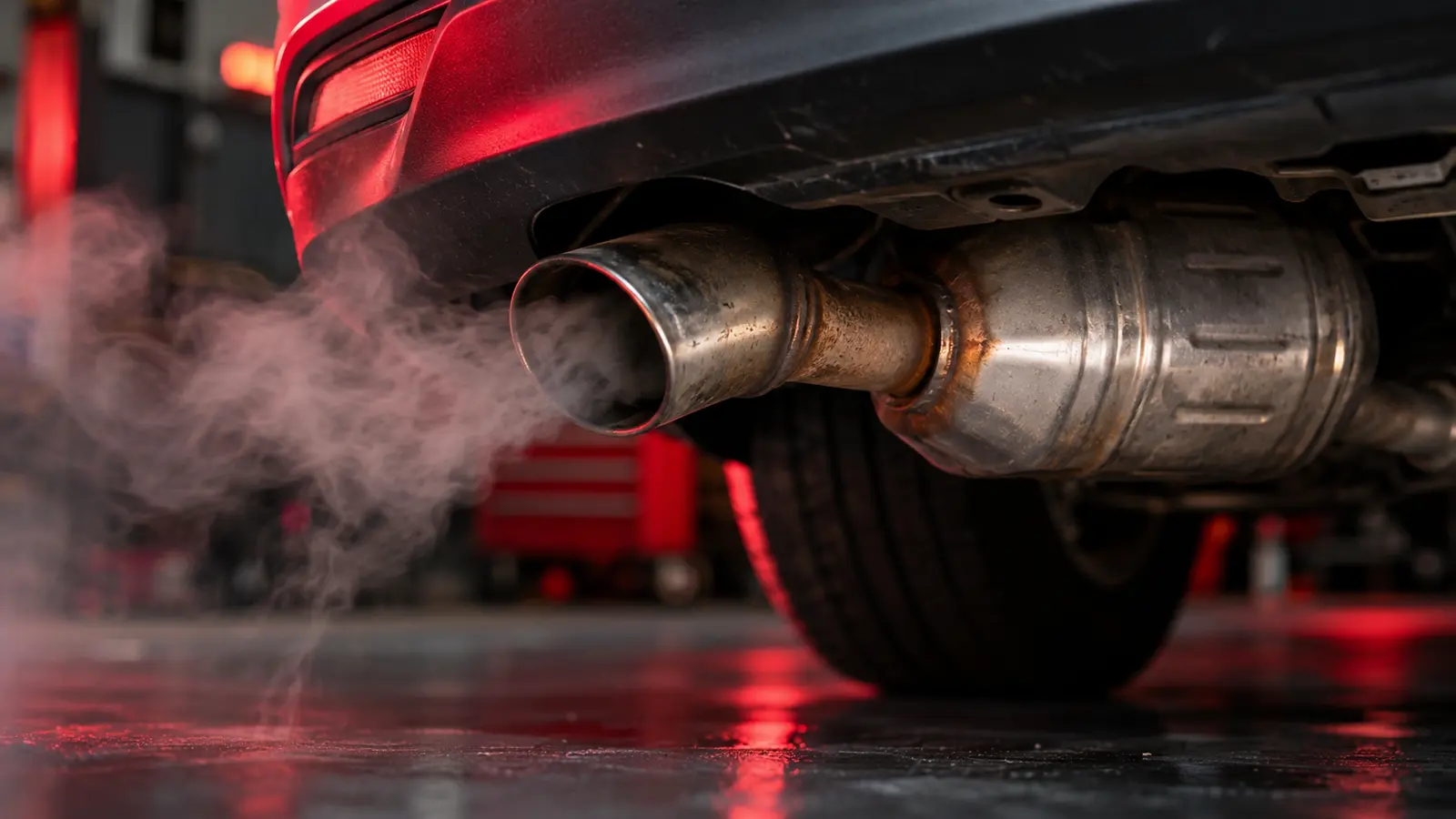
A rotten egg or sulphur smell from your car almost always comes from the catalytic converter. Fuel contains small amounts of sulphur. Normally the converter turns it into odourless compounds. When the engine runs rich or the converter is failing, hydrogen sulphide escapes and you smell rotten eggs.
Is it safe to drive?
You can usually drive carefully to a garage. If the check engine light is flashing, the engine is misfiring and the converter can overheat. Slow down and stop. If the smell is coming from the battery and it's hot or swollen, don't drive.
Causes at a glance
| Clue | Likely cause |
|---|---|
| Smell from exhaust, check engine light | Engine running rich, misfire |
| Smell plus rattling under the car | Failing catalytic converter |
| Smell after one tank of fuel | High-sulphur fuel |
| Smell from under the bonnet, hot battery | Battery overcharging (stop) |
| Manual gearbox, old car, smell at rear or front | Leaking old gear oil |
Check these in order
- Is the check engine light on? Read the codes. P0420 points to converter efficiency; P0172 to a rich mixture.
- Where is the smell strongest? Exhaust, bonnet or underneath?
- Look at the battery carefully, without touching. Swelling or a hot case is serious.
- Try a different fuel station if it started after refuelling.
Causes explained
Rich mixture
A faulty oxygen sensor, leaking injector or failing fuel pressure regulator sends too much fuel. The converter gets overloaded.
Failing catalytic converter
Converters can clog or break up internally, often after long periods of misfires or oil burning. A rattling sound underneath is a clue.
Battery overcharging
An overcharged lead-acid battery can vent gases with a sulphur smell. This needs urgent attention.
Gear oil
Old manual gearbox and differential oils can smell of sulphur if they leak onto hot parts.
What a mechanic will do
They'll read codes and live data (fuel trims, oxygen sensors), check exhaust back-pressure, inspect the converter and test charging voltage.
What affects the cost
Oxygen sensors are moderate. Catalytic converters are expensive, so fixing the underlying rich-running or misfire cause first is essential.
How to prevent it
- Fix misfires and check engine lights promptly.
- Service the car on time to prevent oil burning.
Regional notes
In the US, a check engine light usually fails state emissions tests. In the UK, an illuminated engine management light is an MOT failure.
Related problems
Frequently asked questions
Is a rotten egg smell dangerous?
The smell itself is hydrogen sulphide from fuel. The bigger worry is the cause: a very hot or failing catalytic converter, or a battery overcharging. Get it checked soon.
Can bad fuel cause a sulphur smell?
Fuel with higher sulphur content can make it more noticeable. If it only happens after one fill-up, try a different fuel station.
Why does my car smell like rotten eggs only when I accelerate hard?
Hard acceleration richens the mixture briefly. A converter that's struggling can't fully process the extra sulphur.
Tools that can help
How the parts involved work
Need a mechanic?
Find rated garages near you by city, ZIP code or postcode, with directions.
About this guide
Written by Editorial Team using manufacturer documentation, government road-safety guidance and motoring-organisation advice. It explains likely causes and safe checks. It is not a diagnosis. How we write and check guides.
More engine problems guides
 Engine Problems
Car Exhaust and Emissions: The Complete Guide to Catalytic Converters, Sensors and Smoke
The exhaust system carries burnt gases away, cleans them with a catalytic converter (and on diesels a DPF and SCR), and quietens the engine. This guide explains each part, what different smoke colours and noises mean, catalytic converter theft, and emissions tests.
Updated November 22, 2026Read Engine Problems
Engine Cooling System: The Complete Guide to Coolant, Overheating and Repairs
The cooling system carries heat away from the engine using coolant, a water pump, a thermostat, a radiator and fans, all under pressure so coolant can run above 100 °C. This guide explains each part, why engines overheat, how to spot leaks and how to check coolant safely.
Updated November 22, 2026Read Engine Problems
Diesel Engines: The Complete Guide to How They Work, DPF, AdBlue and Care
Diesel engines ignite fuel by compression rather than a spark. Modern diesels add glow plugs, a particulate filter, AdBlue and EGR to start reliably and cut emissions. This guide explains each system, the warning lights and how to keep a diesel healthy.
Updated November 22, 2026Read