
Option A
OBD2 scanner
Option B
Basic code reader
OBD2 Scanner vs Code Reader: What Do You Need?
Short answer
A basic code reader reads and clears engine fault codes. A scan tool adds live data, freeze-frame information and often access to other systems like ABS, airbags and transmission. For most DIYers, a reader with live data is the sweet spot.
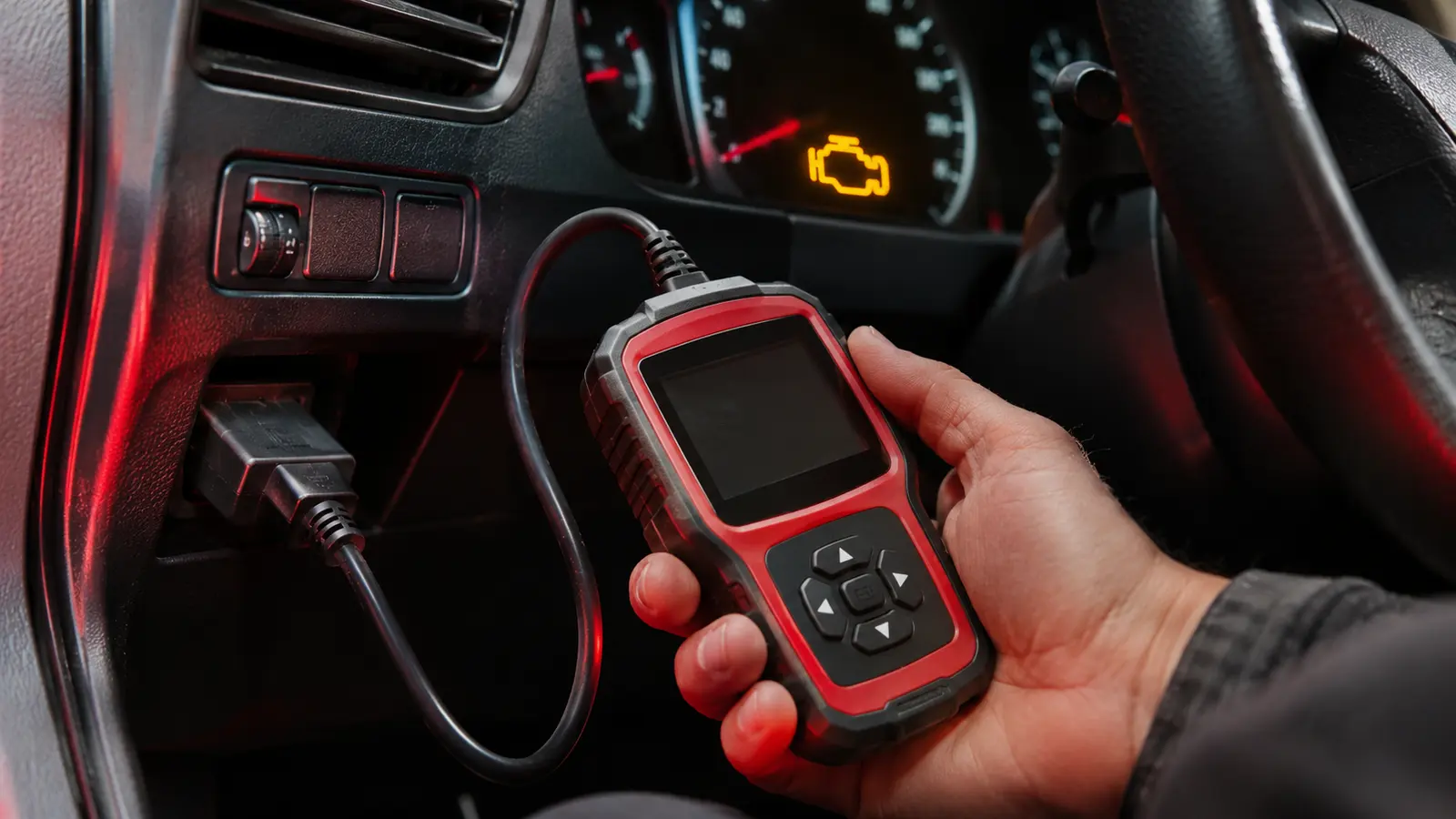
Side-by-side comparison
| Feature | OBD2 scanner | Basic code reader |
|---|---|---|
| Read/clear engine codes | Yes | Yes |
| Live sensor data | Yes | Rarely |
| Freeze-frame data | Yes | Sometimes |
| ABS/airbag/transmission | Often | No |
| Bluetooth app options | Common | Some |
| Price | Higher | Lower |
Why choose OBD2 scanner
- Shows what the engine sees
- Helps find intermittent faults
- Covers more systems
Why choose Basic code reader
- Cheap and simple
- Good for a quick code check
- Small enough for the glovebox
Which should you choose?
Choose OBD2 scanner if…
You do your own repairs or want to diagnose before visiting a garage.
Choose Basic code reader if…
You only want to know why the check engine light is on.
Our verdict
The bottom line
Any OBD2 tool helps you talk to a mechanic with facts. Clearing a code doesn't fix the fault, so look it up first.
Frequently asked questions
Where is the OBD2 port?
Usually under the dashboard on the driver's side, within reach of the steering column.
Will clearing codes pass an emissions test?
No. Readiness monitors reset and must complete before testing.
Does my car have OBD2?
Most petrol cars from 1996 in the US and 2001 in the UK/EU, and diesels from about 2004 in the EU, do.
Related guides
More comparisons
General information, not a diagnosis. If a warning light is red, the car drives abnormally or you're unsure, stop safely and have a qualified technician inspect the vehicle.